Week 1
Weekly Meeting Goals
- Learn more about the Level the Curve project and its current assistive technology work.
- Identify one project or area that I am especially interested in.
- Reach out to people involved with Level the Curve to learn how EAT students can participate.
- Start documenting my exploration, questions, and reflections in my research notebook.

What I Worked On
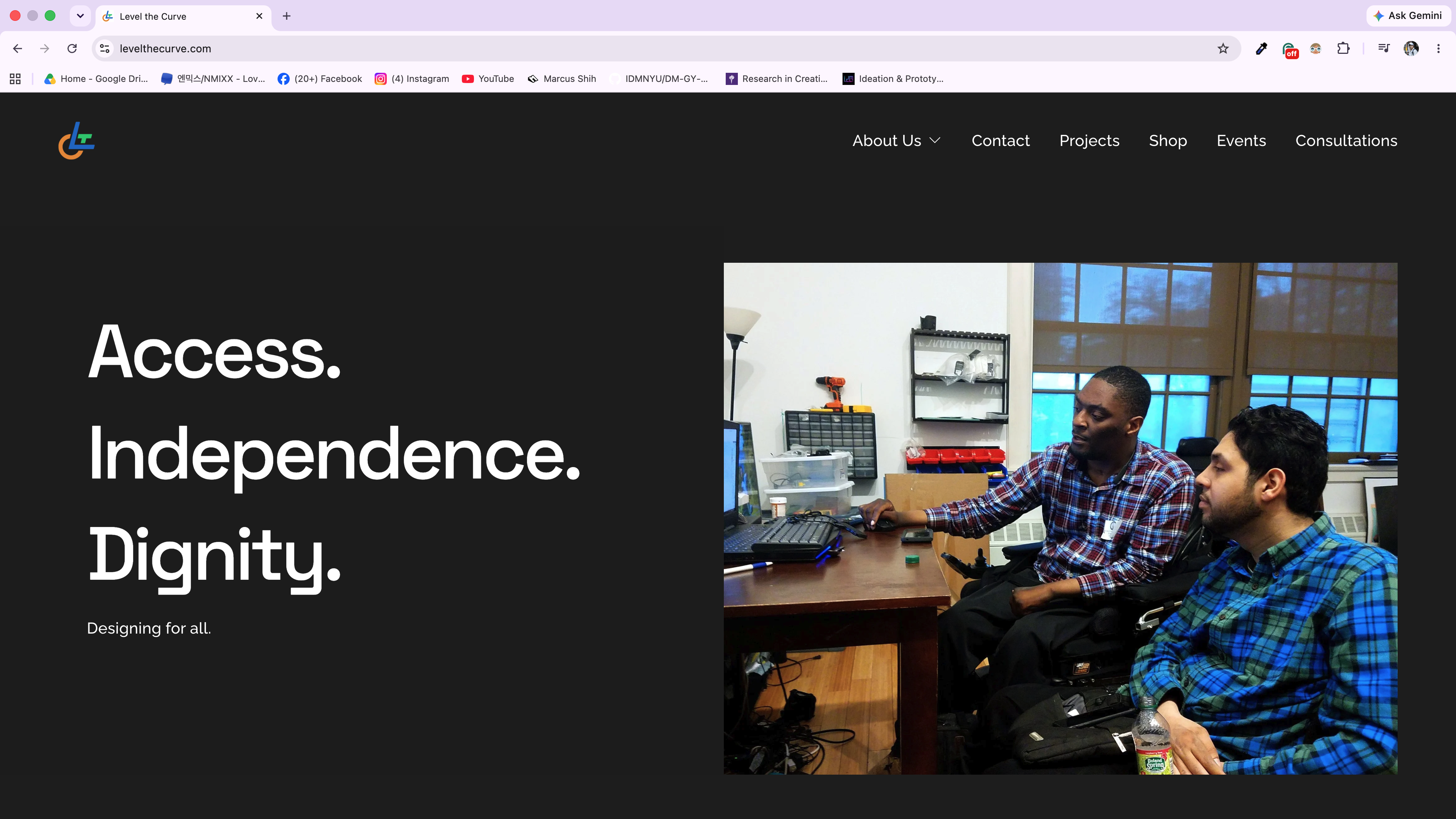
This week, I explored the Level the Curve project and learned more about
their approach to assistive technology design. I looked through their
website and different projects to better understand the types of problems
they are trying to solve.
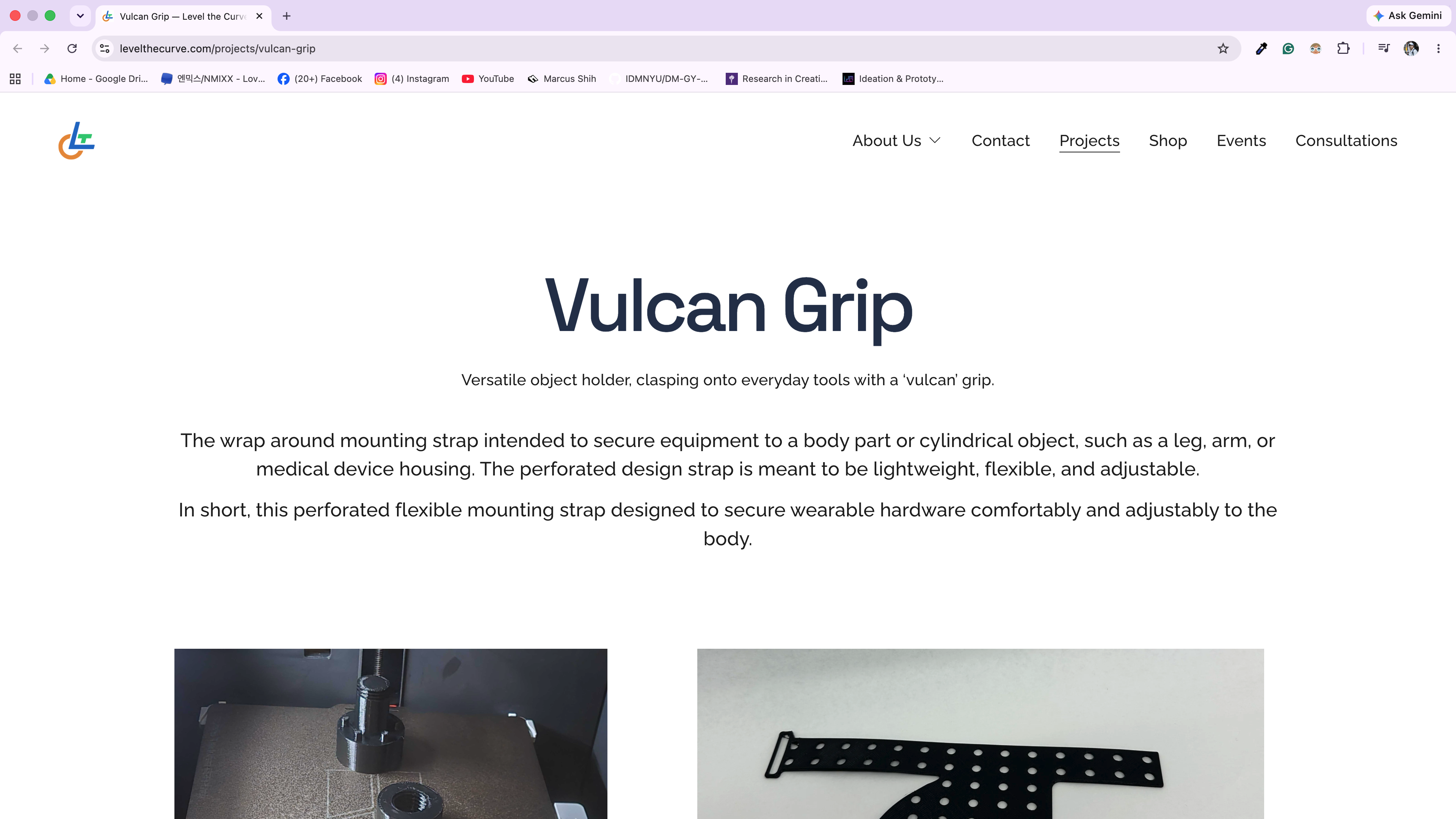
I was especially interested in the Vulcan Grip because it can support different
kinds of activities by helping users hold or interact with objects more easily.
I also found its use in music-related activities interesting because it connects
assistive technology with interaction and creative practices.
I also started learning more about how Level the Curve works with the NYU Ability
Project and how students from the Everyday Assistive Technology VIP may be
able to participate in their projects.
What I Did
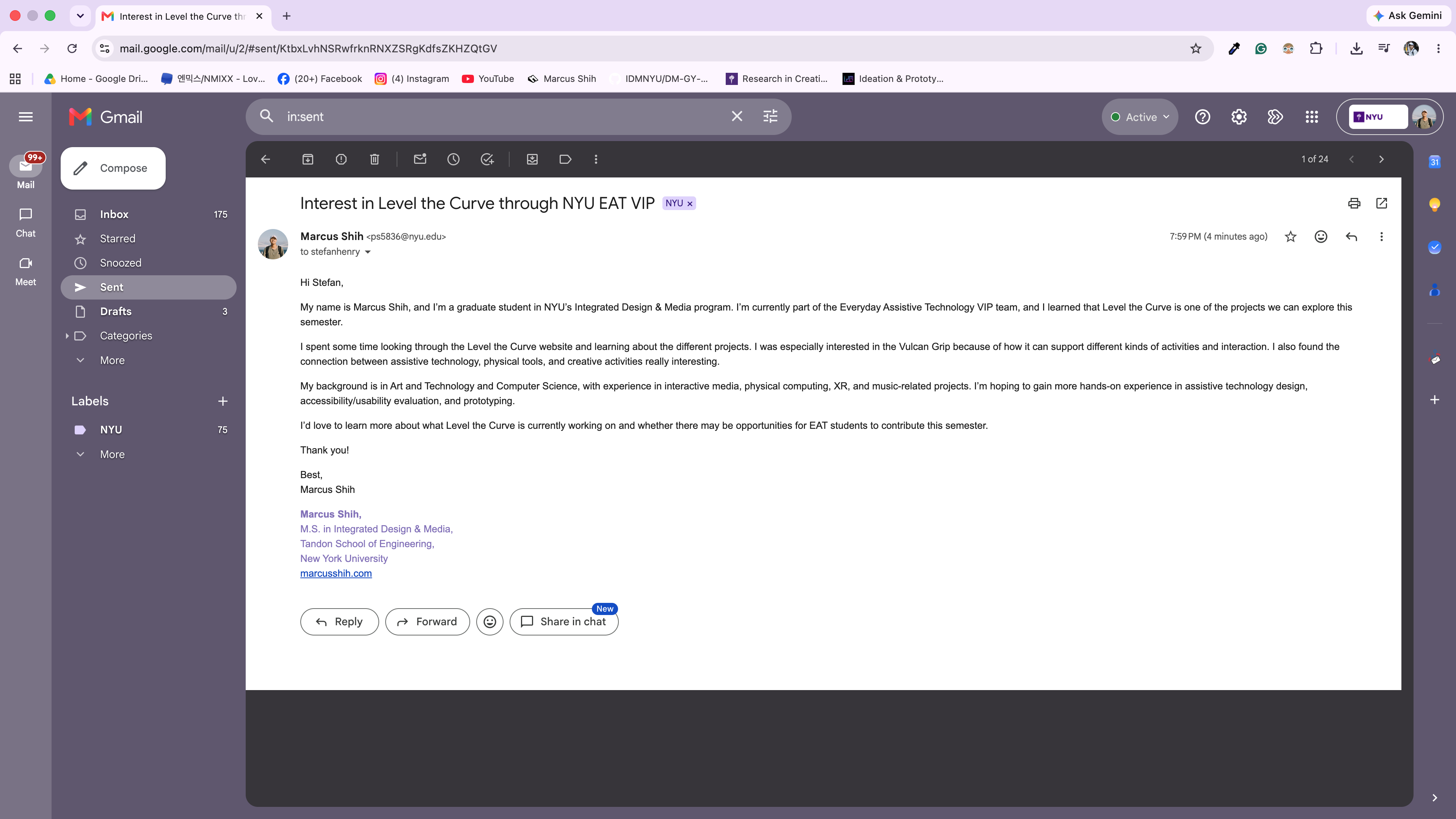
This week, I started by reading through the Level the Curve website to learn more about their goals, design approach, and current assistive technology projects. I looked at several projects, including the Universal Eating Tool, Wheelchair Ramp, Spinal Mobility Chair, and Vulcan Grip, and spent more time looking at the Vulcan Grip because I was interested in how it could support different kinds of activities and interaction. I also learned more about Level the Curve’s collaboration with the NYU Ability Project. After reviewing the website, I reached out to Joseph Kang through Google Chat and emailed Stefan Henry to ask about the current work at Level the Curve and how EAT students may be able to participate. I also messaged Amy to confirm the date of the upcoming Level the Curve meeting and received clarification from her.
What I Learned
What I Learned From looking through the Level the Curve website, I learned
that their approach to assistive technology is strongly connected to real
everyday needs and lived experience. Their projects are not only about
making a tool functional, but also about making it practical, affordable,
comfortable, and something people would actually want to use in daily
life.
I also noticed that many of their projects focus on changing the interaction
between a person and an existing object instead of trying to change the person’s
ability. The Vulcan Grip was a good example of this because it can help users
interact with different objects and activities through an adaptive attachment.
This made me think more about how assistive technology can support not only
basic daily tasks, but also creative activities such as music.
I also learned that Level the Curve works closely with the NYU Ability Project,
which makes the project feel connected to a larger process of research, prototyping,
and testing rather than being only a standalone product design project.
Challenges / Questions
One challenge I had this week was that I could understand the projects from the website, but I still do not know what Level the Curve is currently working on or what kind of role EAT students can realistically take on. The website gave me a good overview, but I still need more context about the current stage of each project and what work is actually available this semester.
Some questions I have are:
- Which Level the Curve projects are currently active?
- What kind of work can EAT students contribute to?
- Are there opportunities to participate in prototyping, testing, or usability evaluation?
- Is the Vulcan Grip still being developed or tested?
- How much interaction do students have with users during the design process?
Reflection
Reflection This week helped me get a better understanding of what Level the Curve is working on and why their approach to assistive technology is interesting to me. I liked that many of their projects start from practical problems in everyday life and try to create solutions that are simple, useful, and realistic for people to use. The Vulcan Grip stood out to me the most because it connects assistive technology with interaction and creative activities. Since I already have experience with music, physical computing, and interactive media, I feel like this could be an interesting direction for me to explore further. At the same time, I still want to learn more about what projects are currently active and what I could actually contribute as an EAT student before deciding whether I want to continue with Level the Curve for a longer period.
Next Steps
My next step is to get a better understanding of what Level the Curve is currently working on and what kind of role I could have as an EAT student. I also want to learn more about the Vulcan Grip and see whether it is still an active project.