Photographic edition
← Ideation & Prototyping

The Lost Archive

Brooklyn · 2151 / Archive 026

Time Capsule III · A Speculative Archaeological Report from 2151

Chapter 01 / 06 — Discovery1 of 6
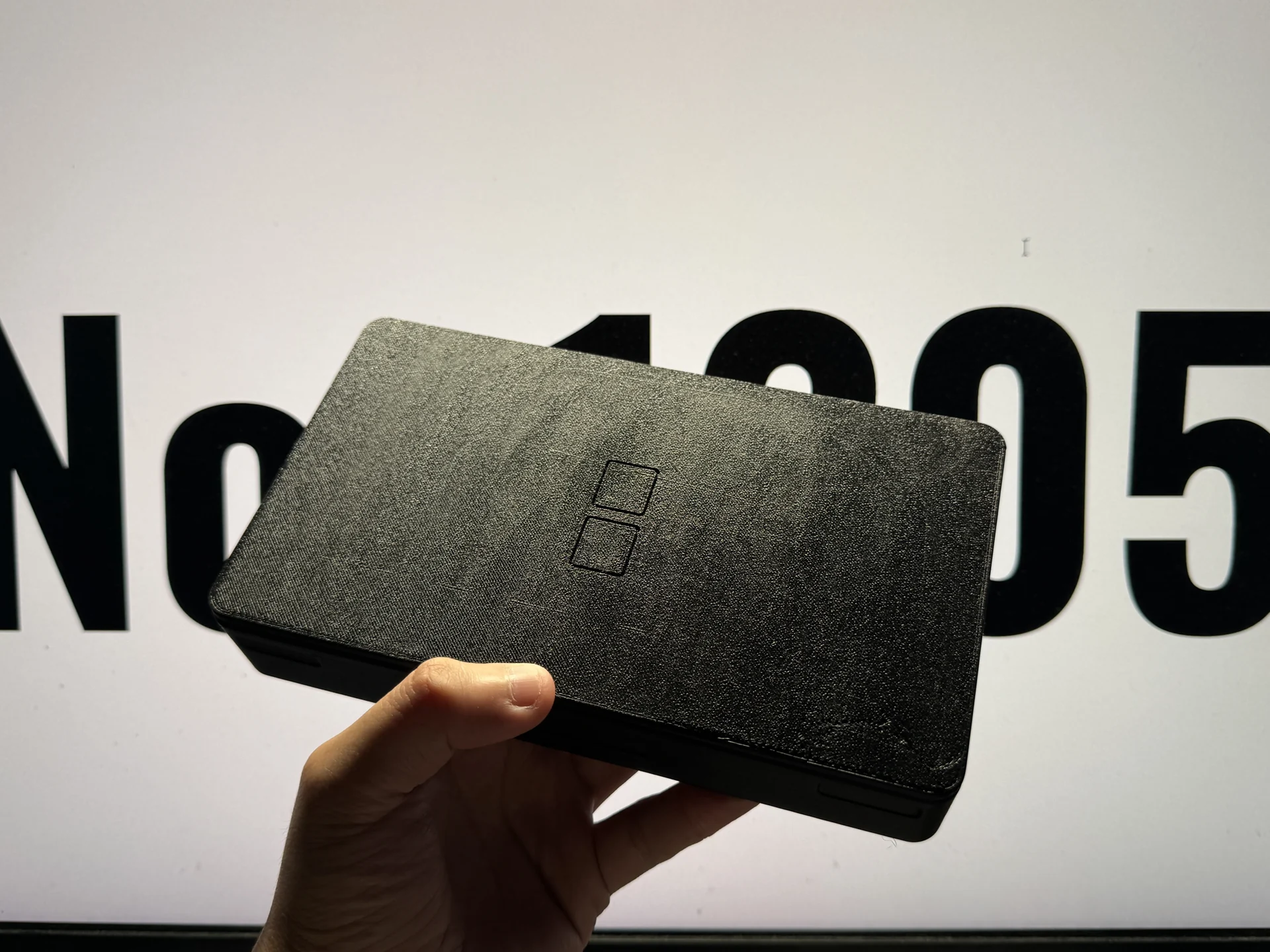
Black closed NDSL-inspired capsule held in a hand
026 / Closed capsule · Exterior examination

01 / Discovery · Archive 026

THE LOST
ARCHIVE

A Discovery from 2026,
Recovered in 2151

Brooklyn, New York · Recovery year 2151

Click or tap the case to begin the investigation.Keyboard: focus the case and press Enter.

02 / The unidentified device

A Familiar Shape.
An Uncertain Purpose.

The controls resemble those of a Nintendo DS Lite. Layer-built plastic and a hollow interior suggest a purpose-built replica. Why preserve the form of a gaming device without its original function?

Click or tap the case to open it.Keyboard: focus the case and press Enter.

Black closed NDSL-inspired capsule held in a hand
026 / Closed enclosure, before interior examination.
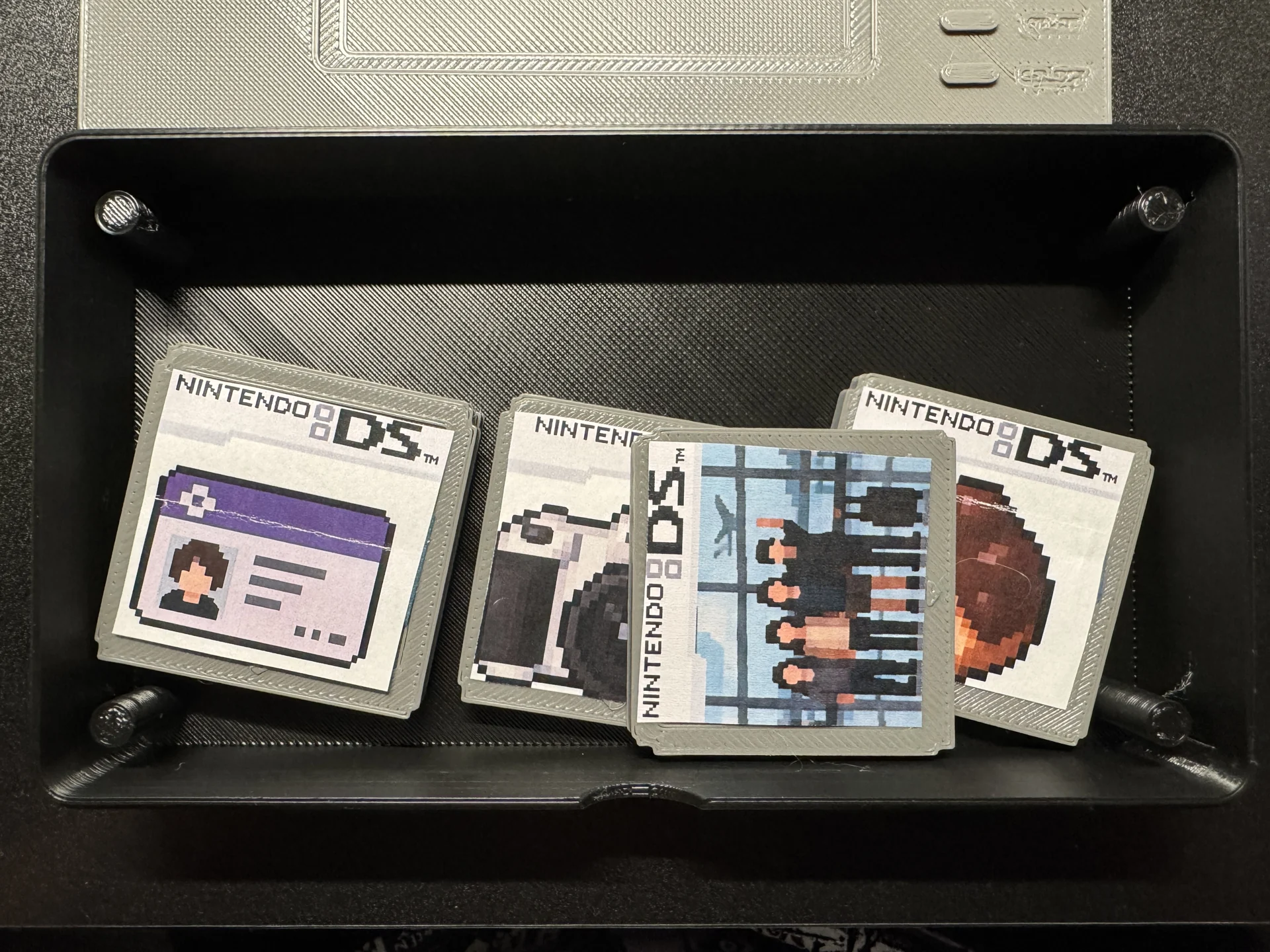
Four illustrated cartridges visible inside the capsule; the full collection contains five
026 / Interior examination — click the photograph to close.
Click the photograph to open the case.Click the photograph again to close the case.
Four illustrated cartridges visible inside the capsule; the full collection contains five
026 / Interior detail — four cartridges visible; five in the complete inventory.

Inventory note 02.1

Five objects inside. Six possible subjects.

The shell may itself be a preserved memory. Childhood, convenience, and symbolism are possible explanations; none is established.

03 / Inside the archive

Fragments
of a Life

Five printed illustrations, one console-shaped shell. Select any object to examine the evidence. Identifying a subject does not establish its significance. Continue whenever you are ready.

All artifacts are available for examination.

Select a cartridge or the shell
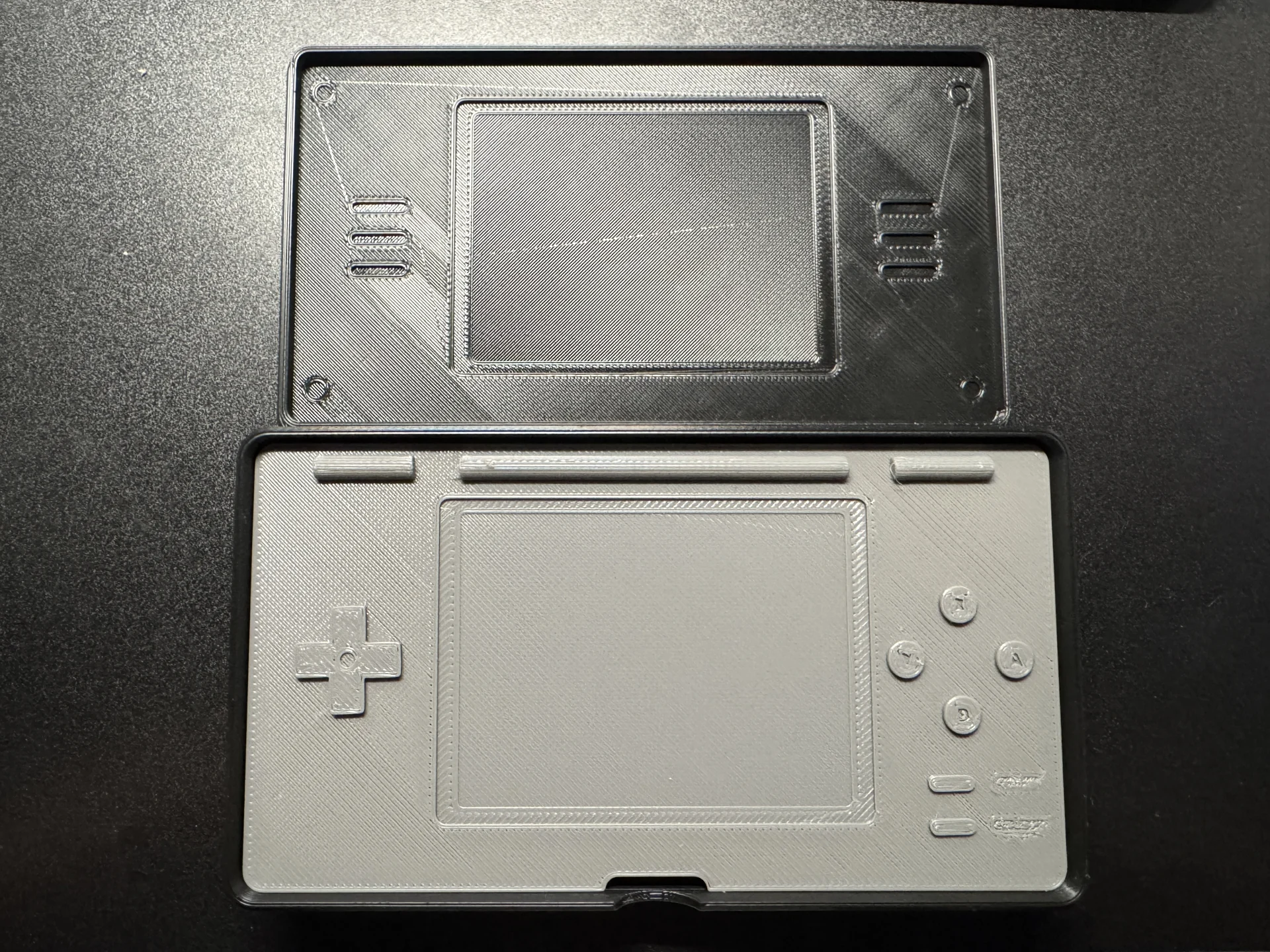
Open console-shaped enclosure with imitation controls
Enclosure / photographic detail

Provisional classification / 026.01

Console-shaped shell

Observable evidence

A hinged, layer-built plastic enclosure with a directional pad, imitation screens, and a hollow interior.

Working interpretation

The form recalls a Nintendo DS Lite, an early portable gaming device. Its modified interior suggests deliberate preservation rather than ordinary play.

Uncertainty

A childhood association is possible. Convenience, nostalgia, and cultural symbolism remain equally unverified.
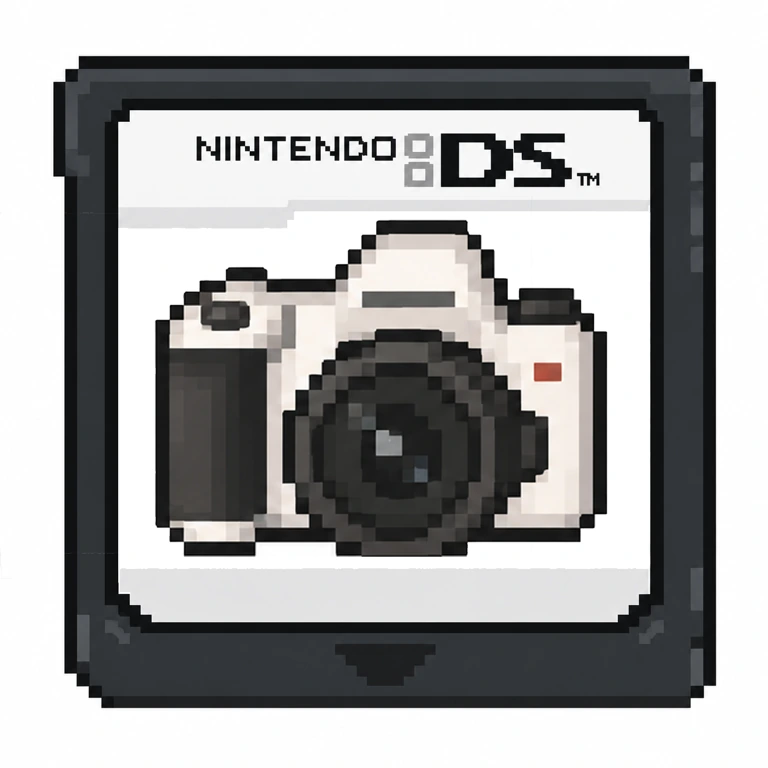
Printed pixel-art design depicting camera emblem
Cartridge label design / reference detail

Provisional classification / 026.02

Camera emblem

Observable evidence

A pixelated camera illustration on a cartridge-shaped support. No photographic mechanism survives within it.

Working interpretation

The image refers to photography. It may identify the owner as a professional visual recorder.

Uncertainty

The emblem cannot distinguish a profession from a personal interest.

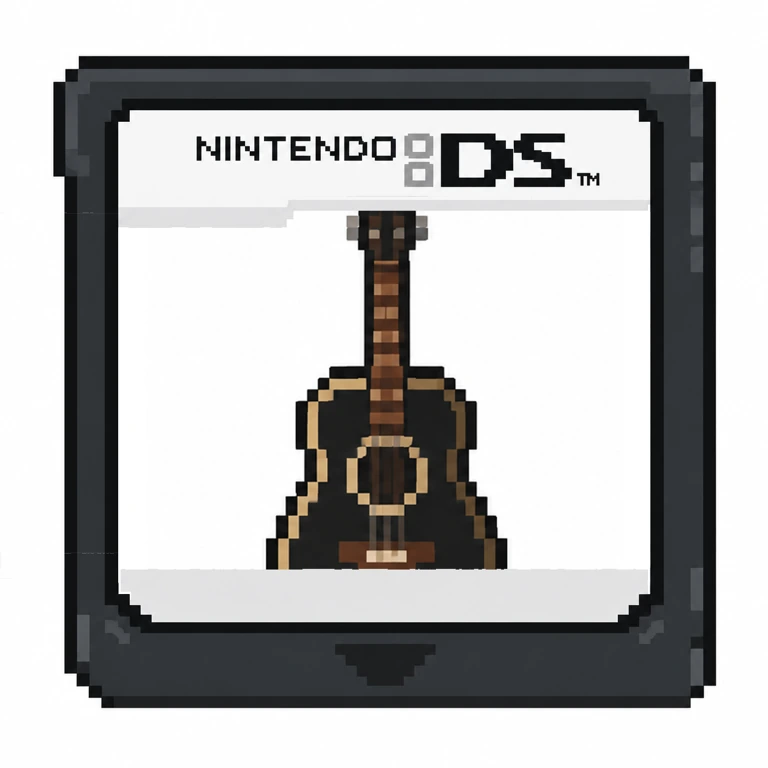
Printed pixel-art design depicting stringed instrument
Cartridge label design / reference detail

Provisional classification / 026.03

Stringed instrument

Observable evidence

A long neck and rounded body identify a guitar in a printed illustration.

Working interpretation

Music belonged to the collection’s subject matter. The owner may have played this instrument.

Uncertainty

It could also refer to another person, a performance, or a recording. Skill and occupation cannot be inferred.

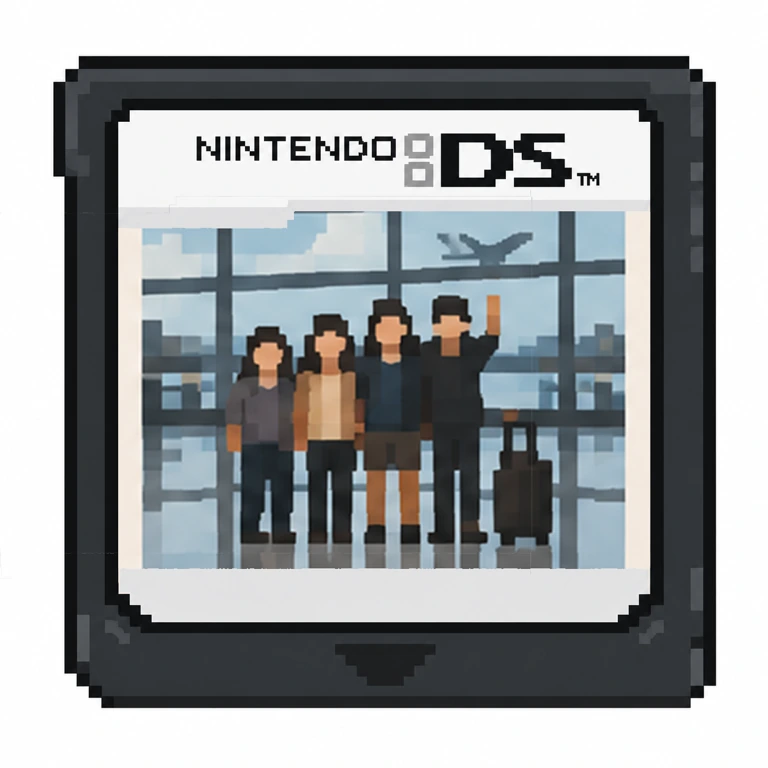
Printed pixel-art design depicting group portrait
Cartridge label design / reference detail

Provisional classification / 026.04

Group portrait

Observable evidence

Several figures appear together in an image framed to resemble an instant photograph.

Working interpretation

The group was likely significant to the person who assembled this archive.

Uncertainty

Family, friends, and colleagues cannot be reliably distinguished. The occasion and location are unknown.

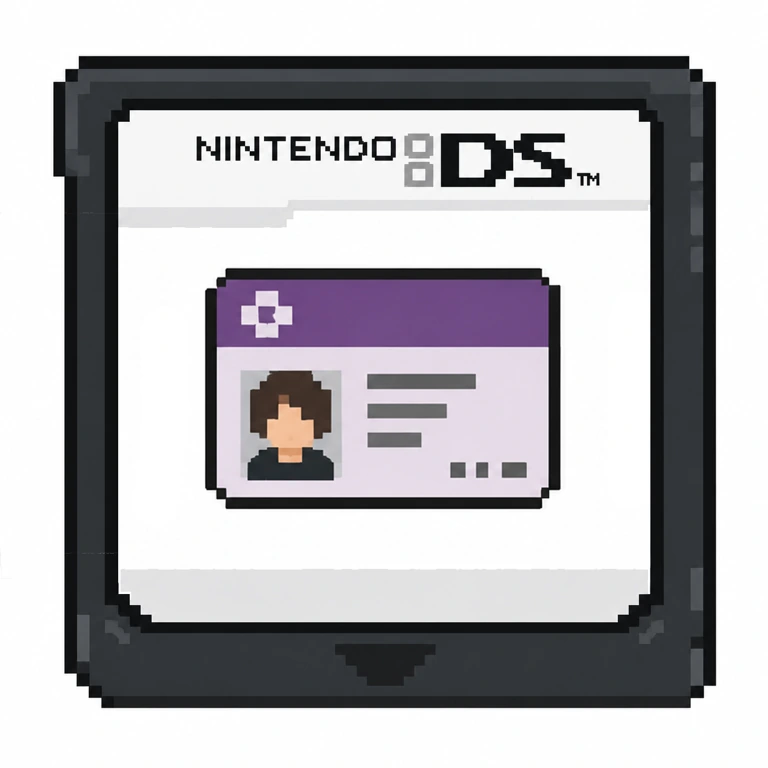
Printed pixel-art design depicting institutional credential
Cartridge label design / reference detail

Provisional classification / 026.05

Institutional credential

Observable evidence

The illustration resembles an identification card. Its reduced detail limits the information that can be read.

Working interpretation

An educational affiliation is probable. It may commemorate admission to a particular institution.

Uncertainty

A single affiliation may be too narrow an explanation. The image could represent several stages of education.

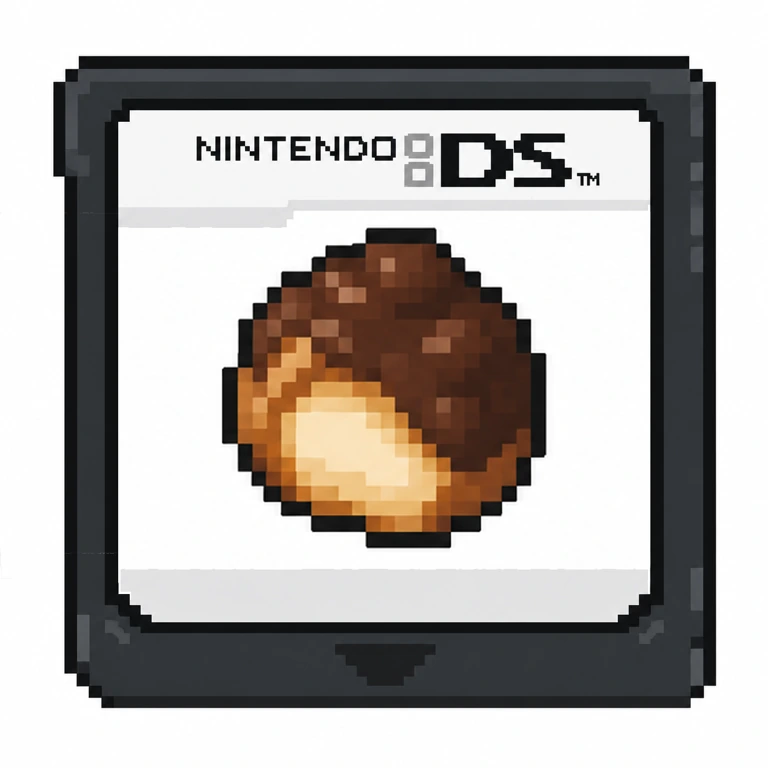
Printed pixel-art design depicting food emblem
Cartridge label design / reference detail

Provisional classification / 026.06

Food emblem

Observable evidence

A rounded, filled food item is depicted with the same care as the instrument and credential.

Working interpretation

Its inclusion may indicate a food shared during a recurring communal or ceremonial occasion.

Uncertainty

This reading may overstate its significance. An ordinary preference is also possible.

04 / The digital evidence

The Objects
Point Elsewhere.

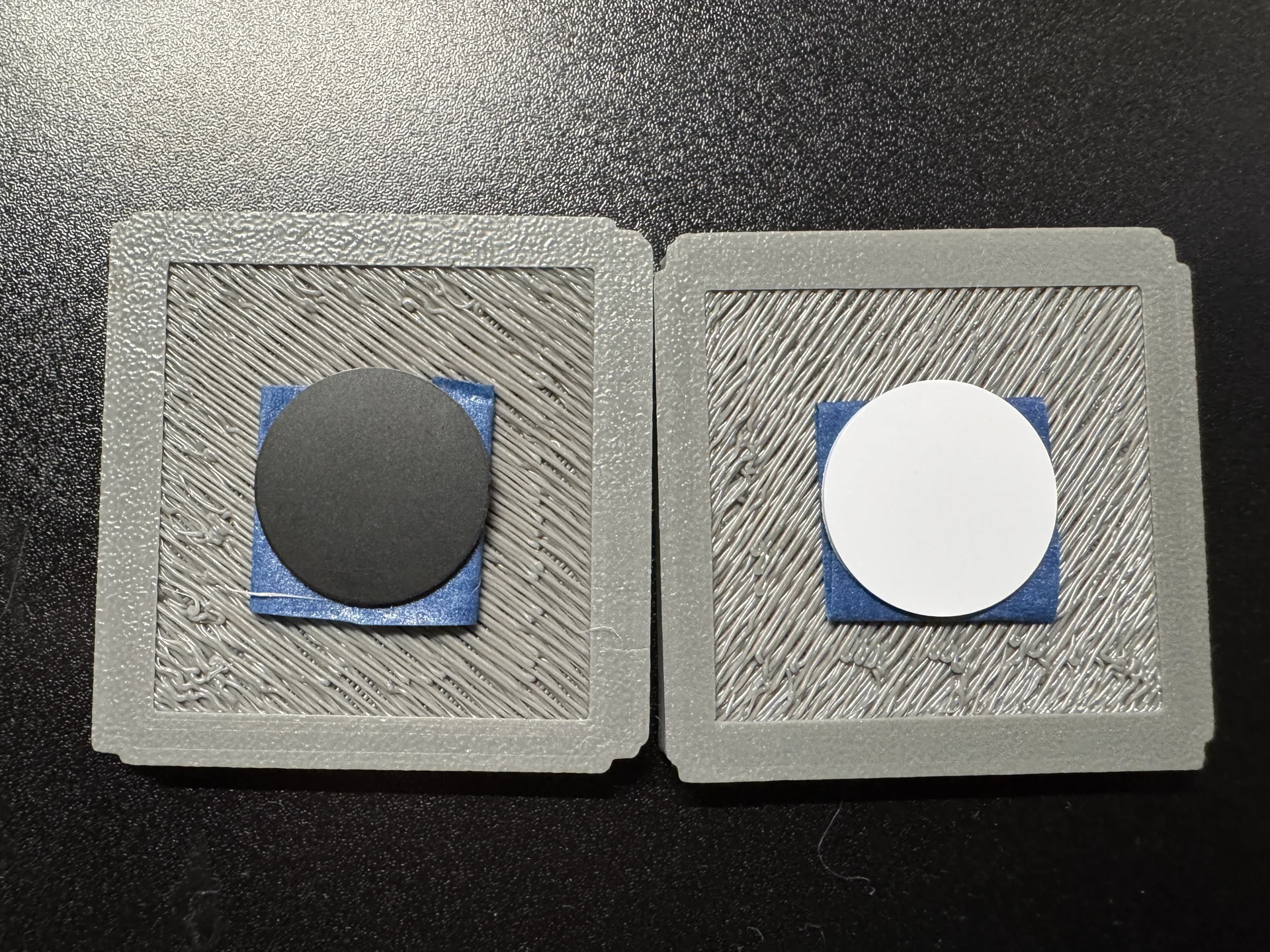
Near-field communication tags are attached to the reverse of the cartridges. These tags once directed a reader to an external digital address.

The illustrations may be only the visible part of the archive.

Backs of two printed cartridges with circular NFC stickers
026 / NFC tag on the reverse of a cartridge.
Retrieval record / 026

A reference survives.
Can its record be recovered?

Awaiting retrieval attempt.

Four illustrated cartridges visible inside the capsule; the full collection contains five
026 / A coordinated collection, purpose unresolved.

05 / Research conclusion

A Personal Archive.
An Incomplete Reading.

The selection appears intentional. The surviving evidence supports a collection of personal references, but not a complete account of a life.

Supported by the objects

Preservation was deliberate.

The enclosure holds a coordinated set of representations. Its gaming-device form may itself belong to the collection.

Working hypothesis

A life in images and music?

The camera may suggest a professional visual recorder; the instrument suggests an involvement with music. Neither identifies an occupation with confidence.

Still unresolved

The relationships are missing.

A group portrait, an educational credential, and a food emblem suggest affiliations. They cannot tell us who mattered, what changed, or why these particular things were kept.

Classification: personal archive, provisional.
The difference between a plausible account and a recovered memory remains substantial.

06 / What remains

Black closed NDSL-inspired capsule held in a hand
026 / The closed capsule, after examination.

What Survives
Is Not Always
What Was Meant.

The objects survived. Their meanings did not remain entirely intact.

We can identify what they represented in general terms, but not necessarily why they mattered to the person who preserved them.

Preserving physical objects does not necessarily preserve their meanings.

End of report / Classification remains provisional

Back to 2026 / Project documentation

Behind the Archive

Time Capsule Part III — The Future Archaeologist
Concept, narrative structure, and a first digital prototype.

Concept development

Part I selected six objects from my life. Part II translated five of them into illustrated cartridges, connected them to digital material through NFC, and made the NDSL form the sixth memory. Part III asks what happens when those connections outlast their destinations.

The report shifts the viewpoint from someone who knows these objects to researchers who only have their surfaces. Their mistakes come from missing context: a camera can suggest a profession, and a familiar snack can seem ceremonial.

Part I: Objects & Memories ↗
Part II: Physical Objects to Digital Memories ↗

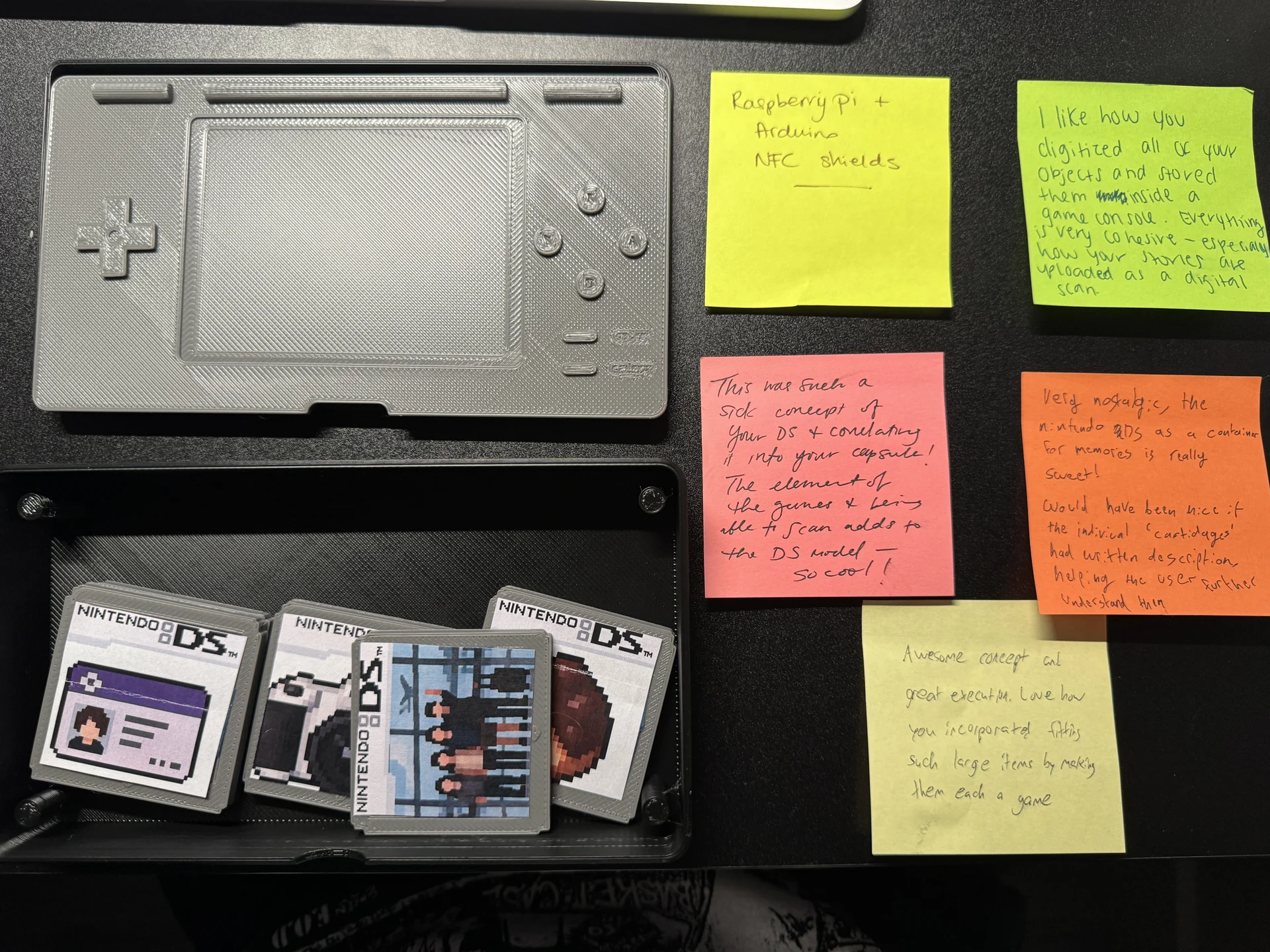
Time capsule displayed alongside classroom feedback notes
2026 / Classroom exhibition and feedback. Process documentation, outside the fictional report.

Setting & perspective

I set the report in 2151, exactly 125 years after 2026, and placed the recovery in a redeveloped area of Brooklyn. These details belong to the fiction; they are not claims about the capsule’s actual history.

The researchers never knew the creator. That lets them recognize a camera or a guitar while missing the personal experiences behind them. An interactive report suits a capsule that already joins physical objects to digital references: the reader examines the evidence, then discovers the limits of access.

Storyboard

  1. 01 / Discovery
    Storyboard sketch pending Frame 01 / Add original drawing

    Establish the year, location, and unexplained enclosure.

  2. 02 / The device
    Storyboard sketch pending Frame 02 / Add original drawing

    Reveal five cartridges and question the meaning of the shell.

  3. 03 / Inside the archive
    Storyboard sketch pending Frame 03 / Add original drawing

    Invite close examination; separate observation from inference.

  4. 04 / Digital evidence
    Storyboard sketch pending Frame 04 / Add original drawing

    Discover NFC tags, then attempt a simulated retrieval that ends in ARCHIVE NOT FOUND.

  5. 05 / Research conclusion
    Storyboard sketch pending Frame 05 / Add original drawing

    Separate supported conclusions from plausible but incomplete interpretations.

  6. 06 / What remains
    Storyboard sketch pending Frame 06 / Add original drawing

    Return to the collection with a more limited claim about what is knowable.

Interpretation & original meaning

The fictional researchers never receive these explanations. This comparison draws on the existing documentation in Parts I and II.

026.01

Console-shaped shell

2151 / Hypothesis

The form recalls a Nintendo DS Lite, an early portable gaming device. Its modified interior suggests deliberate preservation rather than ordinary play.

2026 / Documented meaning

A gift from my parents in elementary school. Playing games in Japanese led me to search for guides and learn through curiosity.

026.02

Camera emblem

2151 / Hypothesis

The image refers to photography. It may identify the owner as a professional visual recorder.

2026 / Documented meaning

My Canon 5D Mark II, bought on a birthday in college, marked a shift from casual picture-taking toward a more intentional hobby.

026.03

Stringed instrument

2151 / Hypothesis

Music belonged to the collection’s subject matter. The owner may have played this instrument.

2026 / Documented meaning

My first guitar began with unwanted lessons arranged by my mom in middle school. Resistance became enjoyment, practice, and confidence.

026.04

Group portrait

2151 / Hypothesis

The group was likely significant to the person who assembled this archive.

2026 / Documented meaning

A photograph with my family and girlfriend at Taiwan Taoyuan International Airport before moving to New York, taken by friends who came to see me off.

026.05

Institutional credential

2151 / Hypothesis

An educational affiliation is probable. It may commemorate admission to a particular institution.

2026 / Documented meaning

My student IDs from high school, National Tsing Hua University, and NYU are evidence of different ages and periods of belonging.

026.06

Food emblem

2151 / Hypothesis

Its inclusion may indicate a food shared during a recurring communal or ceremonial occasion.

2026 / Documented meaning

I-Mei Chocolate Mini Puffs are a childhood favorite. Receiving them at an NYU Taiwanese student gathering made an ordinary snack feel special far from home.

3D asset preparation

I reused the original base, control deck, and lid STLs from Part II. Their geometry is converted to indexed GLB without simplifying the shapes or changing the original files. The three web meshes total about 0.80 MB, compared with 2.85 MB of ASCII STL.

The STLs contain separate print parts rather than an assembled model. The lid rotates about a rear-edge X-axis pivot inferred from the photographs. The control deck lifts separately to reveal the collection. Exact hinge placement remains an assembly approximation because hinge hardware and constraints are absent.

The cartridge bodies and circular NFC stickers are photo-based reconstructions. No cartridge STL is present in the supplied folder. The five original pixel-art images are applied as labels. The five new photographs are optimized as WebP images. Four show the capsule, its contents, and NFC stickers; the exhibition photograph appears only in this process documentation.

Model provenance and measured bounds ↗

Medium & choreography

The physical capsule is now the center of a Three.js scene. A coordinated GSAP timeline moves the camera, opens the lid, lifts the deck, separates the cartridges, and returns the collection to the container. Scene changes interrupt the current timeline and animate toward deterministic positions, including when navigating backward.

Cartridges can be selected in the scene or through keyboard-accessible controls. The recovery scene turns one cartridge over to reveal an NFC sticker and performs a simulated scan. The light and metadata are narrative effects; no NFC hardware or external memory resource is accessed.

The photographic edition preserves the same written story and controls when WebGL is unavailable. Reduced motion sets each scene directly, rendering pauses when the page is hidden, and pixel density is capped for mobile screens.

Design & implementation

Bebas Neue gives the titles a condensed editorial voice, while Space Grotesk carries the narrative and annotations. Shared navigation and restrained spacing keep the documentation connected to the portfolio. Full-bleed photography establishes the opening, while warm paper tones distinguish the examination and findings. The dark retrieval scene creates a pause where an image or recording might have appeared.

Original Part II label designs supply the cartridge textures. The photographic edition uses the new closed-capsule image at the beginning and end, supported by the open-capsule and NFC detail views. Four cartridges are visible in the contents photograph; Part II confirms an inventory of five. The report’s recovery setting and retrieval outcome are fictional; the images document the 2026 prototype.

Chapter links use URL fragments, supporting direct entry and browser Back. A thumbnail selection lets readers examine artifacts in any order, with a larger image and research notes beside it. A brief recovery sequence is simulated locally; it does not scan hardware or test real links. With JavaScript unavailable, the full article and a static retrieval result remain readable.

Reflection / Draft for review

In Part I, I could explain why each object mattered to me. In Part III, I wanted to see how much of that meaning someone else could recover. Opening and examining the 3D capsule puts the physical evidence first. The researchers can identify music or photography, but those categories cannot explain how an unwanted lesson became an interest, or how a snack became more meaningful after moving abroad.

I think the shell is the clearest example: it is easy to catalogue it as a container and miss that its form already holds a memory. The failed digital connection extends that problem. Preserving access instructions alone does not preserve the material or the relationships behind them.

For a next iteration, the original cartridge mesh, measured hinge location, and isolated photographs of each finished cartridge would make the evidence more consistent. Reader feedback can help determine whether the uncertainty feels credible and whether the final retrieval creates the intended pause.