← Ideation and Prototyping / Week 05 / Assignment

GenAI as
Creative Material.

An Iterative Exploration of Loneliness Through Edward Hopper's Automat

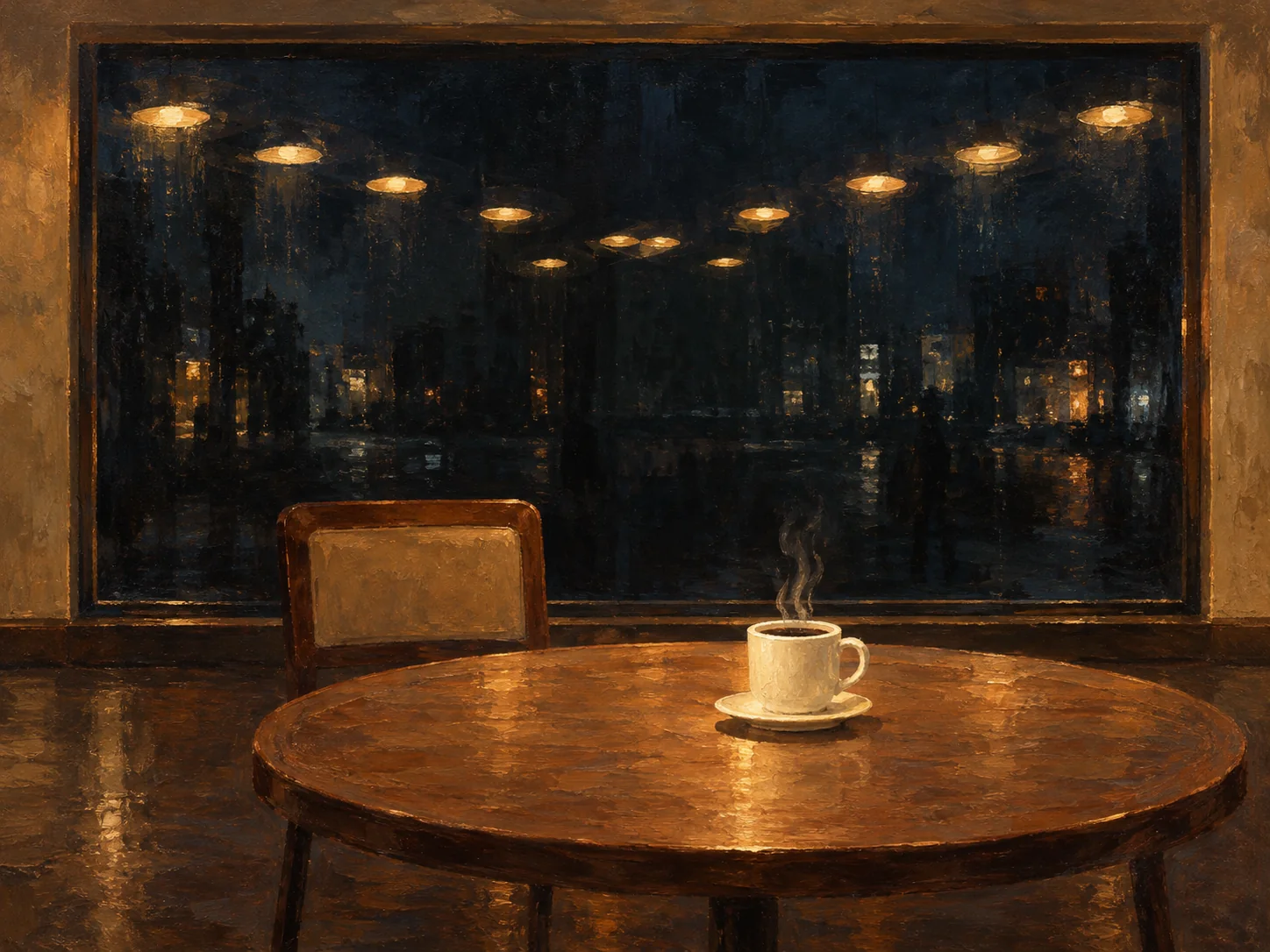
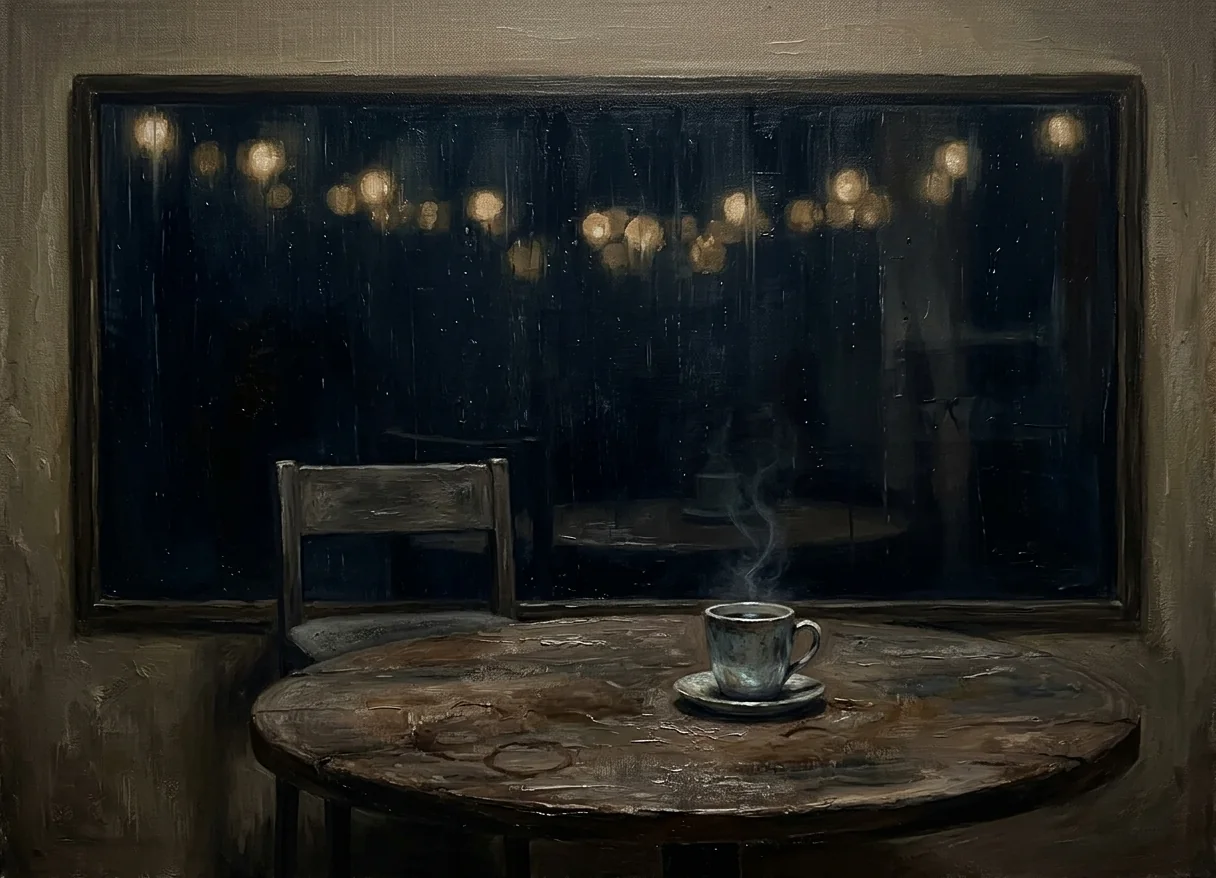
A dark, muted painting of an empty chair, wooden table, steaming coffee cup, and dark window with blurry light reflections.
Selected Final · Google Gemini · Round 2 · Est. generation time: 1m 25s

Can AI communicate loneliness through composition and atmosphere without relying on a solitary human figure? Starting with Hopper’s Automat, I moved between drawing, creative coding, photography, and collage, asking three models to respond to each human-made input. After four rounds, I returned to an unexpected image from Round 2.

Course
Ideation & Prototyping
Year
2026
Materials
Generative AI / Creative Coding / Photography / Digital Collage
Tools
Adobe Firefly, Google Gemini, ChatGPT Images, p5.js

Steps 1–3 / Reference & research

The starting point: Automat

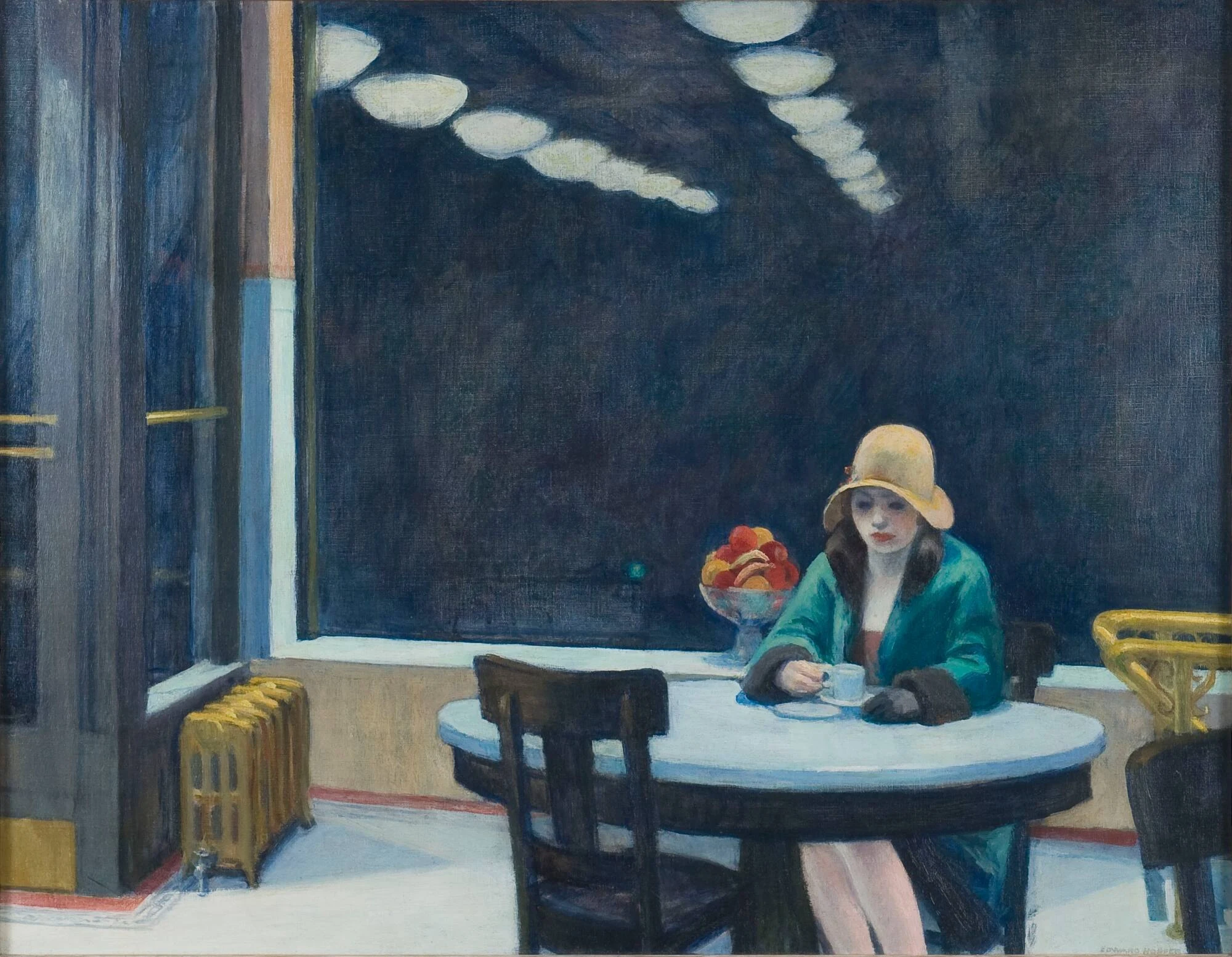
Edward Hopper’s Automat: a woman looks down at her cup beside a dark window reflecting rows of ceiling lights.
Edward Hopper · Automat · 1927 · Oil on canvas · Des Moines Art Center, Iowa. Reproduction via Wikimedia Commons.

I chose Automat because I like how quiet it feels, even though the scene itself is quite simple. The woman, the dark window, and the repeated lights make the space feel lonely without telling us exactly what happened. I'm especially interested in how lighting and composition can create an emotional feeling without much of a story. I wanted to see whether different AI models would understand those relationships, or just reproduce a familiar image of someone sitting alone.

Hopper (1882–1967) painted everyday urban life through carefully composed interiors and light. An automat was a self-service restaurant associated with early twentieth-century city life. Des Moines Art Center holds the painting.

I focused on the asymmetrical figure/ground relationship: one seated woman against the almost-black window. That negative space holds the repeated ceiling-light reflections, while the round table, cup, and chair anchor the warm interior.

The reflected lights direct attention toward the figure, but the mood stays open: quiet contemplation or isolation? Whitney’s interpretation leaves solitude versus alienation unresolved. I didn’t want to assume she was simply sad.

The Wikimedia Commons reproduction is identified as public domain in the United States because the work was published before January 1, 1931. This is a U.S.-specific statement; reuse may be restricted in other jurisdictions.

Round 01 / Steps 4–7

01 / Analyze: Hand-drawn analysis → AI

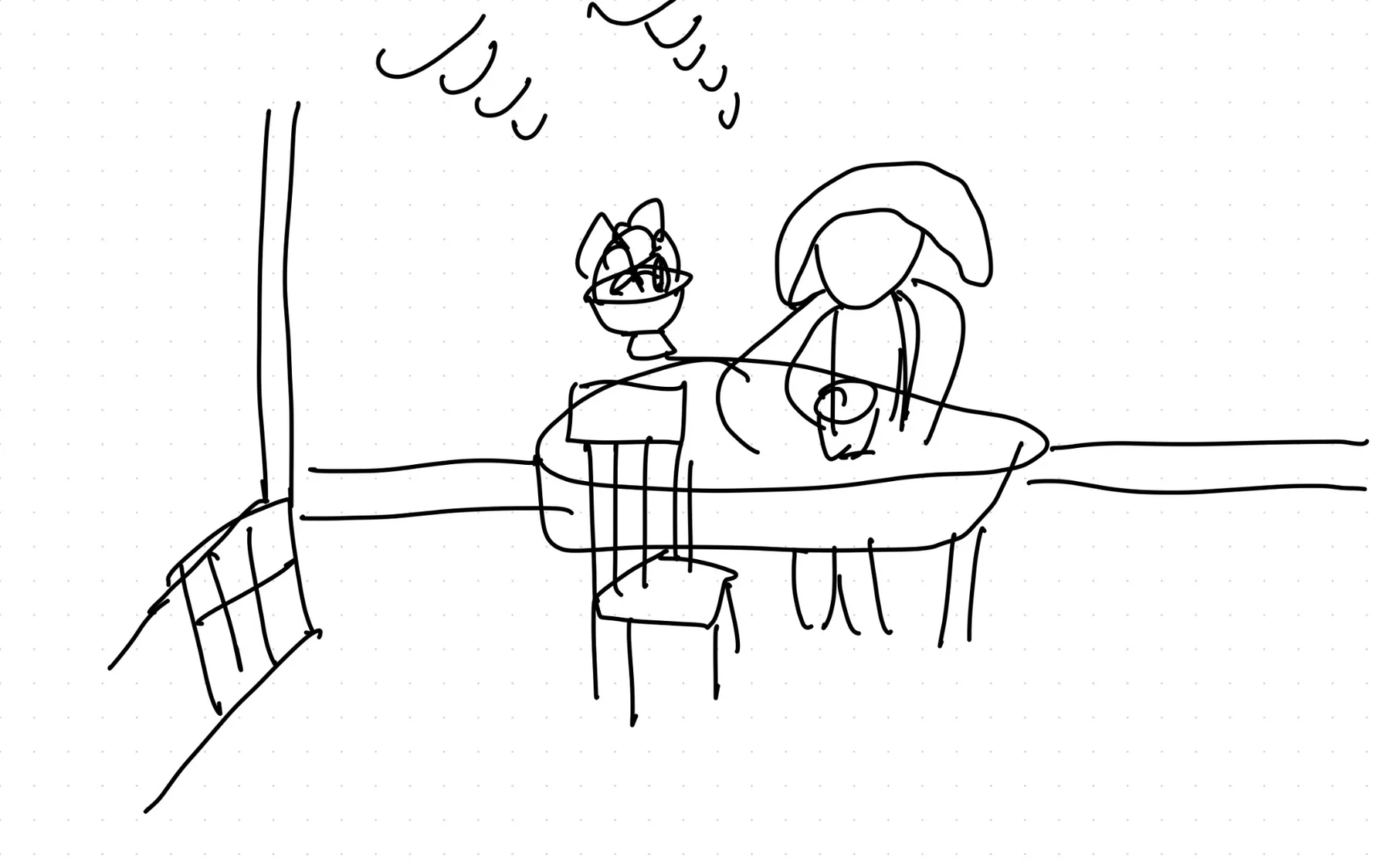
Black-line composition study of a seated woman, cup, table, chairs, and receding ceiling lights.
Human-made · Hand-drawn study

The human decision

I drew a quick black-line composition study rather than copying all of the original details. I included the woman and her hat, the cup and table, empty chairs, the window frame, and repeated overhead lights. The sketch was imperfect, but the simplified spatial relationships were the point. I was curious about whether the AI would follow the sketch or the description when they were not equally precise.

View prompt · Round 01

A woman sits alone at a small table inside a cafe late at night. She wears a dark coat and a cloche hat, and she looks down into a cup of coffee. The setting is quiet and emotionally distant. The composition is simple and structured, with repeated round ceiling lights receding into space, warm interior lighting, and a large dark window behind the woman that reflects the lights but reveals almost nothing outside. The image creates a feeling of loneliness, isolation, and stillness. The perspective places the viewer slightly across from the woman, emphasizing the empty space around her. The atmosphere is calm, quiet, and psychologically tense. See my image prompt, a rough sketch, that illustrates these dynamics. There should be no sketch lines, no pencil marks, no outlines in the final image.

One initial result per platform. Prompts may have minor interface-specific variations.

Three AI responses

ChatGPT Images

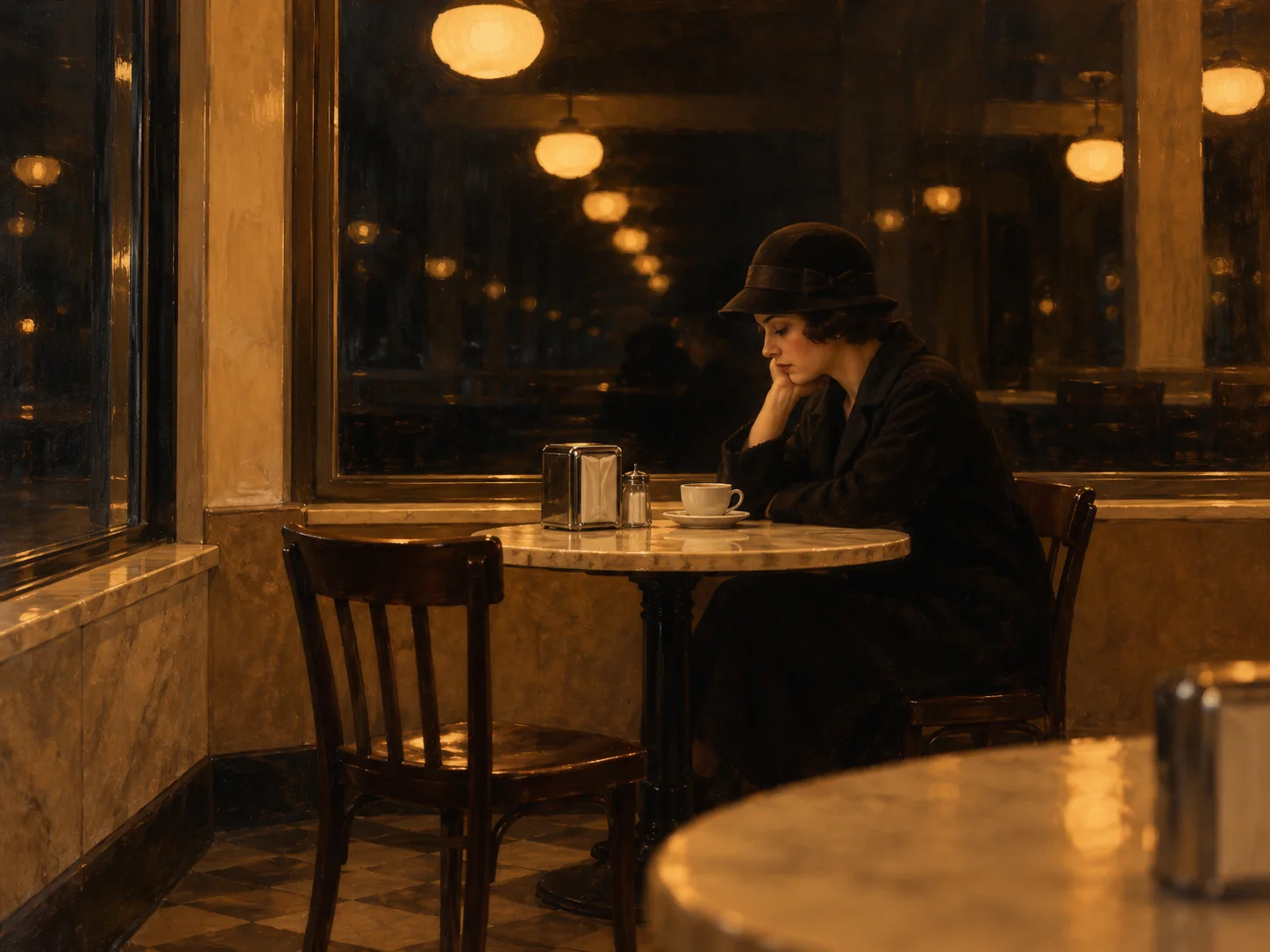
Warm painterly café scene with a woman leaning her head on her hand.
AI-generated · ChatGPT Images · Round 1 · Est. generation time: 1m 45s

ChatGPT's result is closer to an oil painting in its texture and warm color. The woman is leaning her head on her hand, which I did not specifically request. I felt this made her look more obviously sad or tired, turning an ambiguous kind of loneliness into a more recognizable emotional cliché.

Google Gemini

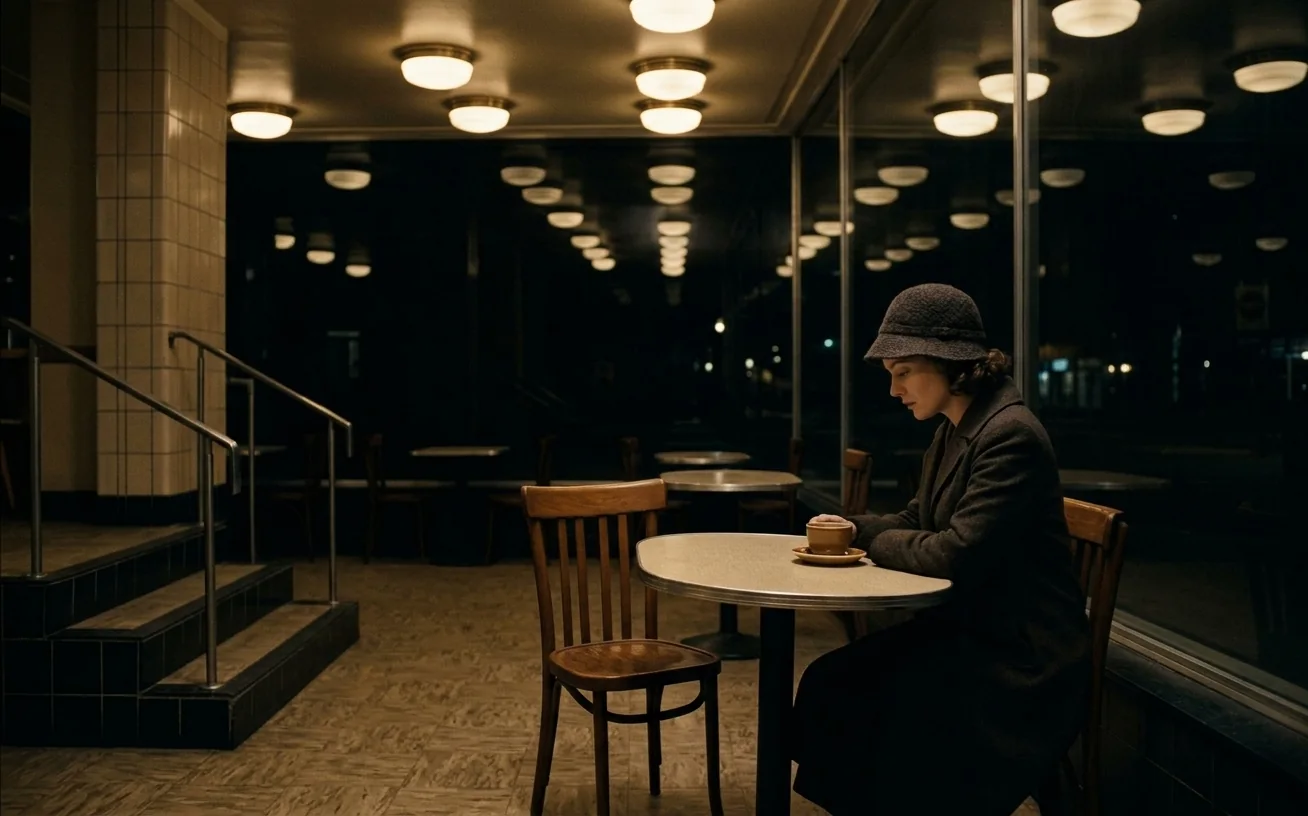
A lone woman in a wide café interior with added stairs and furniture on the left.
AI-generated · Google Gemini · Round 1 · Est. generation time: 2m 20s

Gemini expanded the space and added stairs and extra furniture on the left. I found the stairs interesting because my rough sketch had slanted and vertical lines on that side, so it may have interpreted them as architecture. Its lighting repetition is pronounced, and the wider empty area gives the image a lonely feeling, even though it is quite different from Hopper's painting.

Adobe Firefly

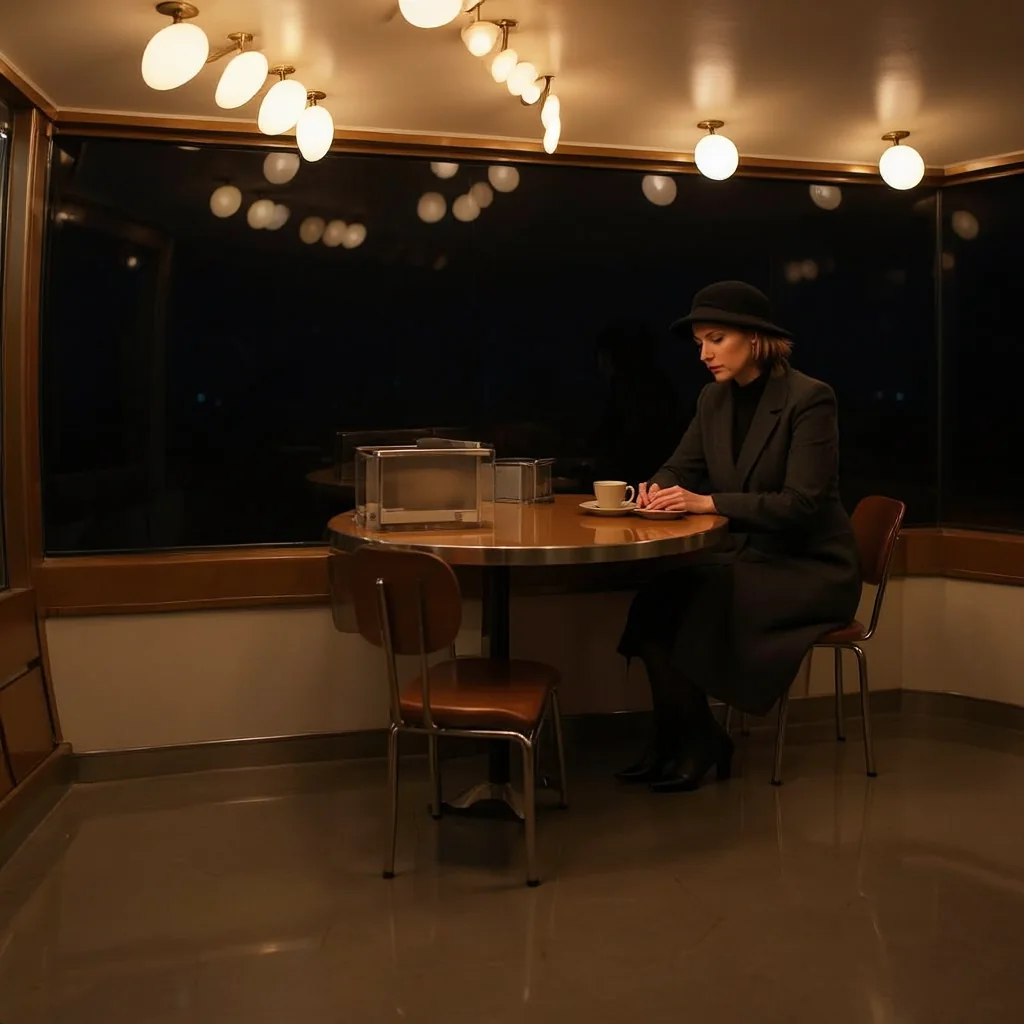
A woman at a round café table in a bright, polished interior with dark windows.
AI-generated · Adobe Firefly · Round 1 · Est. generation time: 1m 30s

Firefly captured the basic setup of a woman sitting at a round table with dark windows behind her. But it looks more photographic than painterly. The room is bright and polished, and it adds contemporary details like an elaborate arrangement of ceiling lights and furniture. The loneliness feels somewhat weaker because the space is so carefully finished.

What I took into the next decision

All three models could identify a woman alone in a café. But they interpreted the mood and space differently, often adding extra objects or turning loneliness into familiar visual conventions. This made me wonder whether I could communicate the same feeling without the woman at all.

Round 02 / Steps 8–10

02 / Remove: p5.js human remix → AI

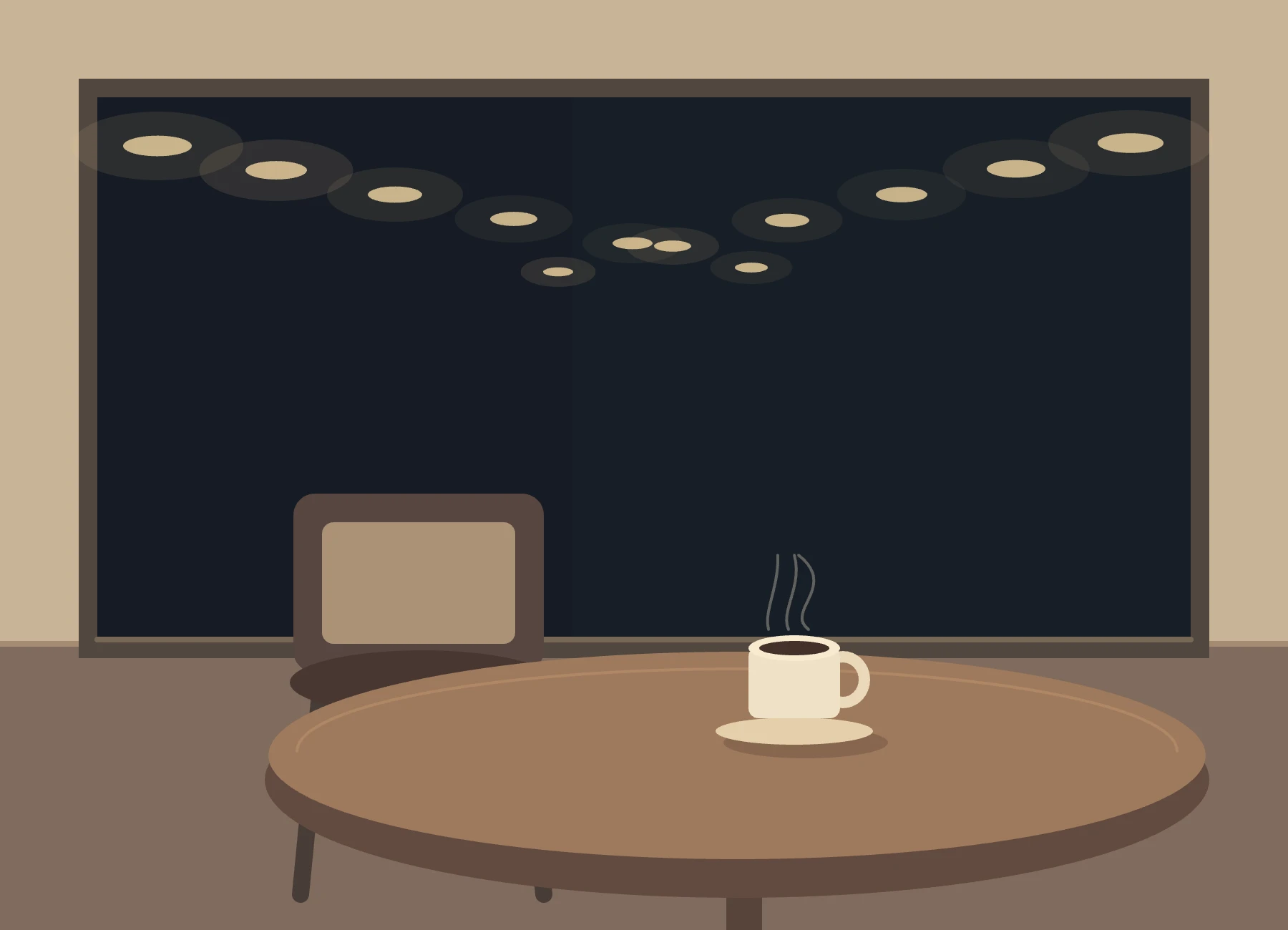
Actual p5.js canvas: an empty chair and coffee cup in front of a dark window with two rows of reflected lights.
Human-made · p5.js creative coding

The human decision

After Round 1, I noticed that all three images relied on a lone female figure to communicate loneliness. I wanted to remove that shortcut, so I used creative coding to make an empty version of the space. My p5.js sketch kept a dark window, repeated light reflections, a round table, an empty chair, and a cup of coffee. The lights gently flicker, the coffee has animated steam, and clicking toggles the light reflections. It was meant to test whether lighting, emptiness, and repetition could communicate isolation without a person.

View prompt · Round 02

Using the uploaded creative coding sketch as a visual reference, reinterpret this scene as an atmospheric oil painting. Preserve the main composition and spatial relationships, while freely interpreting the lighting, colors, textures, and details. Focus on creating a strong sense of loneliness, stillness, and emotional distance.

View p5.js source

Download the original sketch


                    let lightsOn = true;

function setup() {
  createCanvas(900, 650);
  pixelDensity(2);
}

function draw() {
  background("#c9b496");
  drawRoom();
  drawWindow();
  drawLights();
  drawChair();
  drawTable();
  drawCoffeeCup();
  drawSteam();
}

function drawRoom() {
  noStroke();
  fill("#806b5c");
  rect(0, 450, width, 200);
  stroke("#a48b74");
  strokeWeight(4);
  line(0, 450, width, 450);
}

function drawWindow() {
  noStroke();
  fill("#514740");
  rect(55, 55, 790, 405);
  fill("#151b24");
  rect(68, 68, 764, 379);
  fill(35, 43, 51, 40);
  rect(400, 68, 432, 379);
  stroke("#766756");
  strokeWeight(4);
  line(68, 447, 832, 447);
}

function drawLights() {
  if (!lightsOn) return;
  noStroke();
  for (let i = 0; i < 6; i++) {
    let x = 110 + i * 83;
    let y = 102 + i * 17;
    let size = 48 - i * 5;
    let glow = 20 + sin(frameCount * 0.025 + i) * 8;
    fill(255, 211, 151, glow);
    ellipse(x, y, size * 2.5, size);
    fill(255, 226, 170, 190);
    ellipse(x, y, size, size * 0.3);
  }
  for (let i = 0; i < 6; i++) {
    let x = 790 - i * 80;
    let y = 100 + i * 18;
    let size = 46 - i * 5;
    let glow = 20 + sin(frameCount * 0.025 + i + 2) * 8;
    fill(255, 211, 151, glow);
    ellipse(x, y, size * 2.5, size);
    fill(255, 226, 170, 190);
    ellipse(x, y, size, size * 0.3);
  }
}

function drawChair() {
  stroke("#483c37");
  strokeWeight(12);
  line(225, 470, 210, 625);
  line(365, 470, 380, 625);
  noStroke();
  fill("#574640");
  rect(205, 345, 175, 125, 15);
  fill("#ab9277");
  rect(225, 365, 135, 85, 8);
  fill("#483732");
  ellipse(295, 477, 185, 45);
}

function drawTable() {
  stroke("#57443a");
  strokeWeight(25);
  line(520, 550, 520, 660);
  noStroke();
  fill("#624a3f");
  ellipse(515, 545, 660, 165);
  fill("#9e795c");
  ellipse(515, 528, 655, 145);
  noFill();
  stroke(220, 177, 128, 65);
  strokeWeight(2);
  arc(515, 525, 615, 115, PI, TWO_PI);
}

function drawCoffeeCup() {
  noStroke();
  fill(42, 30, 26, 50);
  ellipse(563, 519, 115, 22);
  fill("#e5cfaa");
  ellipse(555, 511, 110, 19);
  noFill();
  stroke("#ead7b9");
  strokeWeight(8);
  ellipse(589, 475, 30, 32);
  noStroke();
  fill("#eee0c6");
  rect(523, 452, 64, 50, 7);
  fill("#f8e9cf");
  ellipse(555, 453, 64, 18);
  fill("#44302a");
  ellipse(555, 453, 49, 10);
}

function drawSteam() {
  noFill();
  stroke(245, 232, 208, 85);
  strokeWeight(2);
  for (let i = 0; i < 3; i++) {
    let sway = sin(frameCount * 0.025 + i * 2) * 8;
    bezier(537 + i * 14, 440, 528 + i * 14 + sway, 427,
           550 + i * 14 - sway, 410, 538 + i * 14 + sway, 388);
  }
}

function mousePressed() {
  lightsOn = !lightsOn;
}

function keyPressed() {
  if (key === "s" || key === "S") saveCanvas("Automat_Step8", "png");
}
                  

Three AI responses

ChatGPT Images

Empty café with a chair and coffee cup, reflected lights, and a cityscape beyond the window.
AI-generated · ChatGPT Images · Round 2 · Est. generation time: 2m 10s

ChatGPT kept the empty chair, coffee cup, dark window, and repeated lights, but unexpectedly introduced a cityscape outside. I had only drawn a dark window in p5.js. At first this seemed like the AI adding unnecessary details, but the more I looked at it, the more interesting the contrast became: there is an entire city outside, yet this small interior remains empty. It changed the meaning of loneliness from simply being alone to being disconnected from the world around you.

Google Gemini Selected Final

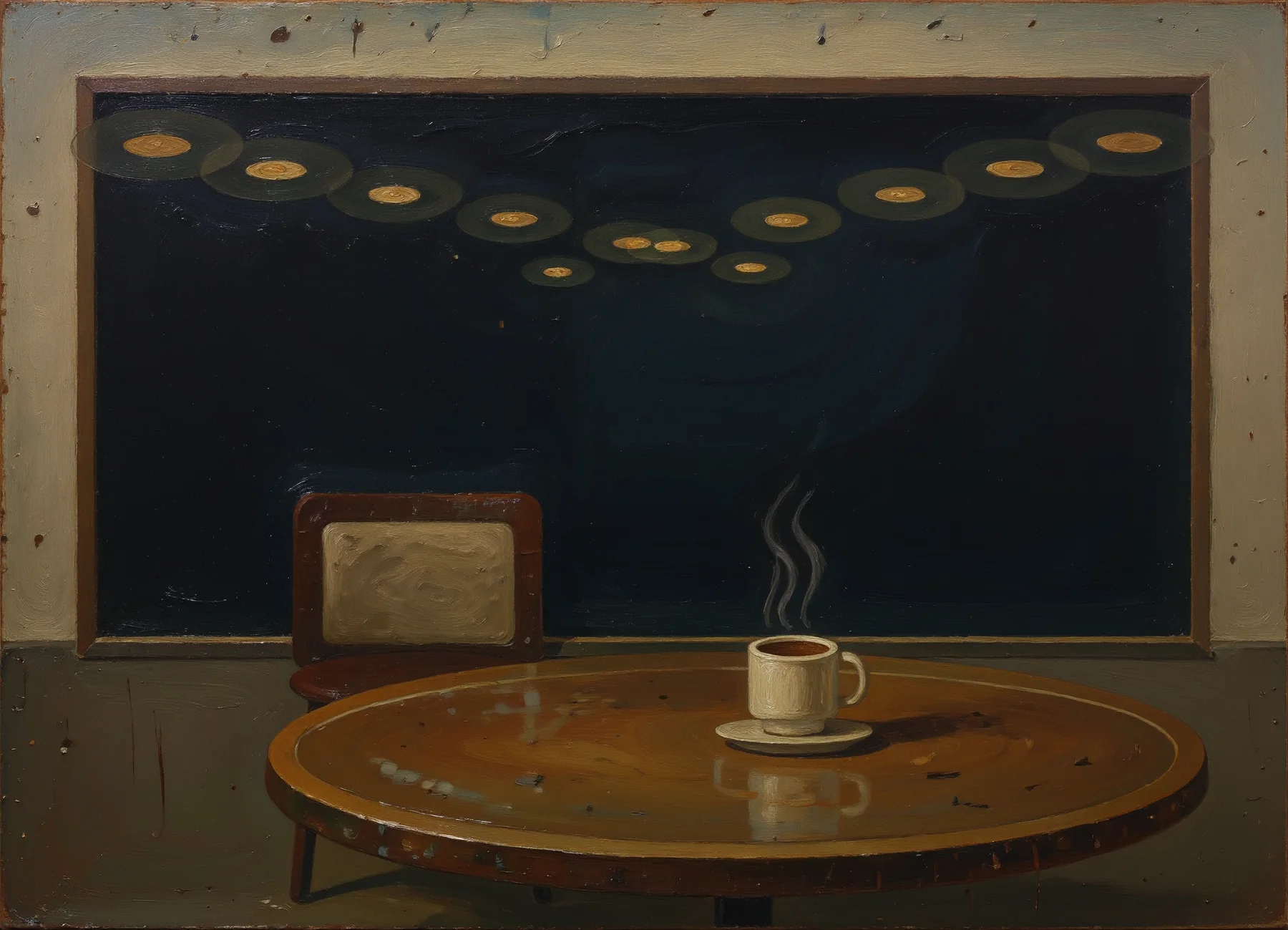
Muted empty café with a cup, chair, dark window, and blurred reflected lights.
AI-generated · Google Gemini · Round 2 · Est. generation time: 1m 25s

The result uses muted, dark colors and soft or blurry reflected lights. The cup, chair, and dark window remain visible, and the room feels abandoned. It is visually heavier and less warm than the others.

Adobe Firefly

Empty café with simple chair, cup, oval table, and light geometry.
AI-generated · Adobe Firefly · Round 2 · Est. generation time: 2m 40s

Firefly followed the simple geometry most closely. The chair, cup, oval table, and lights stay in straightforward positions. It feels flatter, with less visual depth, but is an interesting example of a model retaining the coding sketch's structure.

What I took into the next decision

None of the three models put the woman back into the scene, even though I did not forbid adding people. It was interesting that the environment alone could still feel lonely. The surprise was the city added by ChatGPT, which introduced a new interpretation I had not considered.

Round 03 / Steps 11–13

03 / Restage: Personal photograph → AI

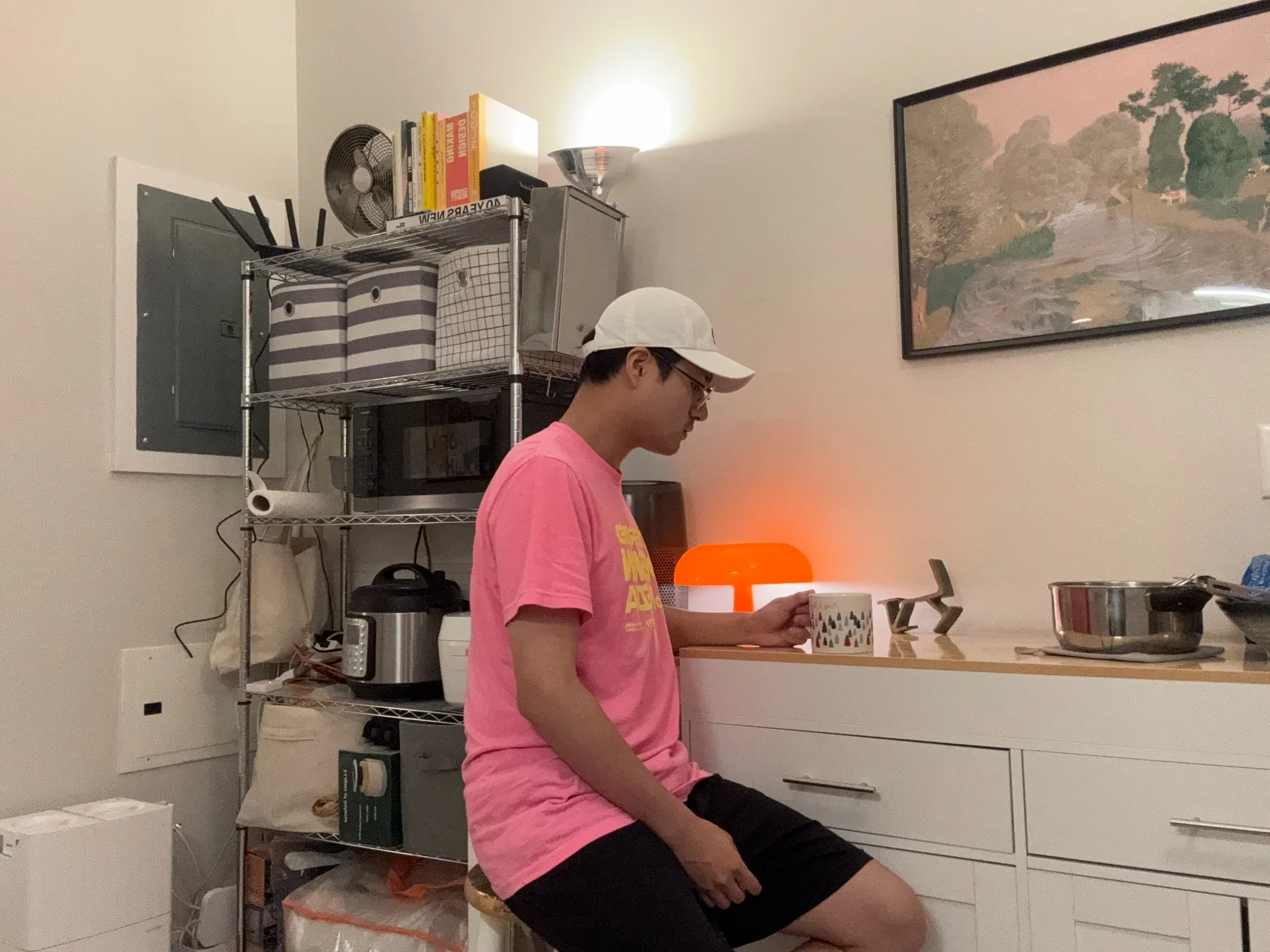
My original photograph, sitting alone with a mug in my apartment kitchen.
Human-made · Photograph

The human decision

I wanted to leave the computer-generated café for a moment and reinterpret the feeling of Automat in a familiar place. I photographed myself sitting alone in my apartment kitchen, looking down while holding a mug. I kept the quiet posture and the idea of an isolated figure, but moved the setting from a public café into my own everyday environment. The shelves, kitchen counter, framed artwork, clothes, and orange lamp are important traces of the real room rather than set decoration.

View prompt · Round 03

Using my photograph as a visual reference, reinterpret this scene as an atmospheric painting inspired by the emotional qualities of Edward Hopper’s Automat. Preserve the basic composition of a person sitting alone with a cup in a quiet interior, but freely interpret the lighting, colors, textures, and surrounding details. Focus on loneliness, stillness, emotional distance, and the relationship between the figure and the space.

Three AI responses

ChatGPT Images

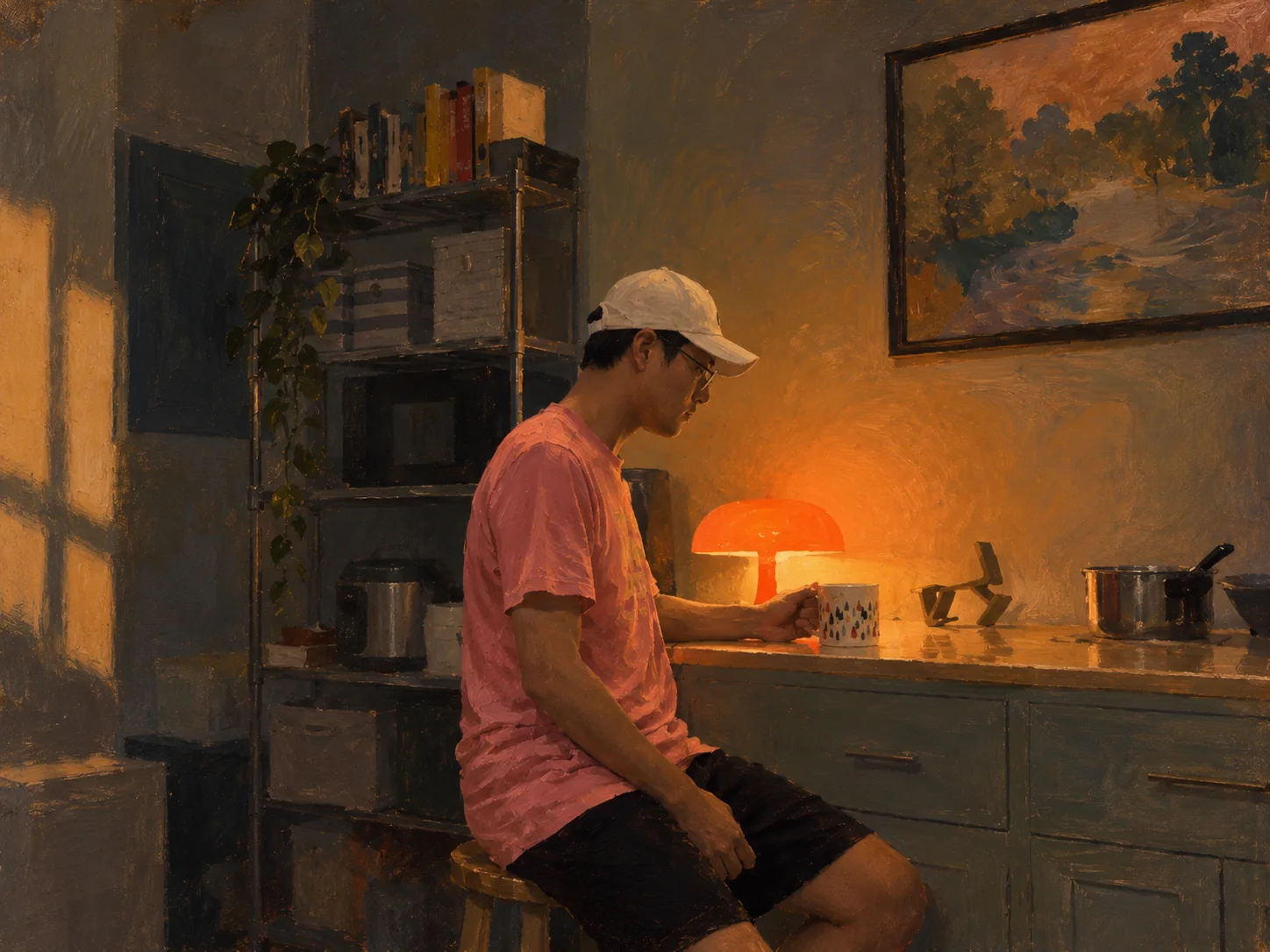
Cinematic kitchen scene with warm orange lamplight and added foliage on the shelf.
AI-generated · ChatGPT Images · Round 3 · Est. generation time: 1m 35s

ChatGPT introduced much more cinematic contrast and warmer orange light. It emphasized the glowing lamp and added or altered environmental details, including foliage along the shelf and stronger warm illumination. The result looks appealing but moves away from the ordinary quality of the original photo.

Google Gemini

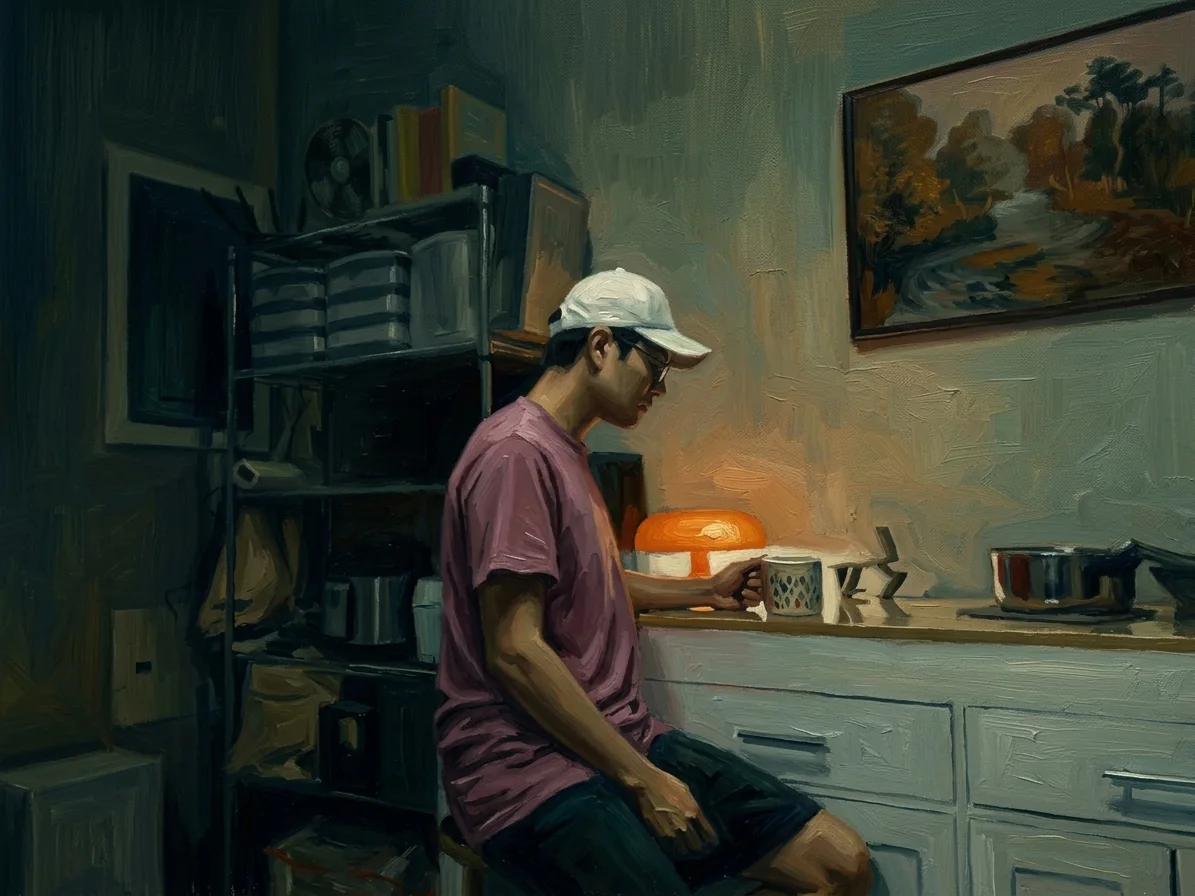
Expressive painterly interpretation of my seated pose and kitchen interior.
AI-generated · Google Gemini · Round 3 · Est. generation time: 2m 45s

Gemini used stronger and more visible painterly textures, making the room feel like an expressive painting rather than a photo. It maintained the main figure and objects but made the surfaces and forms less literal.

Adobe Firefly

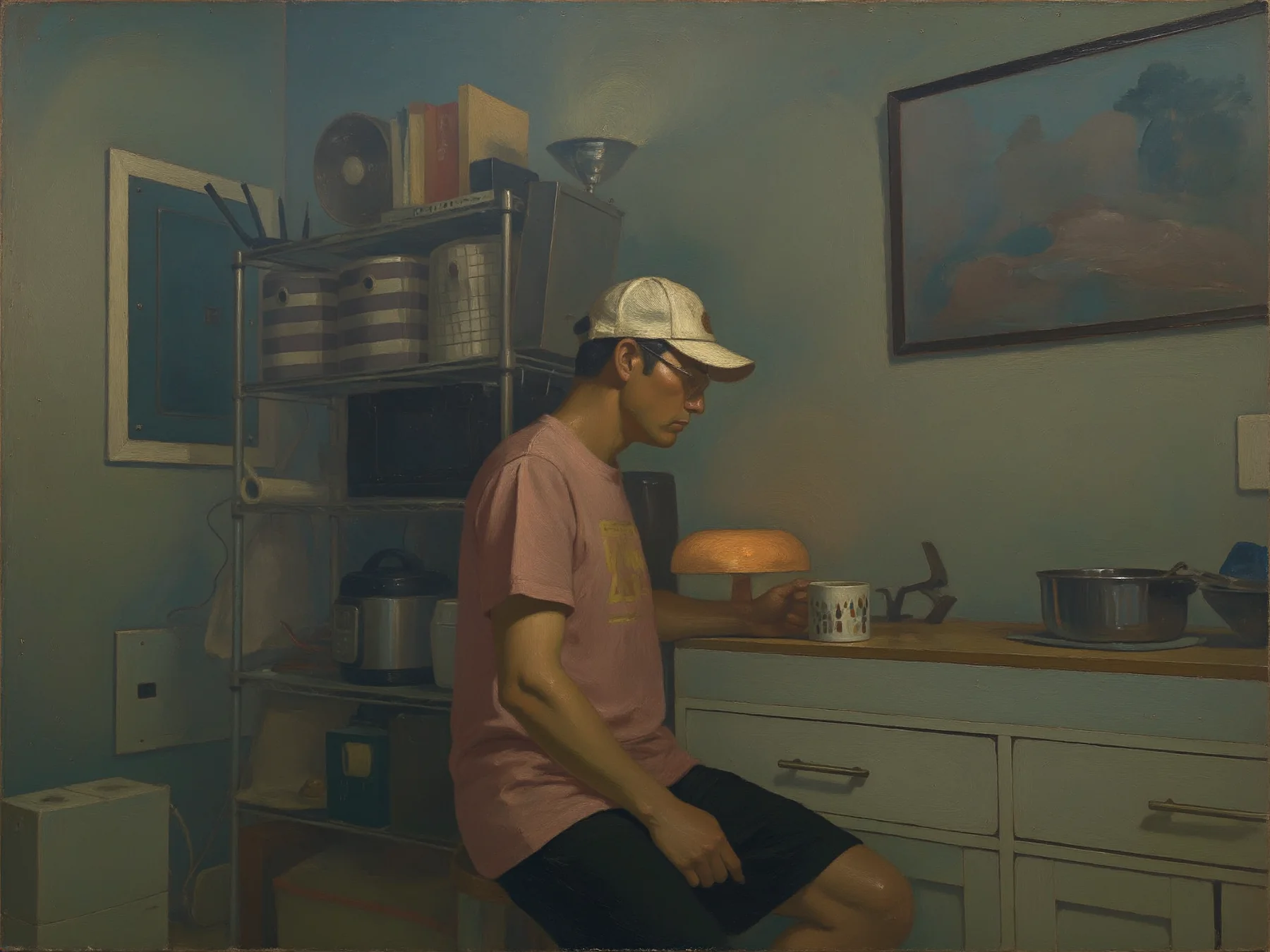
Muted painted interpretation of my kitchen photograph, retaining the cap, mug, shelves, and wall art.
AI-generated · Adobe Firefly · Round 3 · Est. generation time: 2m 5s

Firefly kept much of the photo's arrangement and my body position, including the white cap, mug, shelves, and wall art. It softened the light and used a muted color palette. The effect is introspective and fairly restrained.

What I took into the next decision

A photograph gave the models a much more specific source than a simple sketch, so they preserved more of the actual layout. Even then, they imposed different aesthetic conventions: soft melancholy, expressive brushwork, or cinematic lighting. This was a more personal round because I chose both the setting and the pose.

Round 04 / Steps 14–16

04 / Reassemble: Digital collage → AI

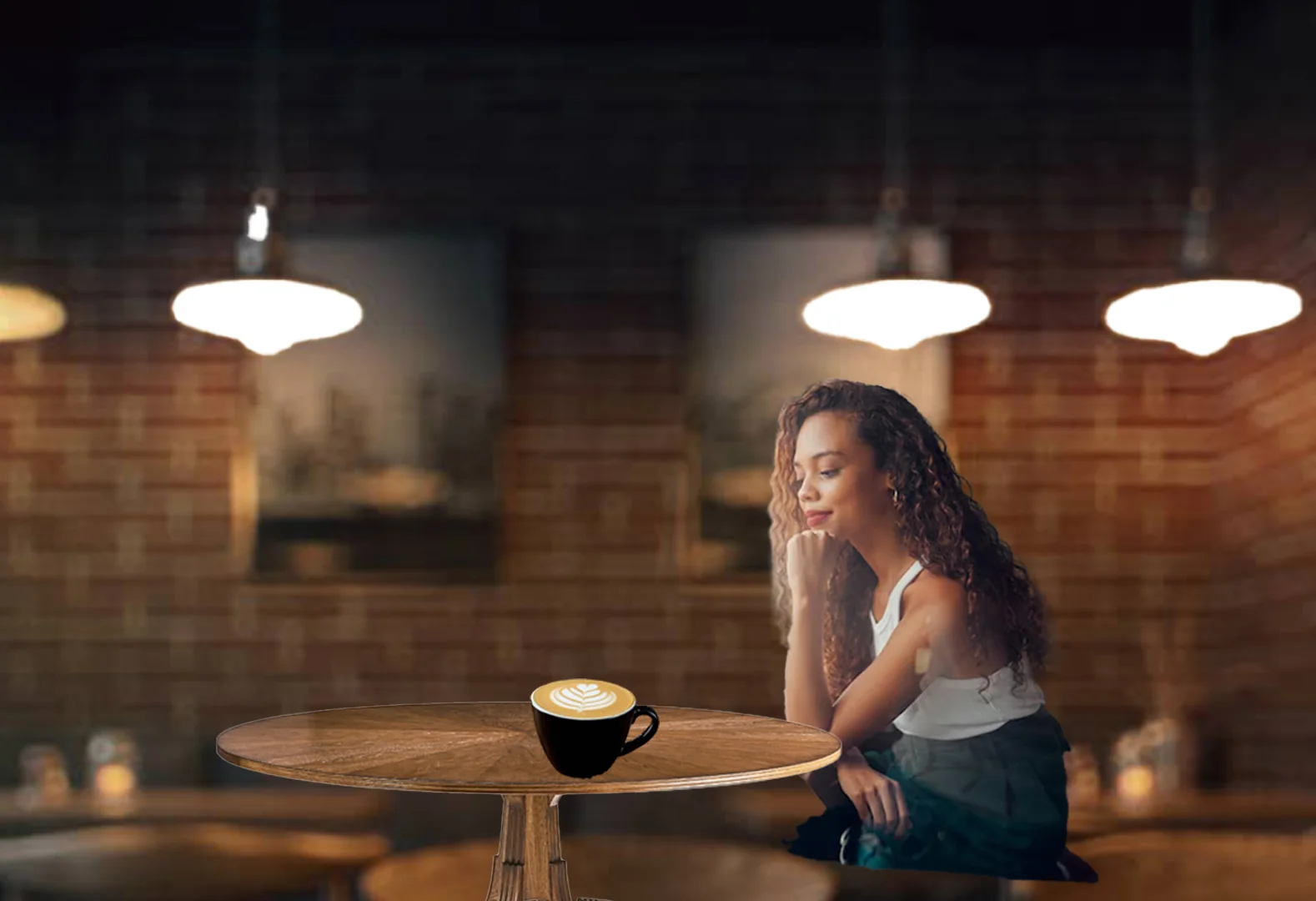
Human-assembled café collage with a woman on the right, a round table, coffee, pendant lamps, and brick walls.
Human-made · Digital collage

The human decision

For this iteration I went back to a café, but this time I constructed the scene through a digital collage. I arranged a woman sitting alone on the right, a coffee cup on a round wooden table, hanging ceiling lamps, and a contemporary brick-walled café background. I intentionally treated the different elements as movable pieces. The source photos had lighting, scale, and perspective differences, and I wanted to see how AI would deal with those seams.

View prompt · Round 04

Using my digital collage as a visual reference, reinterpret this scene as a cohesive atmospheric image. Preserve the main composition, the woman's position, the round table, the coffee cup, and the surrounding café environment. You may freely reinterpret the lighting, colors, textures, and visual style. Focus on the sense of loneliness, stillness, and emotional distance. Pay attention to how the different elements relate to each other spatially.

Three AI responses

ChatGPT Images

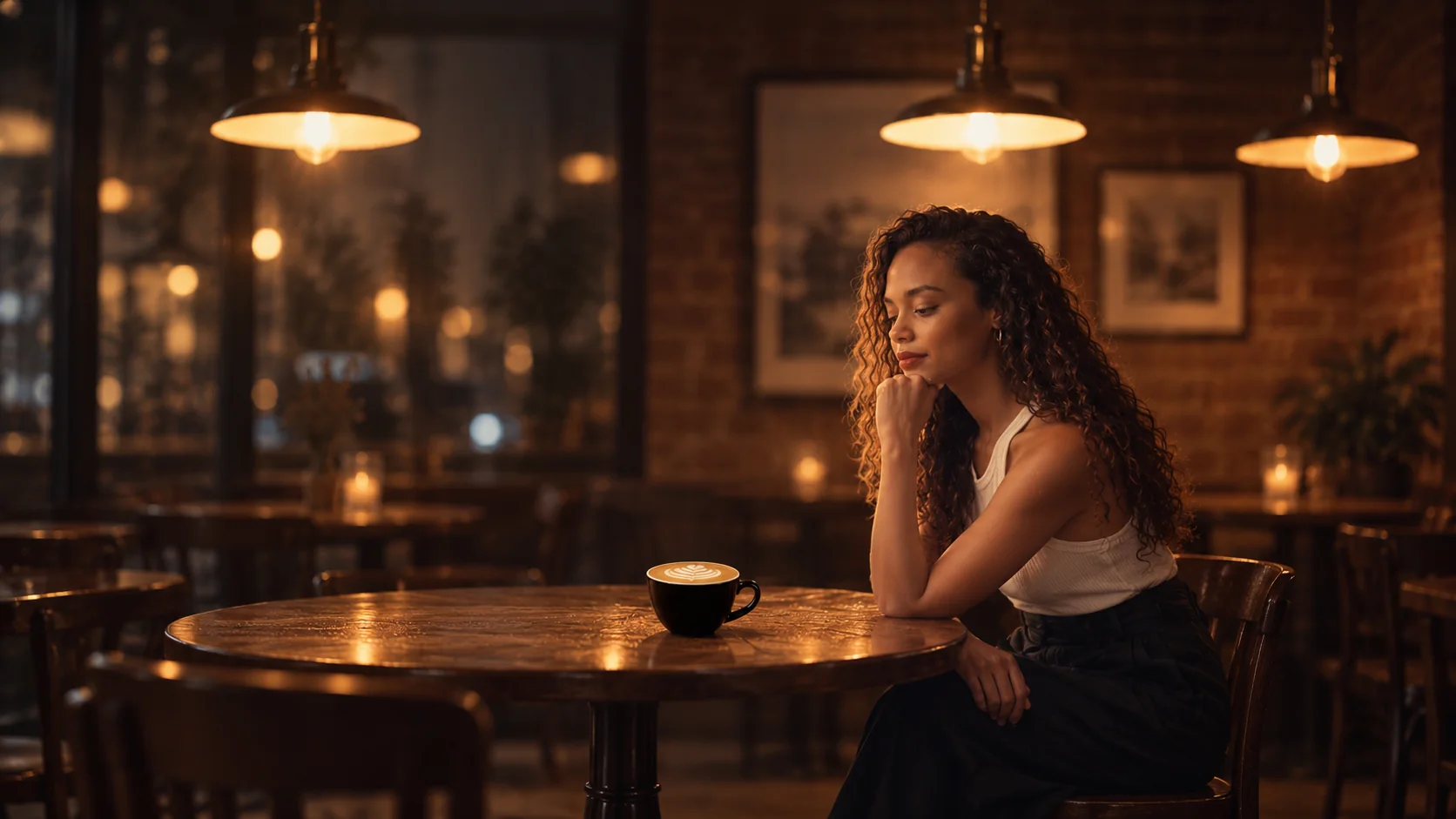
Photographic café interpretation integrating the woman with ambient light and additional furniture.
AI-generated · ChatGPT Images · Round 4 · Est. generation time: 2m 30s

ChatGPT made the scene look more like a convincing café photograph with ambient lighting, additional furniture, and richer spatial detail. It successfully integrated the woman into the space but also removed more of the rough collage look.

Google Gemini

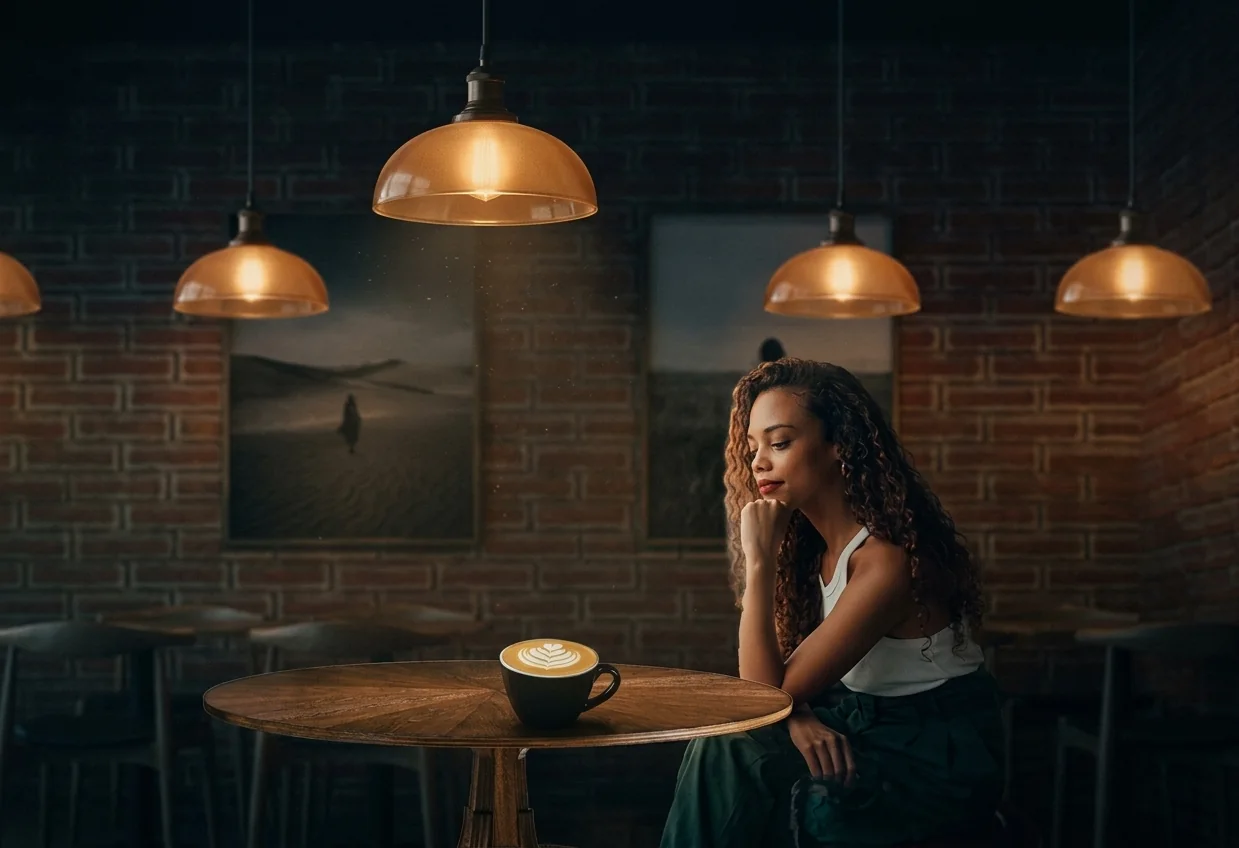
Unified café interpretation with a brick wall, pendant lights, and a woman seated at the right.
AI-generated · Google Gemini · Round 4 · Est. generation time: 1m 50s

Gemini retained the main composition and spatial distribution while giving the brick wall, pendant lights, and seating more coherent perspective and lighting. The result looks like a cleaned-up version of my collage.

Adobe Firefly

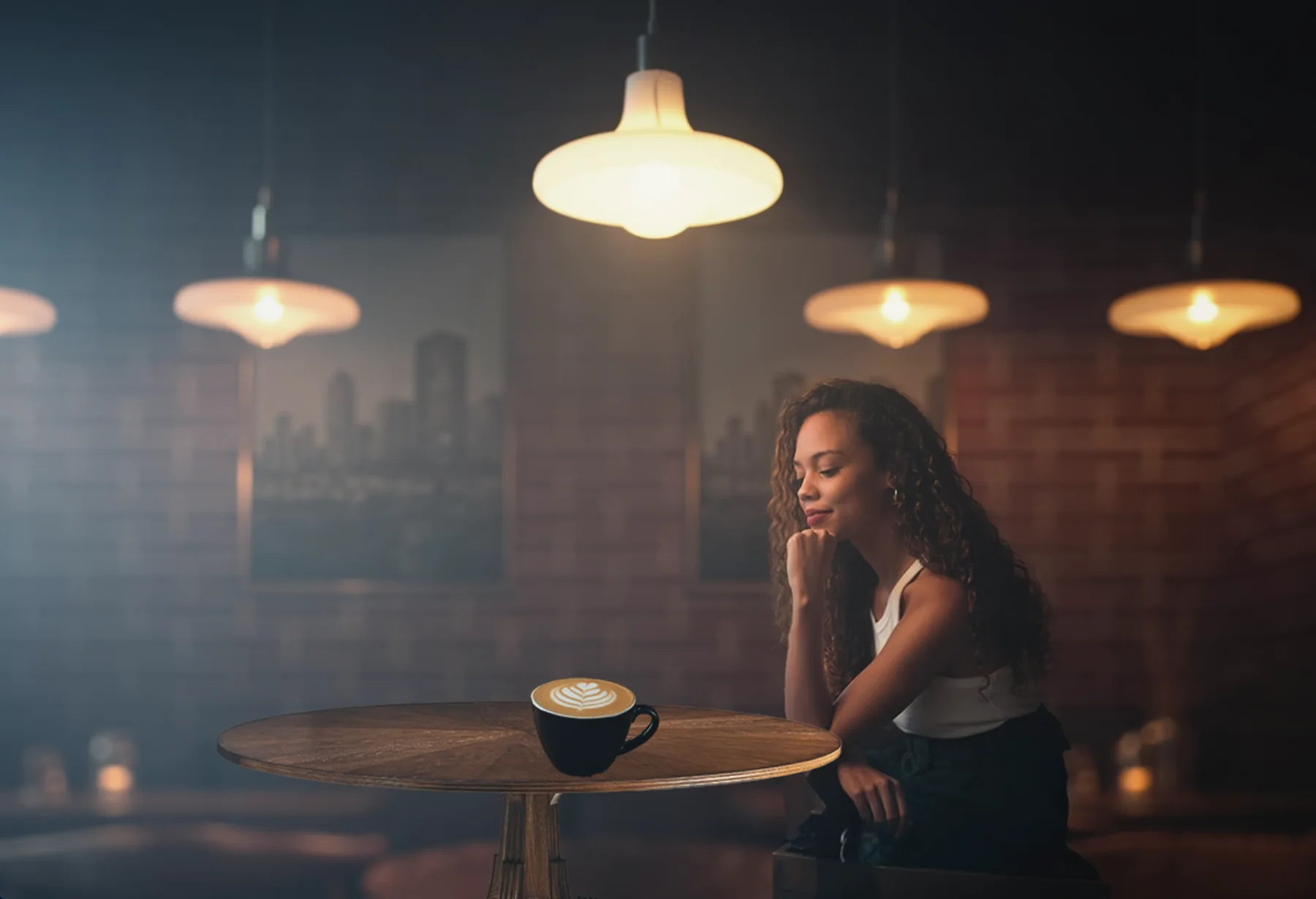
Soft and hazy café interpretation retaining the woman, cup, table, and hanging lights.
AI-generated · Adobe Firefly · Round 4 · Est. generation time: 1m 20s

Firefly created a soft, hazy atmosphere. The woman, cup, table, and hanging lights remained, but the background took on a diffused glow. It leaned heavily toward mood and less toward the deliberately rough, cut-and-paste quality of the collage.

What I took into the next decision

The three AI models all tried to resolve the inconsistencies of my collage. I realized that a model can make something more visually believable while erasing the construction marks that show a human decision. A polished output is not always the most interesting one.

Selected after all four rounds

The Empty Automat

Editorial title / Hybrid process, AI-generated final image

A dark, muted painting of an empty chair, wooden table, steaming coffee cup, and dark window with blurry light reflections.
Selected Final · Google Gemini · Round 2 · Est. generation time: 1m 25s

Why I returned to Round 2

I decided to choose the Gemini-generated image from Round 2 as my final work. What I liked most about this image is how it creates a feeling of loneliness without showing any person. The dark window, blurry light reflections, empty chair, and steaming coffee cup make the space feel quiet and slightly unsettling.

Compared to the ChatGPT result, which introduced a cityscape outside the window, Gemini kept the outside world almost completely invisible. I think this creates a stronger sense of isolation because we don't really know what exists beyond the window.

Download selected final image (.webp)

Where my authorship lives

Even though this image was generated by AI, the composition came from my own creative coding experiment, where I intentionally removed the human figure to explore loneliness through empty space. I consider this a hybrid work because my creative decisions shaped the composition, while Gemini interpreted the atmosphere, textures, and lighting.

Looking back

Final reflection

This project started with Edward Hopper's Automat, a painting that feels quiet and lonely even though it shows a very ordinary scene. At first, I wanted to see how different AI models would recreate its atmosphere from my written description and rough sketch. But after the first round, I realized that the interesting part was not really how close the images looked to the original. It was how the models made decisions that I had not asked them to make.

In the first round, the models understood the basic objects and the setting, but they interpreted the mood differently. Firefly leaned toward a polished photographic scene, Gemini added more architecture and space, and ChatGPT made the woman's emotion more obvious by changing her pose. This made me wonder whether loneliness had to be represented by a person who looked lonely.

For the second round, I used p5.js to remove the woman and keep only the empty café, reflected lights, chair, and coffee cup. All three models kept the space empty. What surprised me the most was that ChatGPT added a city outside the window. This changed the feeling for me. The scene was no longer just an empty room. It became a place that felt disconnected from a larger world outside, and I thought that expressed loneliness really well.

I continued experimenting through photography and digital collage. Using my own photograph made the process feel more personal, but the models still changed the mood through color, texture, and dramatic lighting. In the collage round, they almost automatically corrected the inconsistent pieces and made everything look smoother. I started noticing that AI often prefers a finished and believable image, even when the roughness is part of what I made.

I think AI was good at recognizing objects, maintaining overall layouts, and generating atmosphere. It was less good at preserving ambiguity or understanding why some awkward details might be intentional. Different tools had different tendencies, but all of them made creative decisions for me, sometimes in useful ways and sometimes in generic ways. I don't think the models actually understand loneliness in the same way a person experiences it, but they can produce images that make me reconsider how loneliness is represented.

I selected the Gemini image from Round 2 as the final work, rather than something from the last round. Its dark window, blurry reflections, empty chair, and steaming coffee cup made the space feel quiet and slightly unsettling. Keeping the outside world almost completely invisible created a stronger sense of isolation for me than ChatGPT's cityscape. I would describe the project as a hybrid, because the AI-generated result came from my own analysis, coding, experimentation, and selection. What I learned is that using AI creatively is not just about accepting a good output. It's also about deciding what to keep, what to reject, and what an unexpected result might mean.

What I noticed across the models

ModelWhat worked hereWhat shifted or disappeared
Adobe Firefly Often follows composition clearly; sometimes retains simplified shapes. Can look flattened, conventional, polished, or photographic when a painted scene was intended.
Gemini Reinterprets space; expressive textures in the photo transformation. Sometimes invents architecture, objects, or unexpected spatial readings, such as Round 1’s stairs.
ChatGPT Images Atmospheric reinterpretation; introduces details such as Round 2’s city. Can make emotion obvious or romanticize scenes with cinematic light and familiar mood cues.

References & credits

Visual credit key

Human sketch · Human photo · Human collage: my creative inputs. AI-generated (Adobe Firefly, Gemini, ChatGPT Images): outputs labeled by tool and round. Human/AI hybrid final: Gemini’s Round 2 bitmap, generated from my p5.js composition and selected by me.

Collage component sources and permissions remain unverified. Source credits pending verification.

← Back to Ideation & PrototypingBack to the beginning ↑