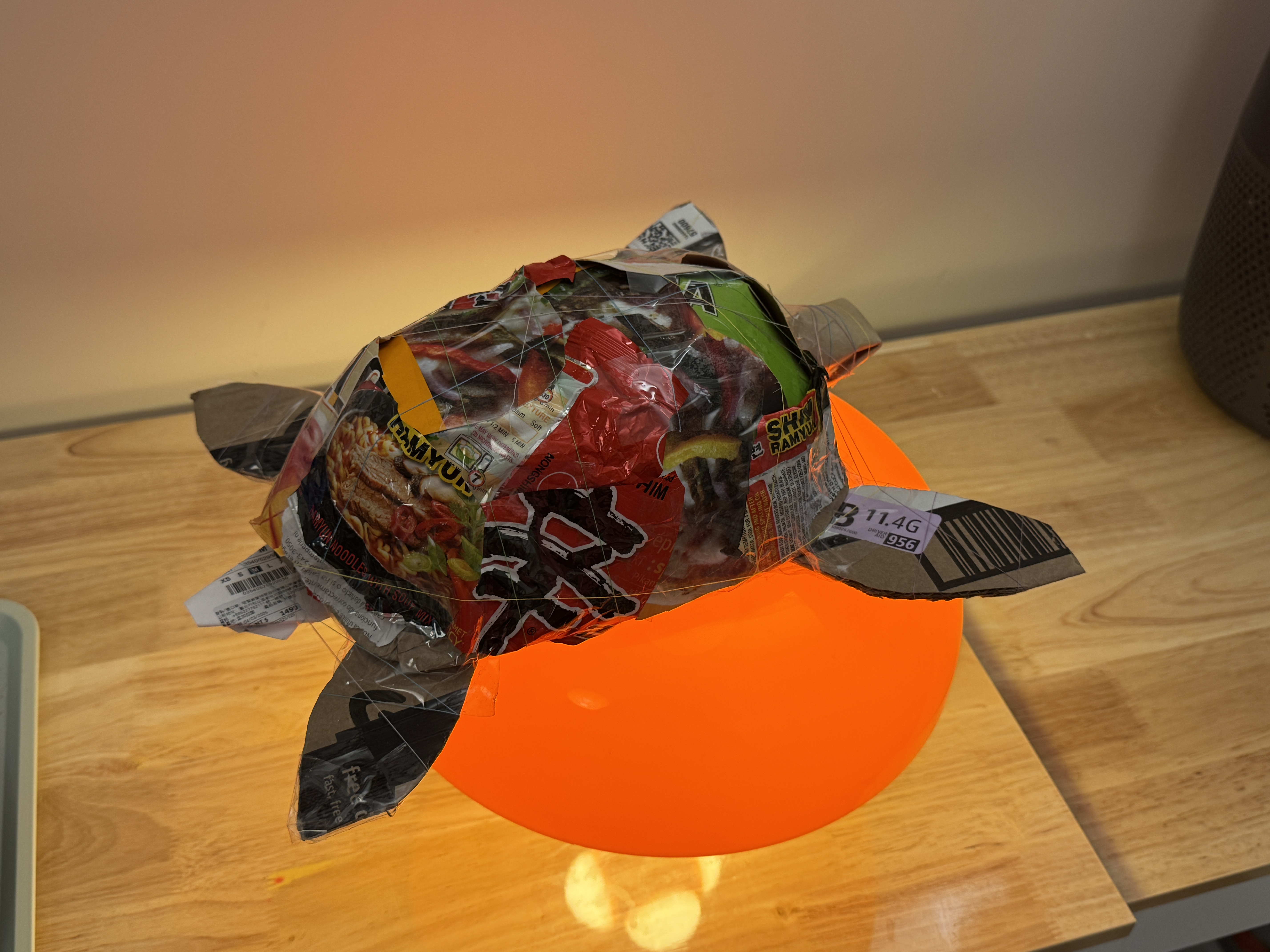
Everyday waste. An overlapping shell. A different kind of life.
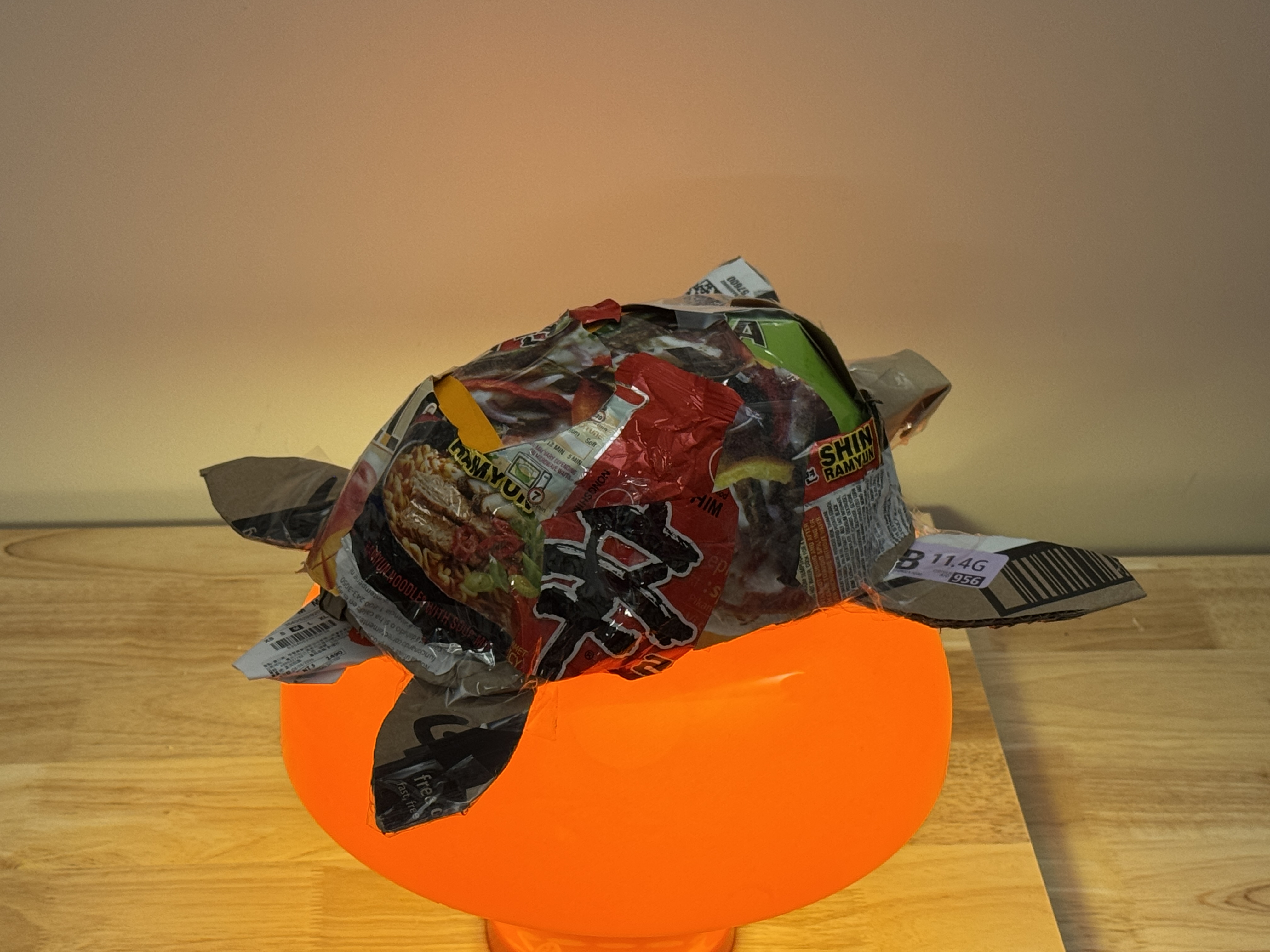
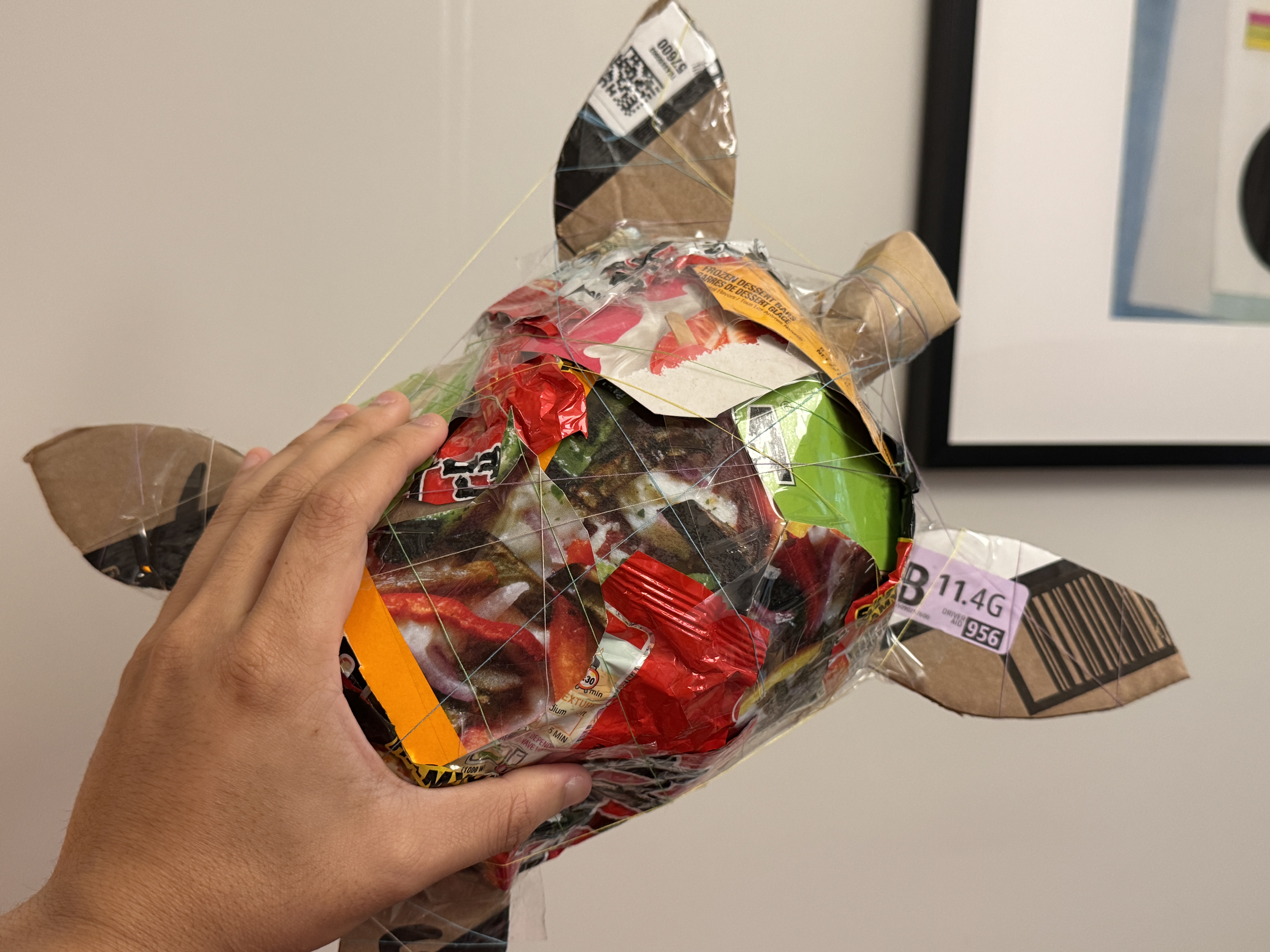
An endangered animal sculpture made primarily from reclaimed and discarded materials. I made a Hawksbill Sea Turtle using discarded cardboard, paper packaging, colorful food and plastic packaging, tape, and thin thread collected at home.
Artwork
Entangled Shell
Year
2026
Format
Process Documentation
01 /Collect Materials
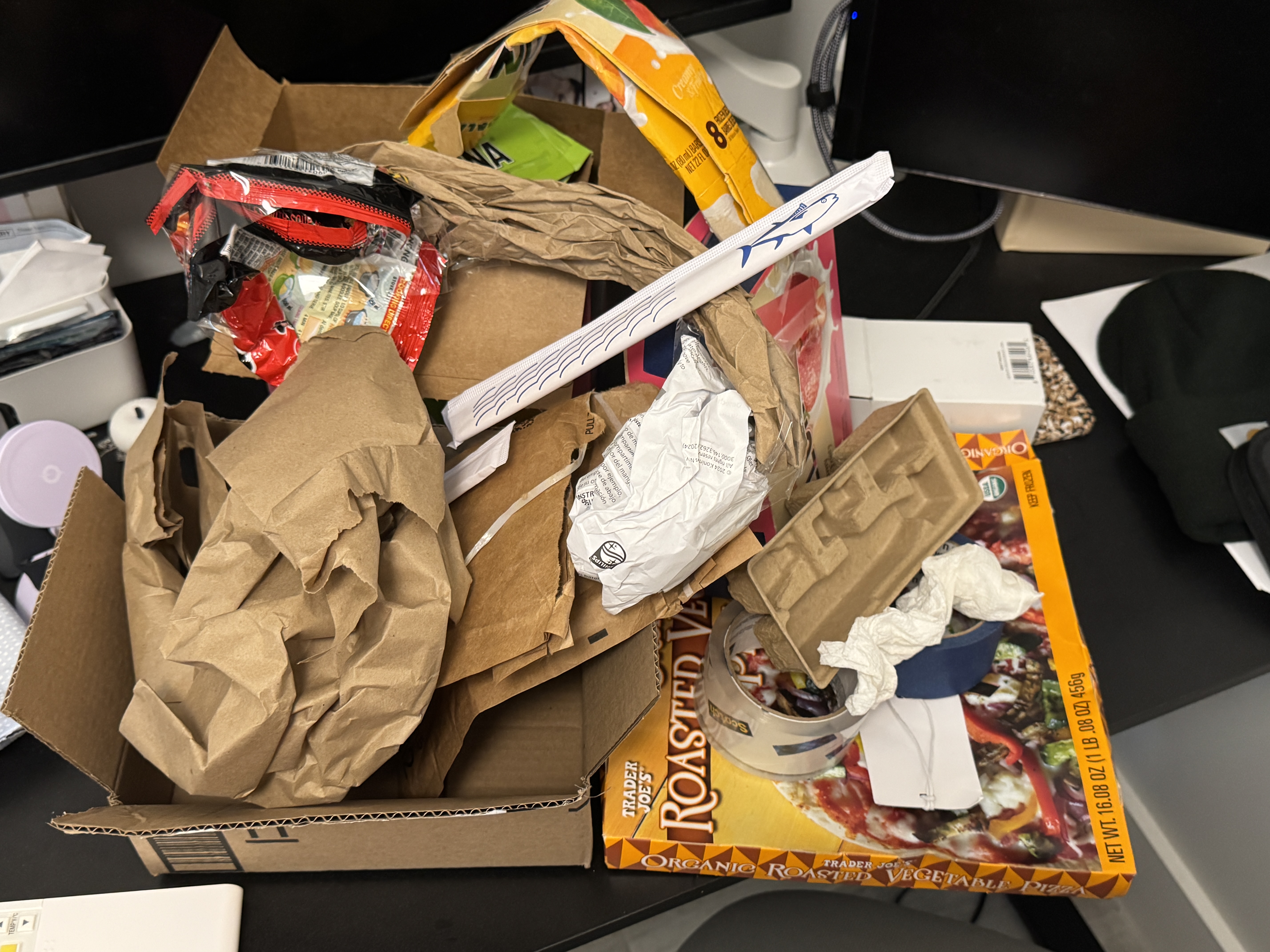
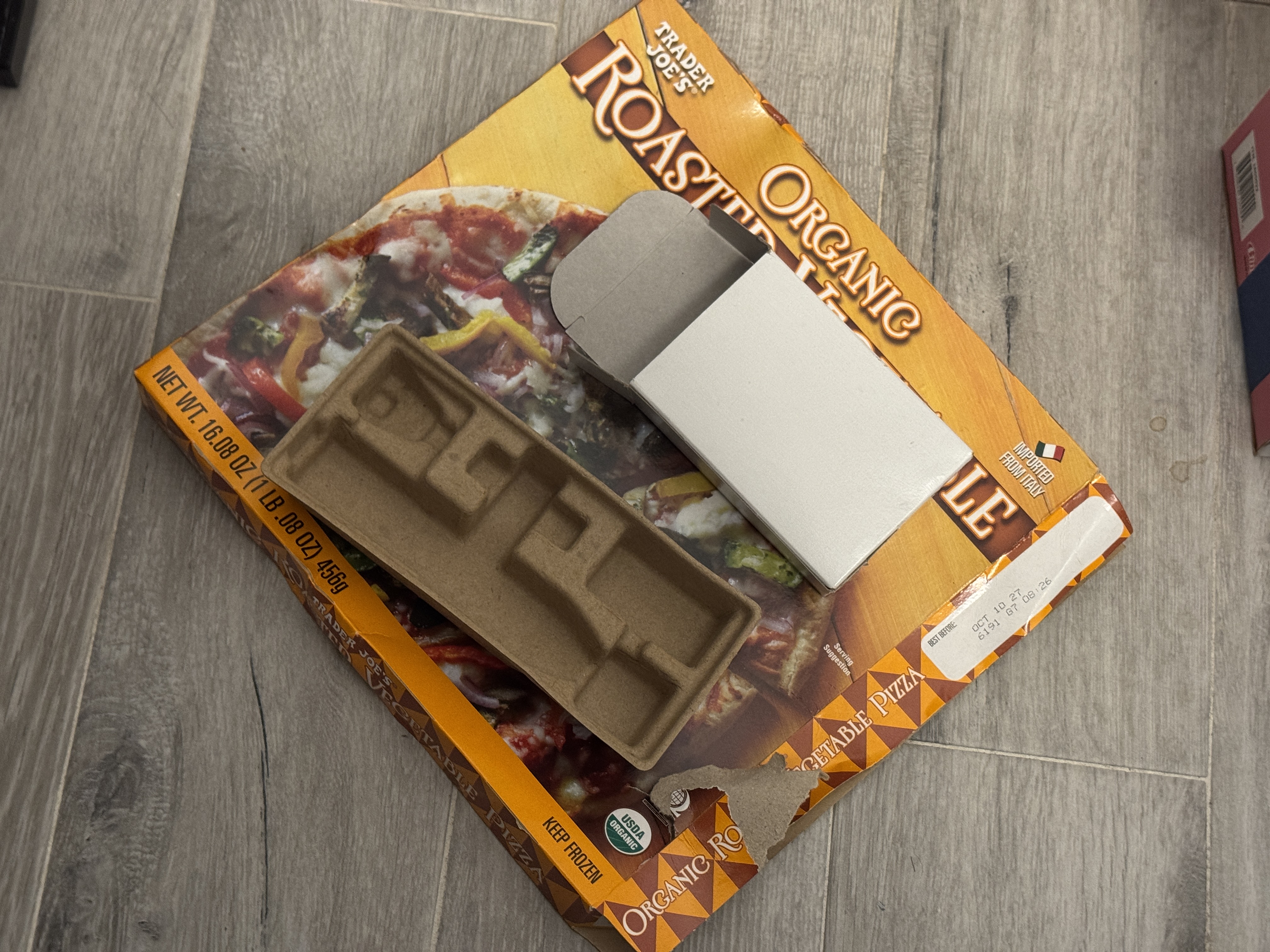
I started by collecting discarded materials from my everyday life before deciding exactly how each would be used. These materials are the starting point for the sculpture.
Collected discarded packaging and materials before deciding how each one would be used.
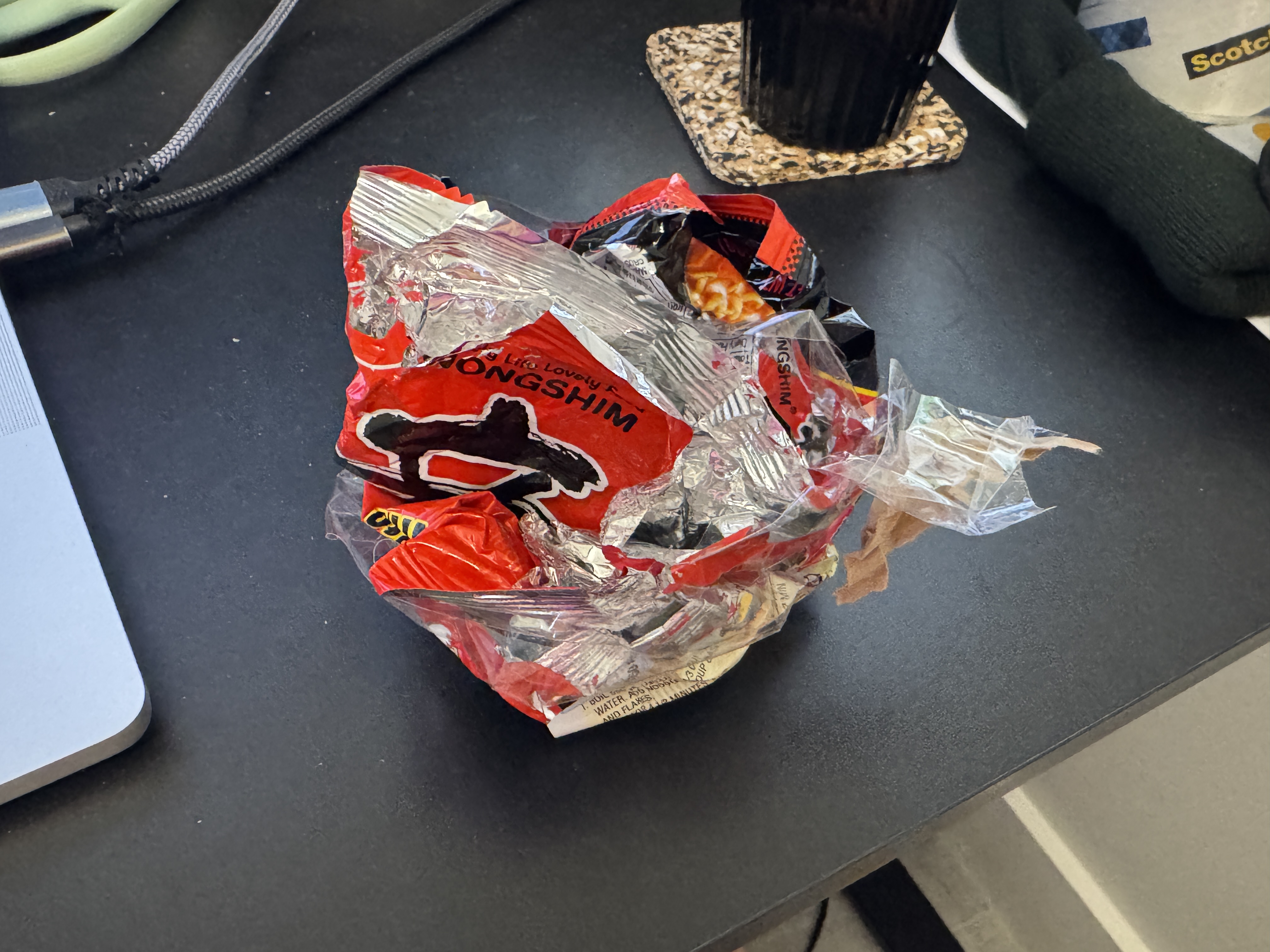
Most of the materials I collected were cardboard and paper packaging from things I recently bought or used. I also kept some colorful plastic food packaging and thin thread because I thought they could become useful later in the process.
Cardboard and paper packaging
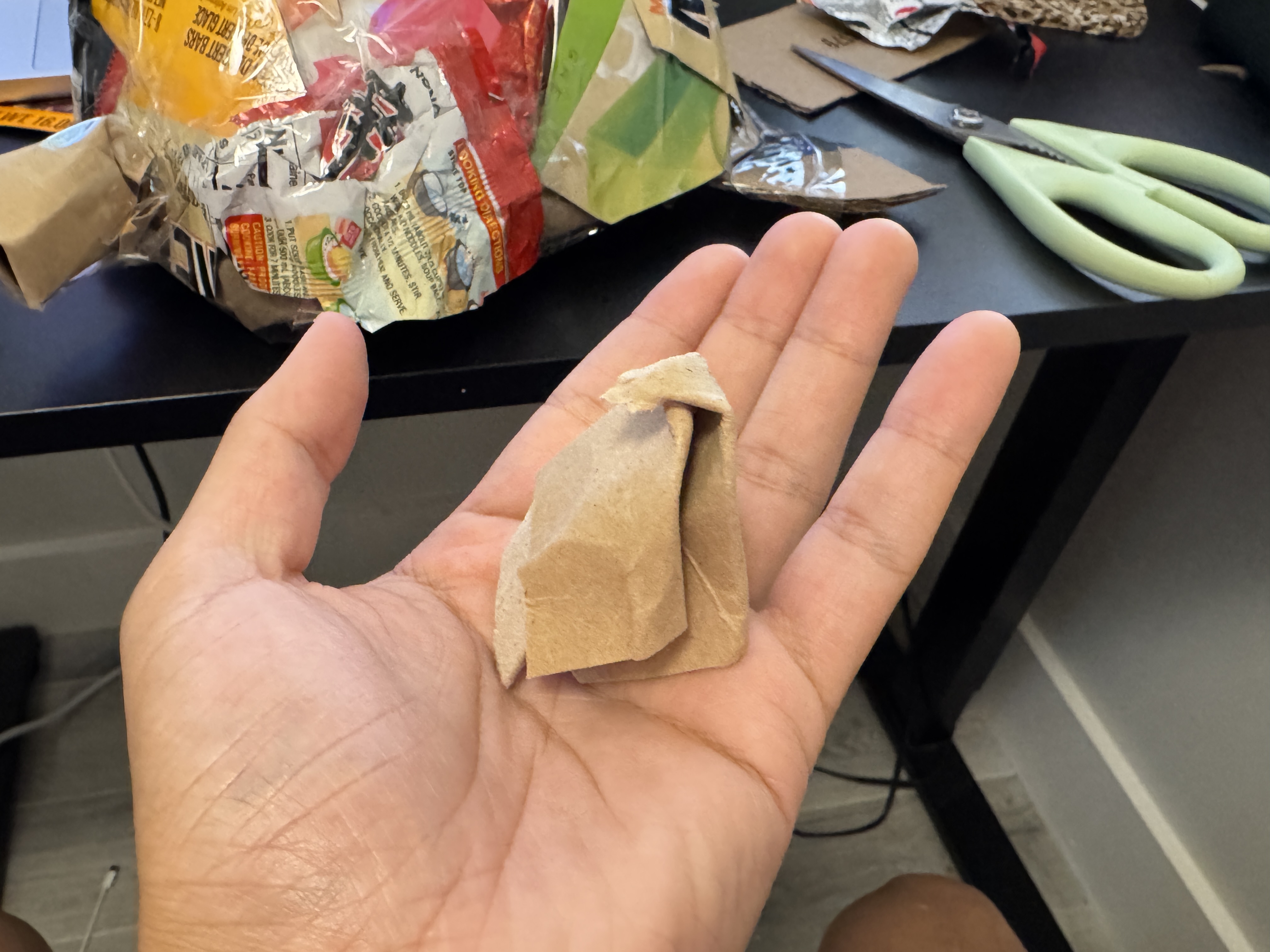
Brown packing paper
Molded fiber packaging
A small amount of colorful plastic packaging
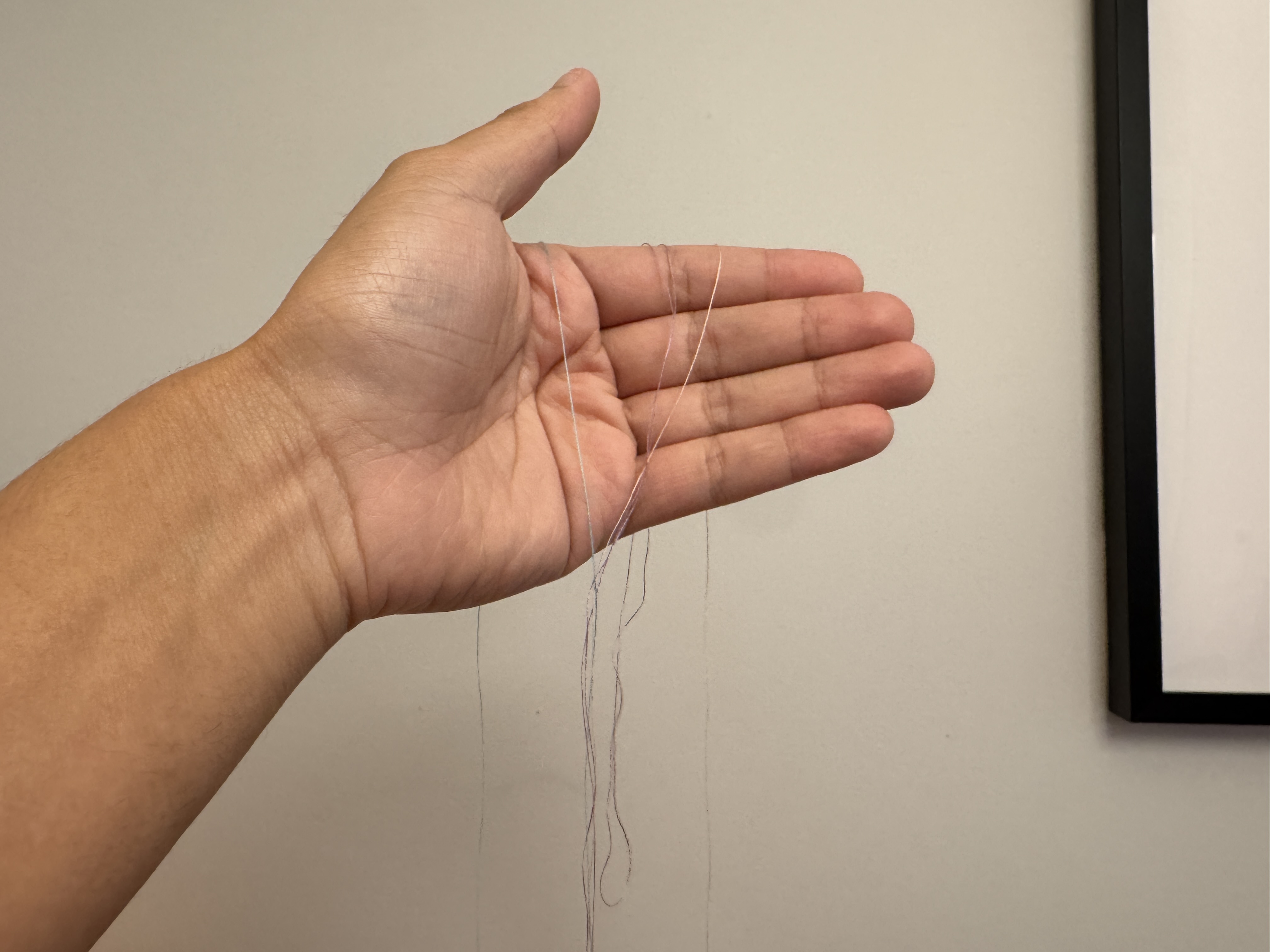
Thin thread
02 /Research the Animal
Hawksbill Sea Turtle
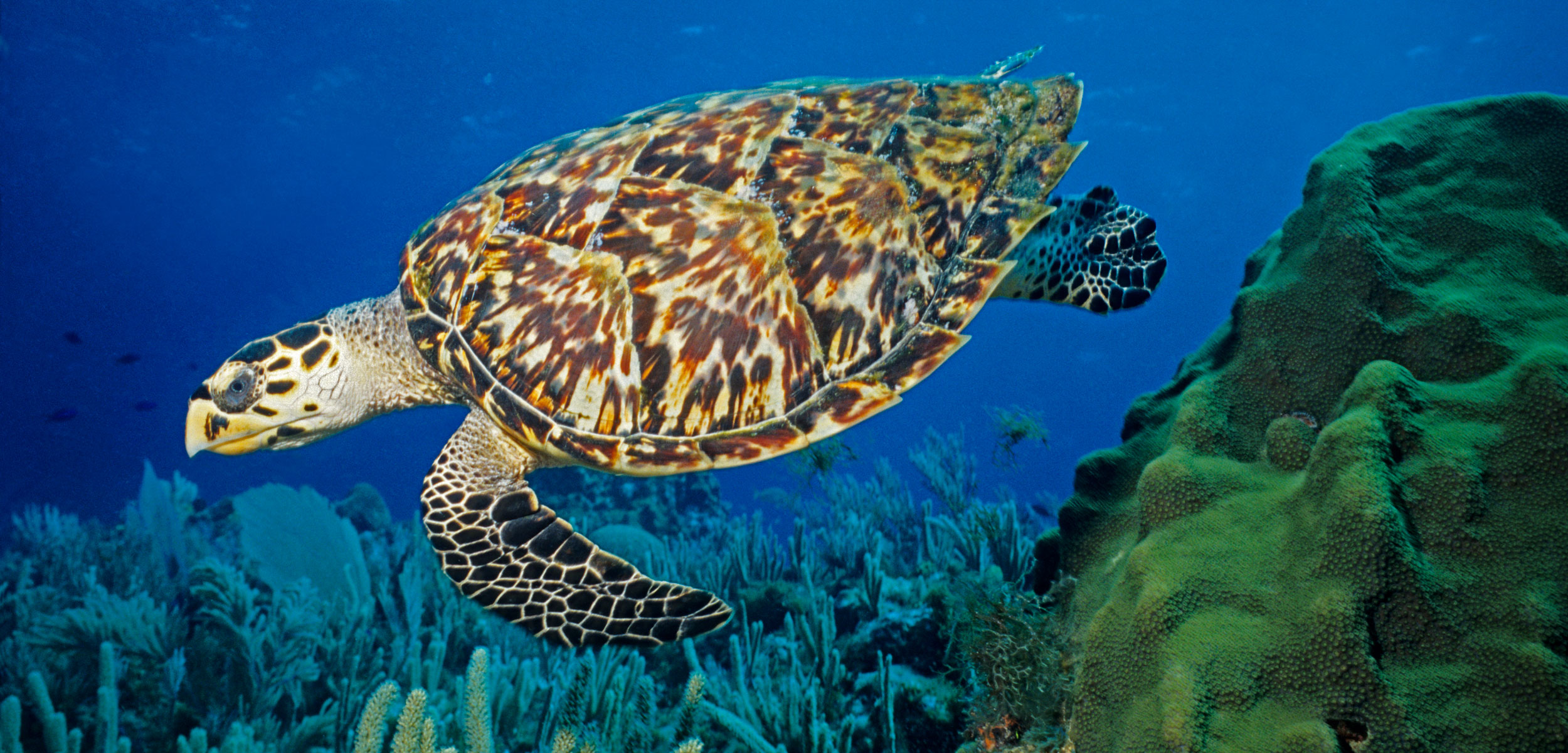
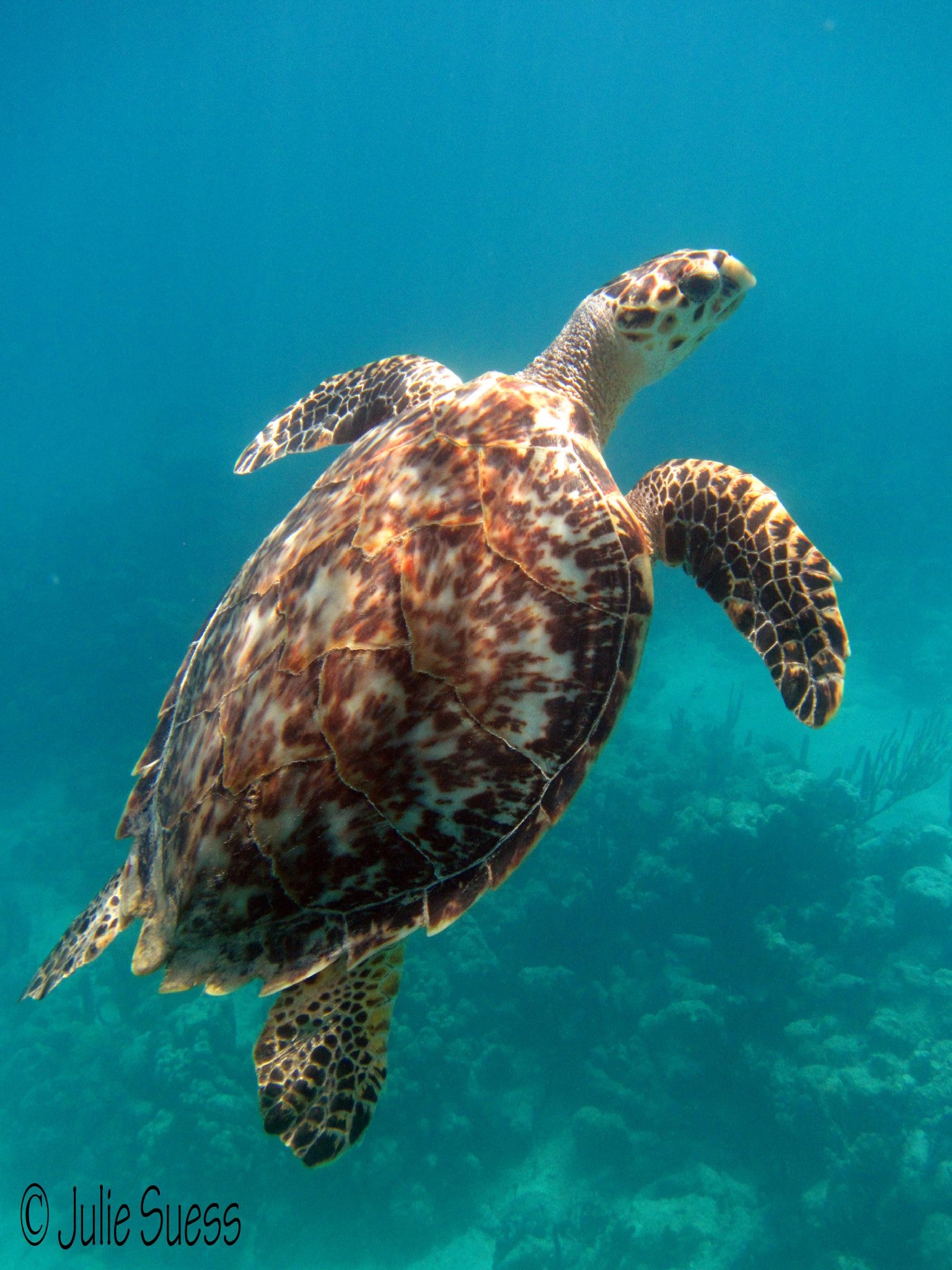
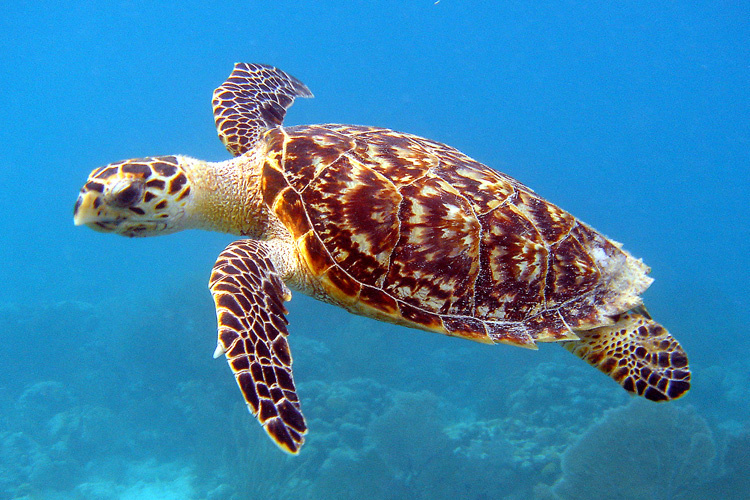
For this project, I decided to choose the Hawksbill Sea Turtle (Eretmochelys imbricata).
At first I was looking at different endangered animals and thinking about which one could work with the materials I collected. I have cardboard, paper packaging and a small amount of colorful plastic packaging, so I started looking at turtles. Then I found the Hawksbill Sea Turtle and really liked its shell because it already has a lot of different colors and overlapping patterns.
Healthy coral reef habitats for feeding, especially access to sea sponges, as well as suitable nesting beaches for reproduction.
Conservation efforts
Protecting nesting and feeding habitats, reducing fishing bycatch and marine debris, monitoring populations, and restricting the illegal tortoiseshell trade.
Habitat
Hawksbill Sea Turtles mostly live in tropical and subtropical oceans, including the Atlantic, Pacific and Indian Oceans. They are especially connected to coral reefs.
One thing I didn't know before is that they eat a lot of sea sponges. Their narrow and pointed mouth helps them reach into small spaces in the coral reef to find food. So they are actually much more connected to the coral reef ecosystem than I originally thought.
Why Are They Endangered?
There are several reasons why Hawksbill Sea Turtles are endangered.
One of the biggest reasons historically is actually their shell. Because their shells have really beautiful colors and patterns, people hunted them and used the shell to make jewelry and other decorative objects.
They are also affected by loss of habitat, fishing and bycatch, changes to coral reefs, and marine pollution. Plastic bags, fishing lines and other waste in the ocean can also become dangerous for sea turtles if they eat them or get tangled in them.
I think this part is especially related to this project because a lot of the materials I collected are plastic packaging and other things that I normally just throw away.
Something I Found Interesting
The most interesting thing for me is probably the shell.
The shell was the main reason why I chose this turtle because I thought it looked really beautiful, but then I found out that the same shell is also one of the reasons why humans hunted them.
I think this is a pretty interesting contradiction. Something that makes the animal beautiful and recognizable also became something humans wanted to take from it.
NYC Local Conservation Connection
For the local connection, I looked at the New York Aquarium and the New York Seascape program in Brooklyn.
They work on protecting marine wildlife and habitats around New York through research, monitoring, habitat protection and education.
Hawksbill Sea Turtles are mostly found in warmer tropical and subtropical waters, so this program is not specifically about protecting hawksbills. But I think it still connects to my project because it is working on the larger marine ecosystem and the relationship between wildlife and human activities.
Before doing this research, I also kind of thought of sea turtle conservation as something happening very far away from New York. Looking at the New York Aquarium's conservation work made the issue feel a little more local to me.
For now, I want to use the colorful plastic packaging I collected to make the shell.
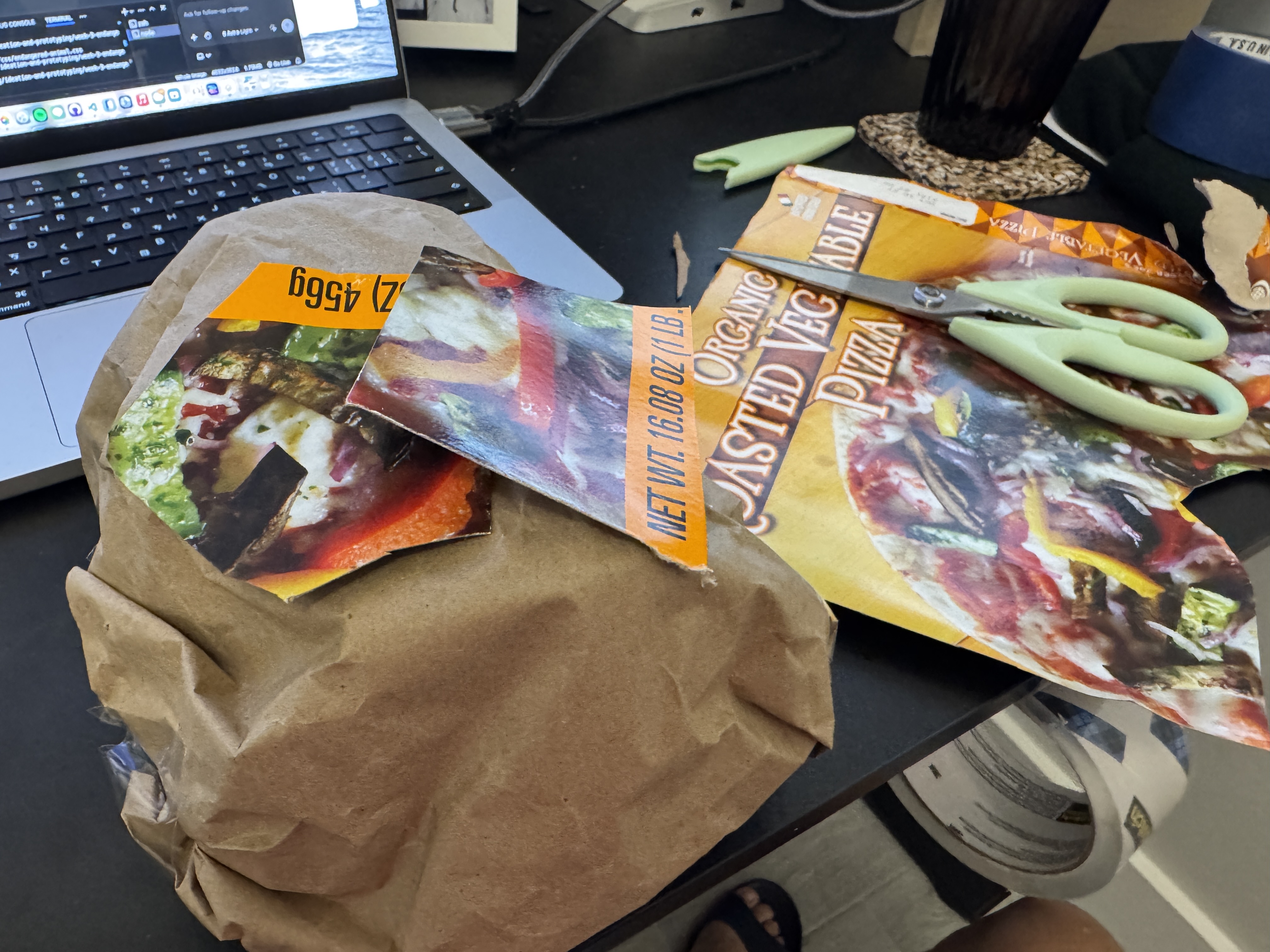
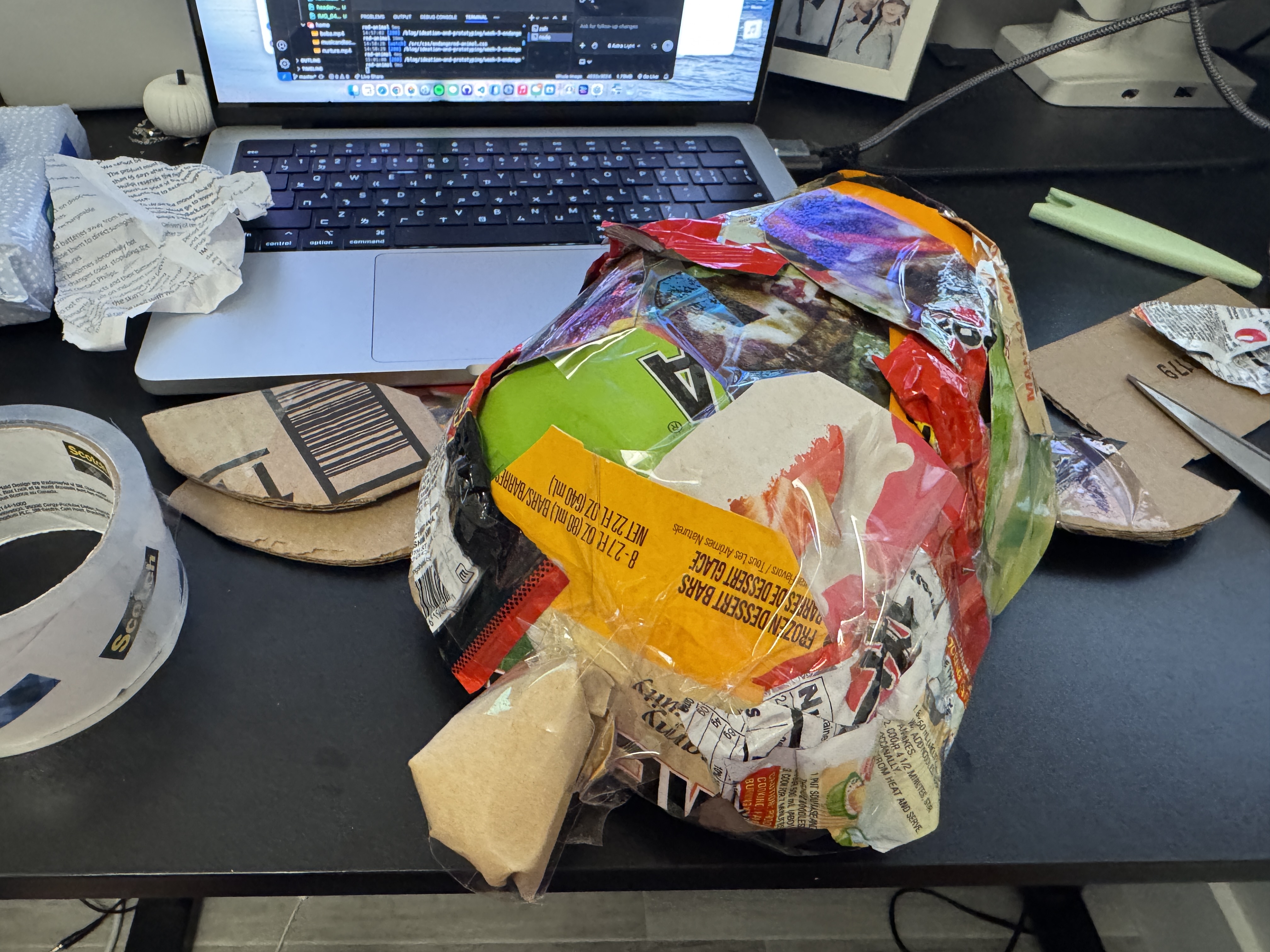
Instead of painting everything to look exactly like a real Hawksbill shell, I want to keep the original colors, words and graphics on the packaging. I think I can cut them into different shapes and overlap them to create the shell pattern.
I don't know exactly how the whole turtle will look yet. I want to first try the materials and see what works before deciding the final design.
For this step, I looked more closely at the materials I collected. Most of them are packaging from things I recently bought or used. I noticed that I actually have a lot more cardboard and paper packaging than plastic, so I want those to become the main materials for the turtle.
Cardboard & Paper Packaging
Most of the materials I collected were cardboard and paper-based packaging.
Most of the materials I collected are different types of cardboard and paper packaging, including shipping boxes, food boxes, brown paper and molded fiber packaging.
These materials were originally made to protect or carry products, but most of them became waste pretty quickly after I opened the package. Cardboard and paper packaging can usually be recycled if they are clean and accepted by the local recycling system.
I also noticed that even though they are all paper-based, they feel very different. Some cardboard is thick and strong, some is thin and easy to fold, and the molded fiber packaging already has its own shape and texture.
For now, I think cardboard will probably become the main structure of the turtle and its shell.
Plastic Packaging
I kept some of the colorful packaging because I wanted to reuse its original colors and graphics in the shell.
I only collected a small amount of plastic packaging, mostly from food.
Compared to the cardboard, these pieces are much more colorful and have a completely different surface. Some of them are shiny, flexible and already have interesting graphics and text printed on them.
Plastic packaging is useful because it is lightweight and durable, but this also becomes a problem when it turns into waste. Some types of plastic packaging are also difficult to recycle, especially when they are made from multiple materials.
I don't think I need to use a lot of plastic in the sculpture. Instead, I want to keep some of the original colors and graphics and use smaller pieces on the shell to make the Hawksbill pattern more colorful.
Thread
I later used thin thread as a visual material to suggest entanglement and restricted movement.
The last material I want to experiment with is thin thread.
At first I thought about using the thread to connect different pieces together, but I don't really know how to sew and I also don't think I need to use it that way.
Instead, I want to use the thread to create a feeling of entanglement and restriction. Sea turtles can become tangled in fishing gear and other marine debris, so I want to try wrapping thread around parts of the turtle's body or flippers to make it look like its movement is being limited.
The thread is not actually fishing line, so I don't want it to literally represent fishing gear. I want to use it more as a visual way to suggest the feeling of being trapped.
What I Learned
Looking at the materials more carefully made me realize that I don't need every material to do the same thing.
The cardboard can give me the main structure, the small amount of plastic packaging can add color and pattern, and the thread can communicate something about the threats the turtle faces.
For the next step, I want to start cutting, folding and layering these materials to see what actually works before deciding the final design.
04 /Explore & Design
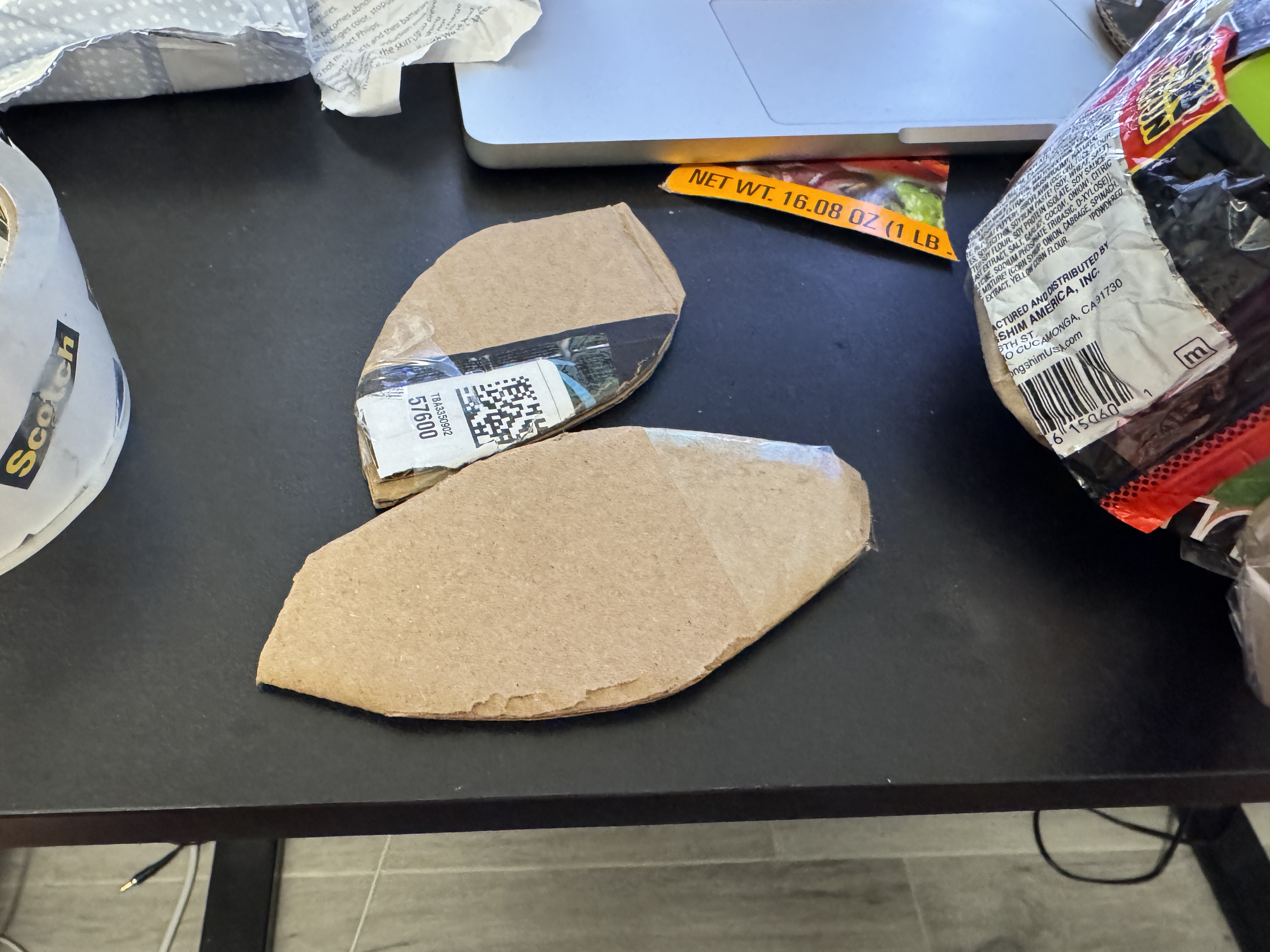
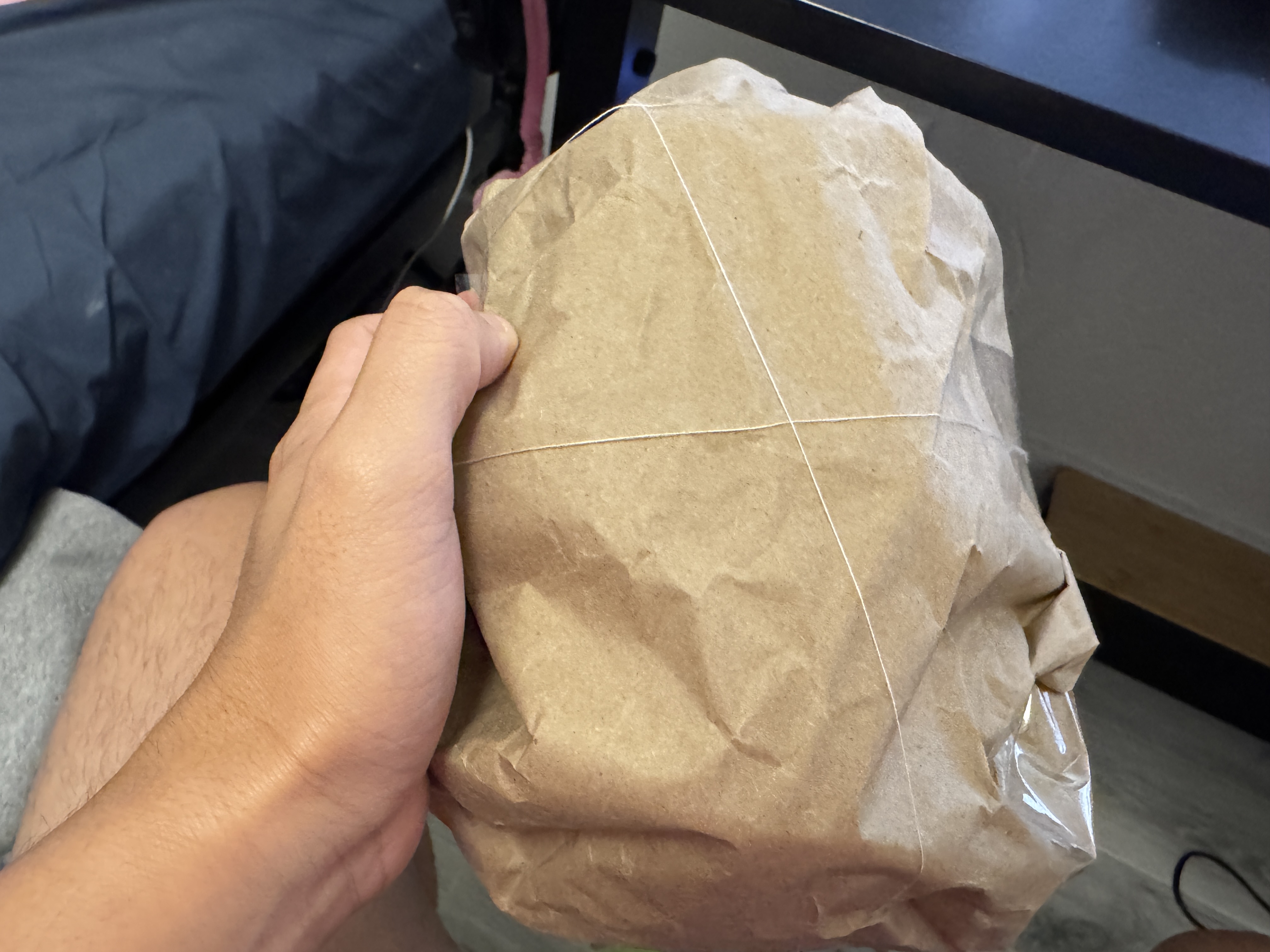
Before starting the final turtle, I tried a few simple material experiments. I tested shaping brown paper for smaller body parts, cutting cardboard into different flipper shapes, and wrapping thread around the shell. These tests helped me decide what each material could be used for before I started the final construction.
Testing how brown paper could be folded and shaped into a small body part.Testing different cardboard shapes for the turtle’s flippers.I tested wrapping thread across the surface to see how it could create a feeling of restriction or entanglement.
After these tests, I decided to use cardboard and paper for most of the structure, colorful packaging mainly for the shell, and thread at the end to create the feeling of entanglement.
05 /Construct Your Animal
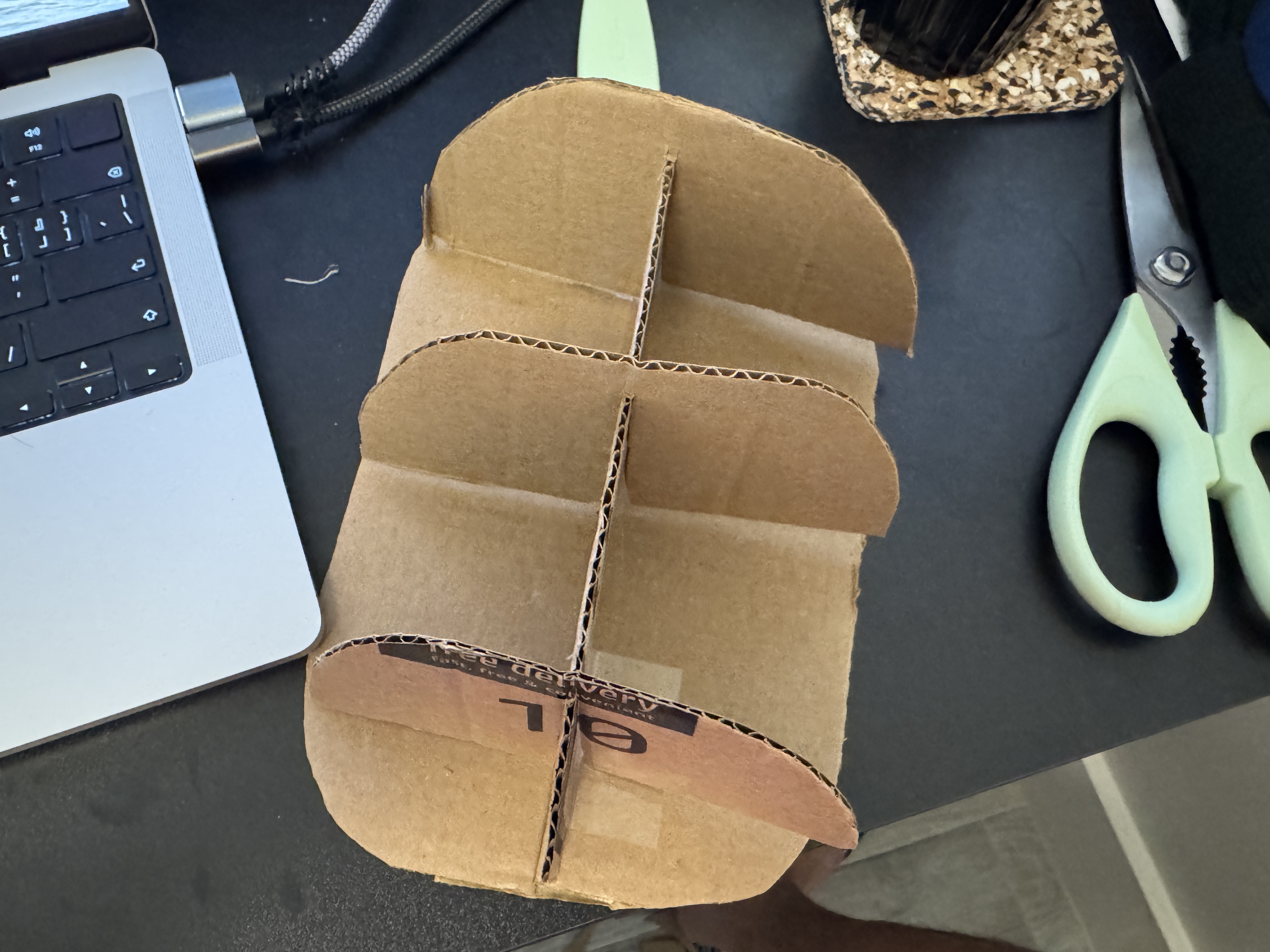
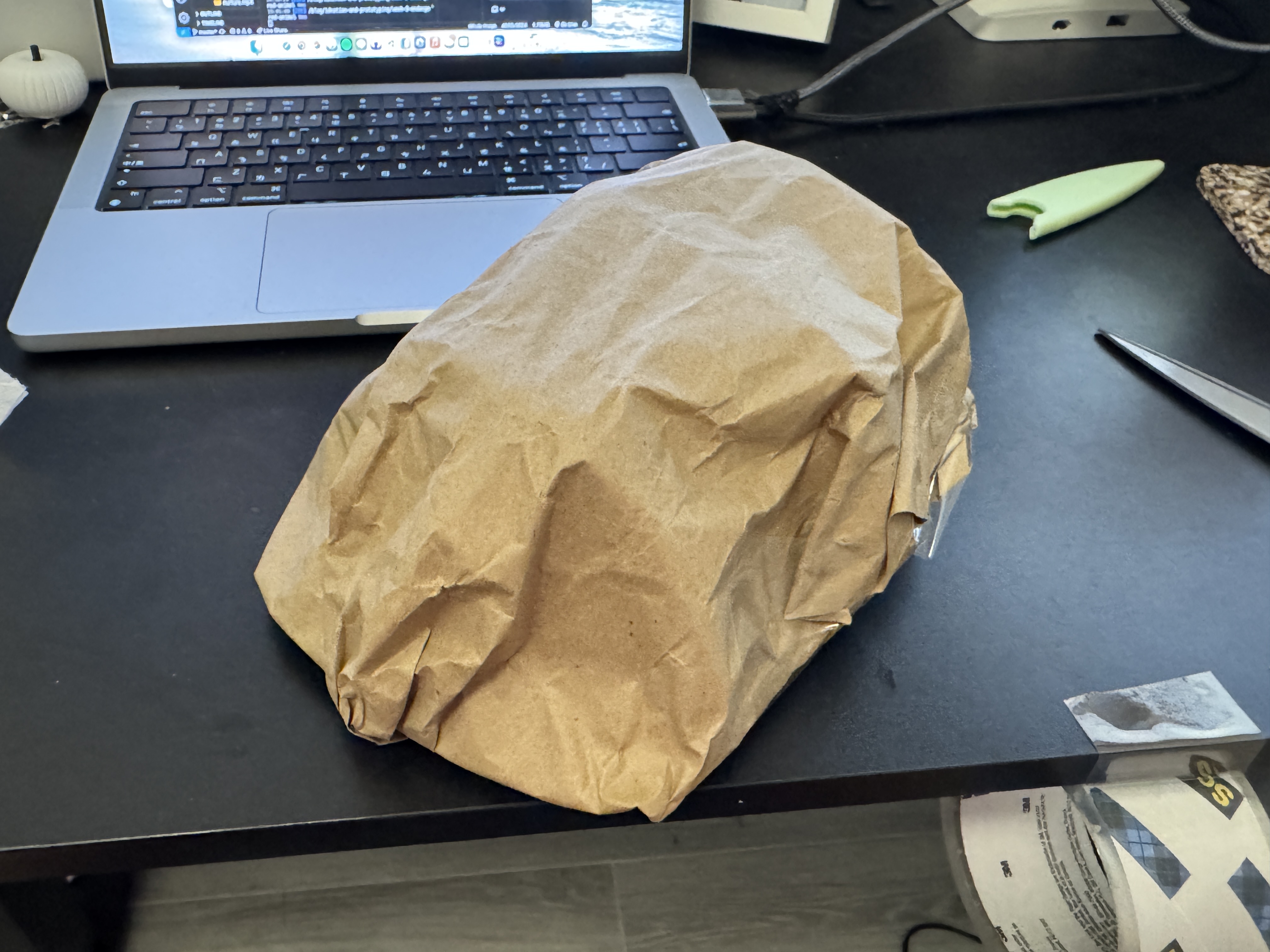
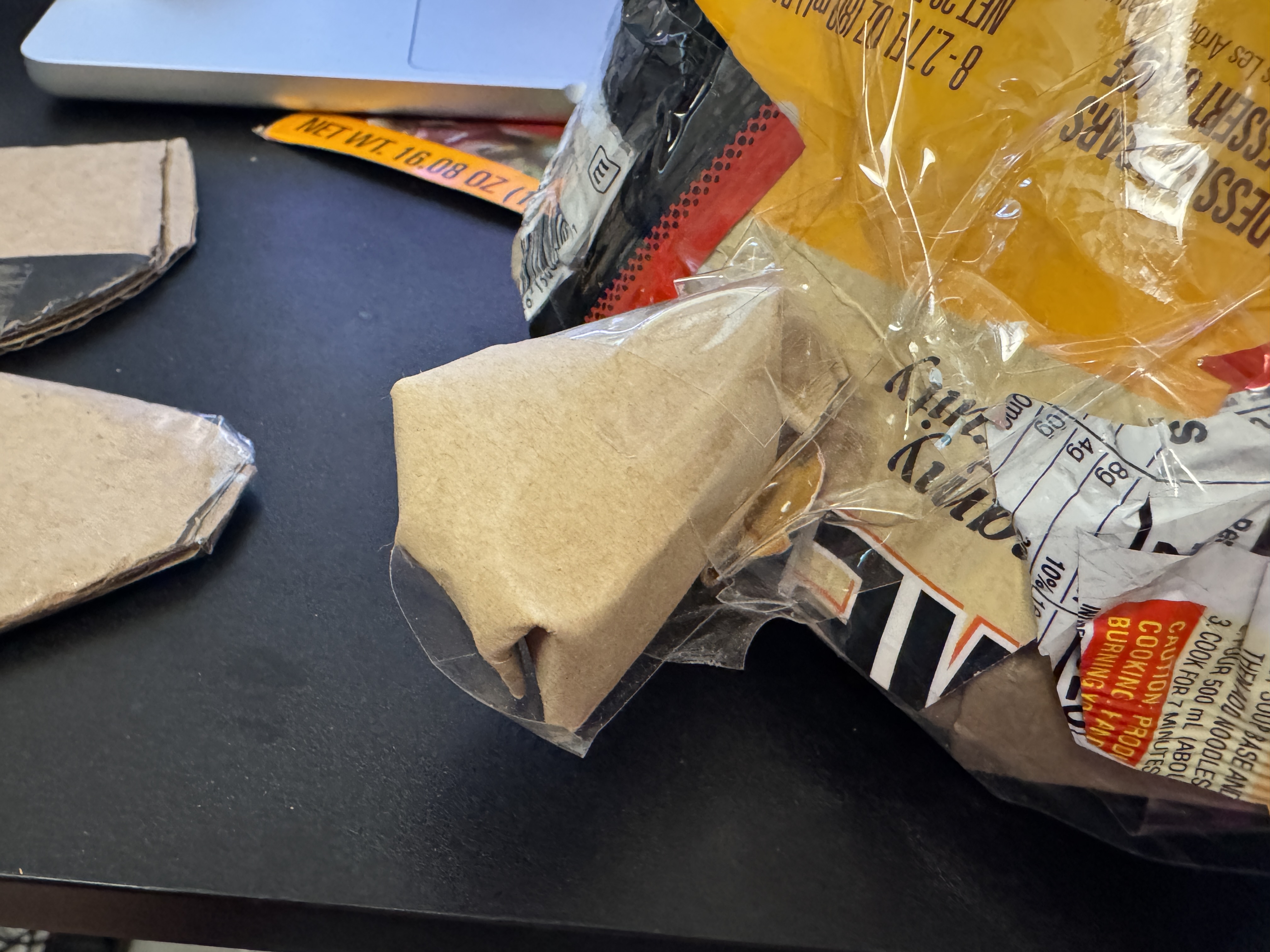
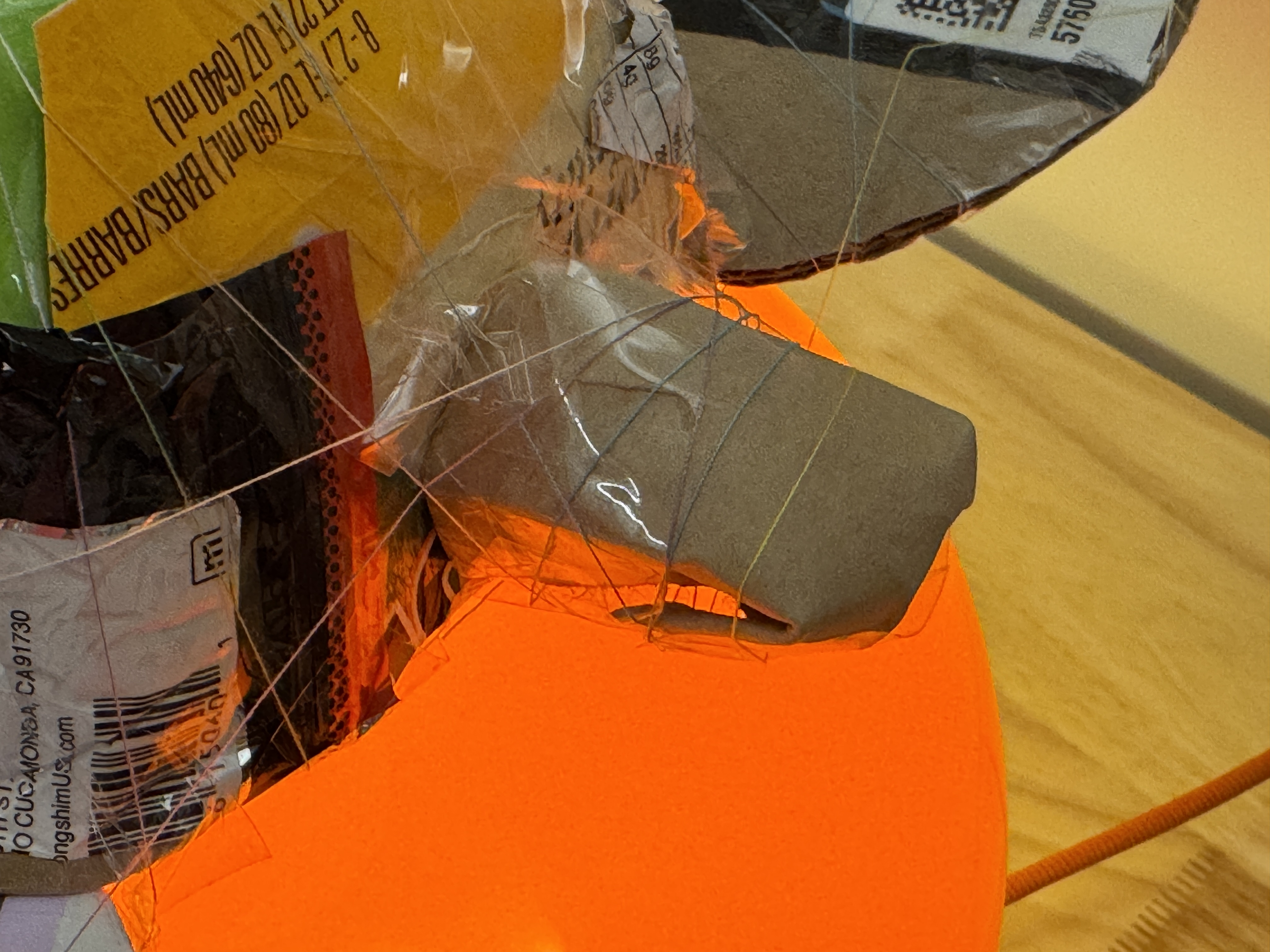
I started by cutting a cardboard base and adding curved cardboard ribs to create the shell structure.I covered the cardboard structure with brown paper to create a continuous shell surface.After the basic form was finished, I started cutting and layering discarded packaging onto the shell.The shell slowly became a collage of different packaging, while I also started attaching the flippers and other body parts.I shaped the head from brown paper and cardboard, trying to keep the narrow Hawksbill-like shape.This was the main turtle form before adding the final thread layer.I also experimented with placing the turtle on a light to see how the form and materials looked when illuminated from below.
06 /Document Your Process / Final Details
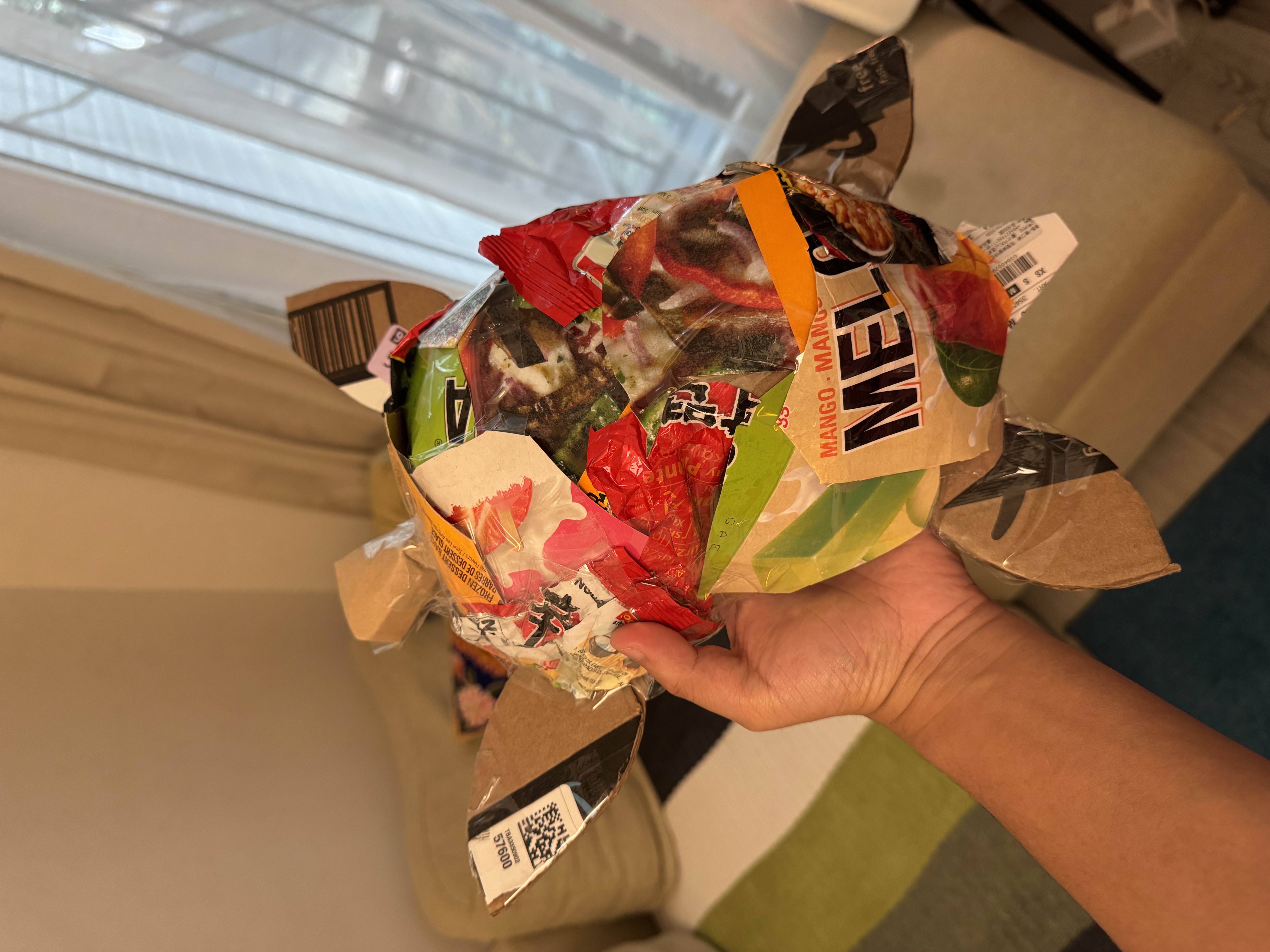
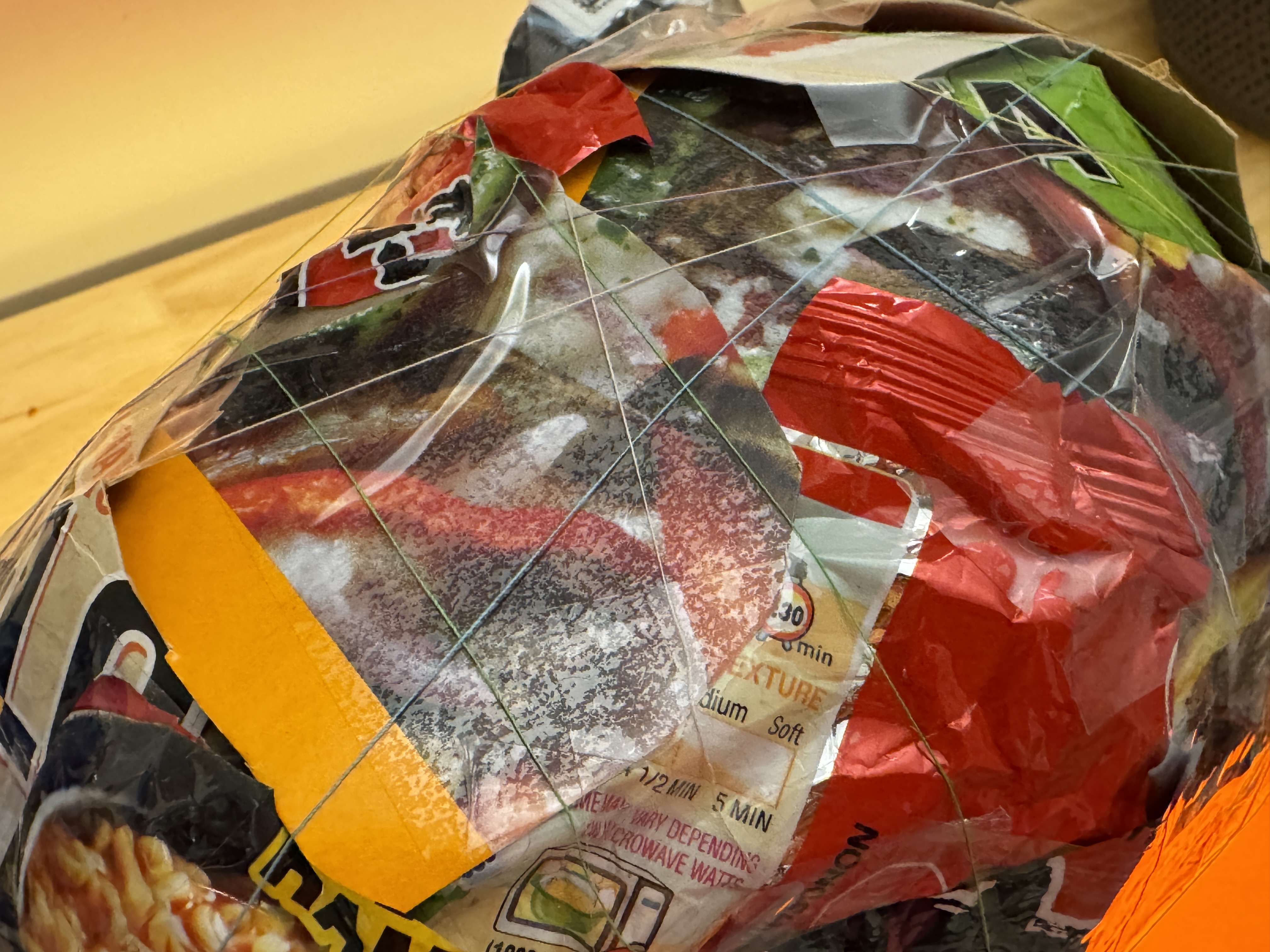
Final form after adding the thread around the body and shell.Detail of the shell showing the layered packaging and thread crossing over the surface.The thread wraps around different parts of the turtle to suggest entanglement and limited movement.
Final dimensions (H × W × D)
6 × 20 × 26 cm
Final materials
Corrugated cardboard, brown packing paper, discarded paper and plastic food packaging, tape, and thin thread.
07 /Reflect
Overall Reflection
I think the most interesting part of this project was seeing how much I could make from materials that I normally wouldn’t keep. At the beginning, most of what I had was just cardboard and packaging, so I wasn’t really sure if the turtle would actually look recognizable.
While making it, I started to notice that the different materials naturally worked better for different things. Cardboard was much better for building the structure, while the colorful packaging worked better as the surface of the shell. I also originally thought about using the thread to connect things together, but later I liked it more as something that visually traps the turtle.
The final result is definitely rough and not very realistic, but I actually like that the original packaging, text and materials are still very visible.
Takeaway 1
The material itself can become part of the idea.
I originally chose the colorful packaging because it looked similar to the Hawksbill shell, but after researching the turtle, the waste also started to connect to the environmental threats faced by marine animals.
Takeaway 2
I don’t need to completely hide what a material used to be.
Keeping the original colors, graphics and textures of the packaging made the turtle more interesting to me. Instead of trying to make the waste look like completely different materials, I liked that you can still tell where some of it came from.
08 /Prepare for Showcase / Final Result
Final Hawksbill Sea Turtle sculpture made from reclaimed packaging, cardboard, plastic packaging, tape, and thread.
Species Research Card
Common Name
Hawksbill Sea Turtle
Scientific Name
Eretmochelys imbricata
Conservation Status
Critically Endangered (IUCN Red List)
Endangered under the U.S. Endangered Species Act
Habitat / Geographic Range
Tropical and subtropical waters of the Atlantic, Pacific, and Indian Oceans, especially coral reef ecosystems.
Primary Threats
Illegal tortoiseshell trade, loss and degradation of nesting and coral reef habitats, fishing bycatch, marine debris, and changing environmental conditions.
Interesting Finding
The colorful shell that first attracted me to the Hawksbill is also one of the main reasons humans historically hunted it.
Primary Reclaimed Materials
Cardboard and paper packaging, brown packing paper, discarded colorful food and plastic packaging, tape, and thin thread.
The New York Aquarium and its New York Seascape conservation work protect marine wildlife and habitats around New York through research, monitoring, habitat protection, and education.
Public-Facing Description
This sculpture interprets a Hawksbill Sea Turtle using discarded cardboard, paper, food packaging, plastic packaging, and thread collected from everyday waste. I was drawn to the hawksbill because of its colorful overlapping shell, but learned that the same shell has also made the species a target of the tortoiseshell trade. The bright packaging recreates that shell pattern, while the thread suggests entanglement and restricted movement. The piece connects everyday consumption and discarded materials with the larger environmental pressures faced by marine wildlife.
Wall Label
Artist
Marcus Shih
Title
Entangled Shell
Year
2026
Medium / Materials
Discarded cardboard, paper and plastic packaging, brown packing paper, tape, and thread